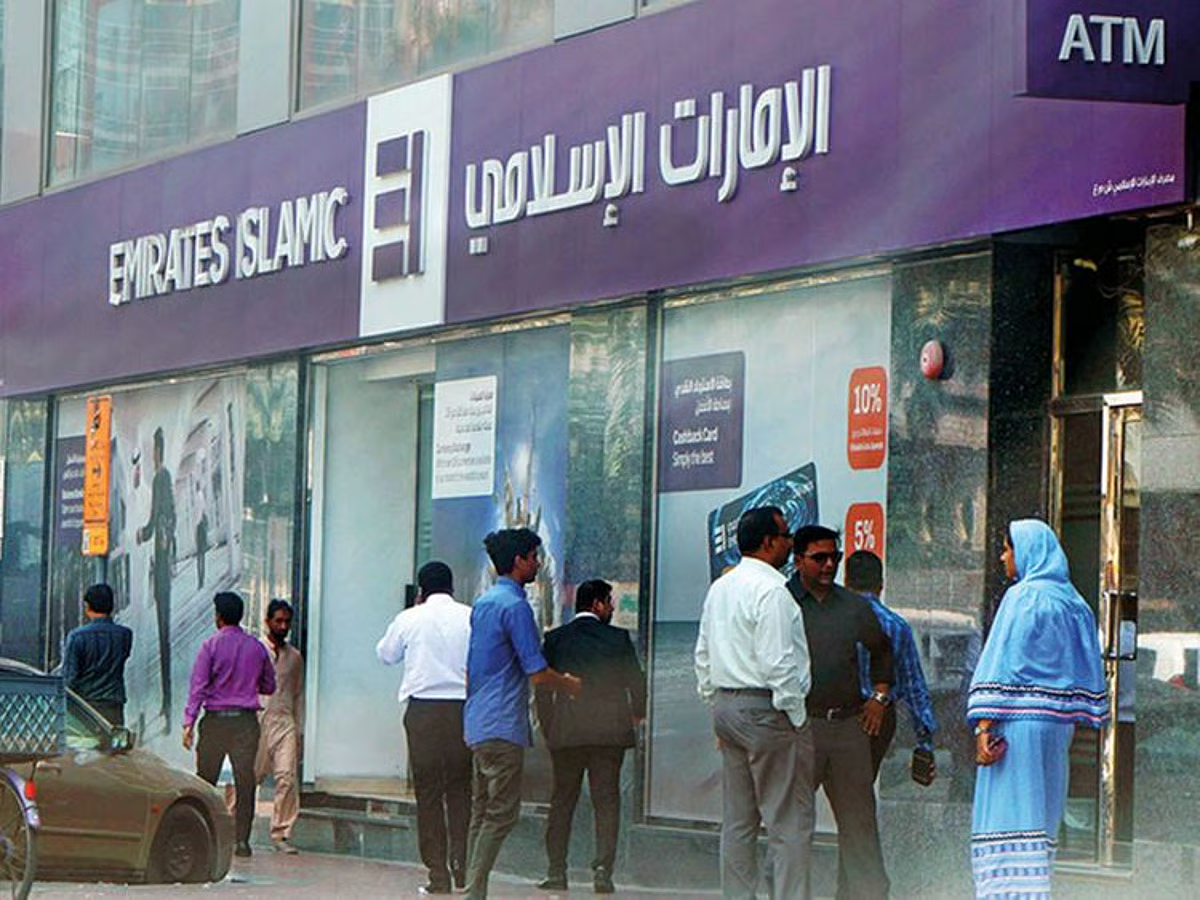

Emirates Islamic bank has launched a new service enabling UAE citizens and residents to invest in T-Sukuk through its digital platform with a minimum subscription of Dh4,000. The move, announced this week, aims to broaden access to government-backed Islamic bonds and simplify the investment process. The service leverages the bank’s ‘EI+’ mobile application for full registration and transaction management.
Available immediately, the platform allows investors to complete the entire process online, utilizing either their Emirates ID or the UAE PASS digital identity system. This accessibility extends to Know Your Customer (KYC) compliance, risk profile assessment, and detailed review of the T-Sukuk’s terms and conditions, all without the need for branch visits. This development comes as the UAE continues to promote financial inclusion and digital transformation within its banking sector.
Expanding Access to T-Sukuk Investments
The introduction of fractional T-Sukuk investments is a significant step toward democratizing access to government debt instruments. Traditionally, T-Sukuk, similar to conventional Treasury bonds, have required larger investment amounts, potentially excluding smaller investors. By offering fractional ownership, Emirates Islamic lowers the barrier to entry, inviting more participation from individual savers.
What are T-Sukuk?
T-Sukuk are Sharia-compliant bonds issued by a government to raise funds. They differ from conventional bonds in their underlying structure, designed to adhere to Islamic finance principles that prohibit interest (riba). Instead of fixed interest payments, T-Sukuk typically offer profits derived from the underlying asset, often linked to government projects or revenues.
The UAE government began issuing federal T-Sukuk in 2021 as part of its strategy to establish a more robust and transparent government debt market. According to the Ministry of Finance, the issuance of T-Sukuk supports funding of key initiatives and contributes to the development of the local financial ecosystem. They also provide investors with a safe, reliable asset class, backed by the full faith and credit of the UAE government.
The Emirates Islamic platform simplifies several formerly complex steps. Investors can use the UAE PASS or Emirates ID to verify their identity, streamlining the KYC process. The app then guides users through a risk assessment questionnaire to determine their investment suitability. Crucially, all relevant documentation and terms associated with the specific T-Sukuk offering are clearly presented within the application.
However, it’s important to note that investment in any financial instrument, including T-Sukuk, carries inherent risks. These risks include market fluctuations, credit risk (although minimal with government-backed securities), and liquidity risk. Investors should carefully review the offering documents and understand their risk tolerance before making a decision.
Additionally, the move by Emirates Islamic aligns with broader trends in the fintech space, where banks are increasingly leveraging digital platforms to offer a wider range of investment products. This shift is driven by changing customer expectations, particularly among younger demographics who prefer online and mobile banking solutions. The bank’s investment in its ‘EI+’ app demonstrates a commitment to these evolving preferences.
Meanwhile, other financial institutions in the UAE are also exploring ways to enhance access to government securities. While Emirates Islamic is among the first to offer fractional T-Sukuk through a mobile app, industry analysts anticipate further innovation in this area. This competition is expected to benefit investors by driving down costs and improving the overall user experience.
In contrast to traditional investment methods, the digital platform offers increased convenience and transparency. Investors can monitor their T-Sukuk holdings, track performance, and access transaction history in real-time. This level of control and visibility is particularly appealing to those new to investing or seeking a more active role in managing their portfolios. The platform also facilitates automated reinvestment of profits, further simplifying the investment process.
The availability of Islamic bonds like T-Sukuk is also significant for investors seeking Sharia-compliant investment options. The UAE is a leading hub for Islamic finance, and the government’s commitment to issuing T-Sukuk reinforces its position in this market. This provides a valuable alternative for investors who prioritize ethical and religious considerations in their investment decisions.
The success of this initiative will likely be measured by the level of investor participation and the overall volume of T-Sukuk subscribed through the platform. The bank has not publicly disclosed specific targets, but internal metrics will undoubtedly be tracked to assess the impact of this new service. Further expansion of the platform to include other government securities and investment products is also a possibility.
Looking ahead, the Ministry of Finance is expected to continue its regular T-Sukuk auctions throughout the year. The next auction date has not yet been announced, but market participants anticipate further issuances to meet the government’s funding needs. The performance of these auctions and the overall demand for T-Sukuk will be key indicators of investor sentiment and the health of the UAE’s financial markets. The impact of global economic conditions on the demand for government bonds will also be a factor to watch.
The long-term implications of this move extend beyond individual investors. Increased participation in the T-Sukuk market can contribute to greater liquidity and efficiency in the UAE’s debt market, fostering a more stable and diversified financial system. This, in turn, can support sustainable economic growth and development.