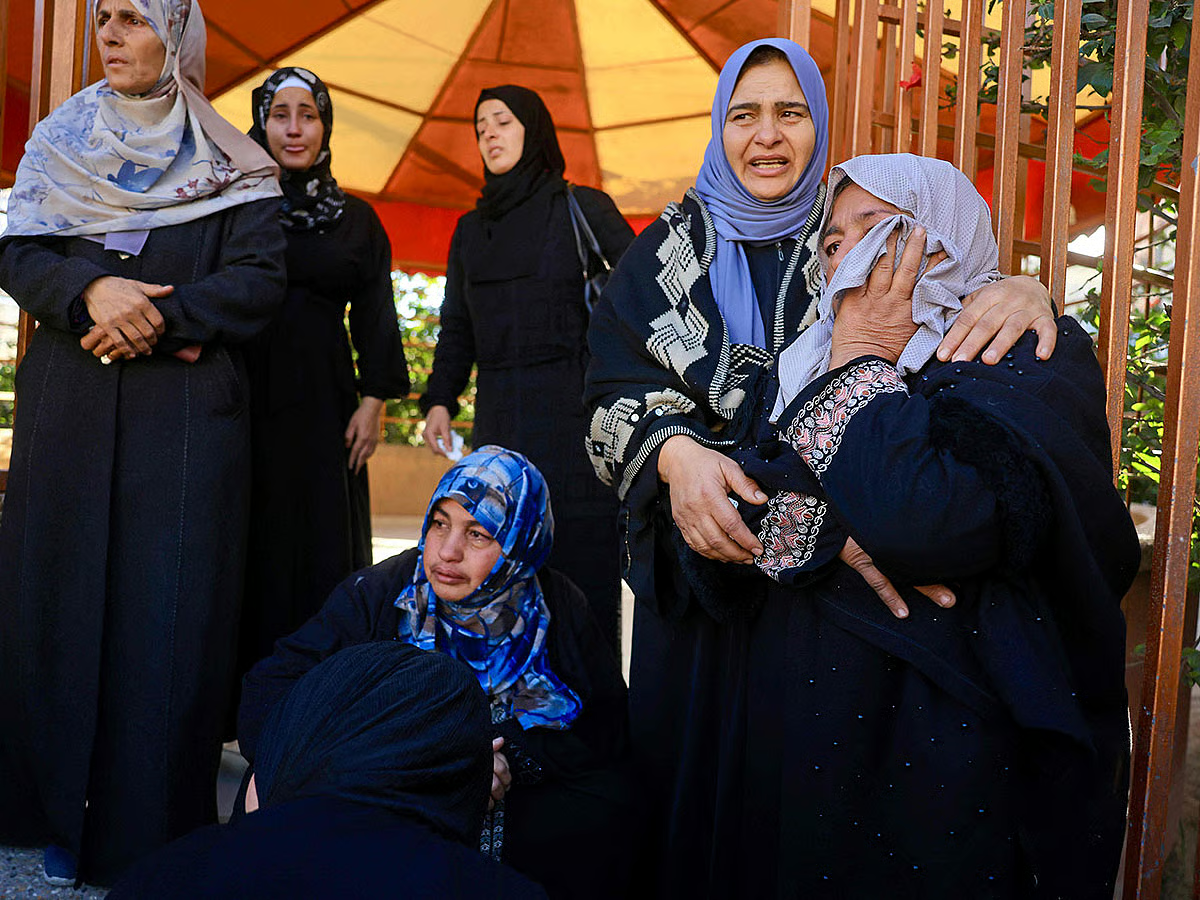

The United Arab Emirates (UAE) has officially denied allegations made by the Hamas-run administration in Gaza concerning Emirati involvement in establishing a field hospital within the territory. The claims, circulating earlier this week, suggested the UAE was coordinating with Israel on the project, a charge Abu Dhabi vehemently rejects. This denial comes amid heightened scrutiny of regional actors’ roles in the ongoing conflict and humanitarian efforts in Gaza.
The UAE Ministry of Foreign Affairs released a statement on Wednesday clarifying its position, asserting that the reported coordination did not occur. The administration in Gaza initially indicated the hospital was being built with Israeli approval and Emirati funding, sparking controversy and accusations of normalization. The UAE maintains its commitment to providing humanitarian aid to Palestinians but denies any political alignment with Israel in the context of this specific project.
UAE Rejects Claims of Gaza Hospital Coordination
The core of the dispute centers around a planned field hospital intended to provide medical assistance to the civilian population of Gaza, which has been severely impacted by recent hostilities. According to the Hamas administration, the hospital’s establishment involved collaboration between the UAE and Israel, a claim the UAE swiftly refuted. This denial is particularly sensitive given the Abraham Accords, which saw the UAE normalize relations with Israel in 2020, a move that continues to draw criticism from some quarters.
Background on UAE Humanitarian Aid
The UAE has a history of providing humanitarian assistance to Palestinians, independent of its diplomatic relations with Israel. This aid typically flows through established channels, such as the United Nations Relief and Works Agency for Palestine Refugees in the Near East (UNRWA) and the Egyptian Red Crescent. The Ministry of Foreign Affairs emphasized that all UAE aid is provided based on humanitarian needs and without preconditions.
However, the specific details surrounding the proposed field hospital appear to have been a source of miscommunication. The report indicates that the UAE had pledged to provide medical supplies and personnel to Gaza, but the administration’s assertion of direct coordination with Israel regarding the hospital’s location and construction proved inaccurate. The UAE statement did not elaborate on why the administration in Gaza made the claims.
Meanwhile, international organizations continue to struggle to deliver sufficient aid to Gaza due to ongoing security concerns and logistical challenges. The conflict has severely damaged infrastructure, including hospitals, and created a critical shortage of medical supplies. The need for increased humanitarian access remains a paramount concern for the international community.
Implications for Regional Diplomacy
The incident highlights the complexities of regional diplomacy and the sensitivities surrounding the Israeli-Palestinian conflict. The UAE’s denial is likely intended to mitigate potential damage to its relationships with other Arab states and to reaffirm its commitment to the Palestinian cause. Maintaining a delicate balance between diplomatic engagement with Israel and support for Palestinian rights is a key challenge for the UAE.
In contrast, the allegations from Gaza could be interpreted as an attempt to leverage regional pressure on Israel and to garner support for the Palestinian position. The administration may have sought to portray the UAE’s aid as contingent on Israeli cooperation, thereby highlighting Israel’s control over access to Gaza. This tactic, however, appears to have backfired, prompting the UAE to issue a strong denial.
Additionally, the situation underscores the importance of clear communication and transparency in humanitarian efforts. Misinformation and unsubstantiated claims can undermine trust and hinder the delivery of vital assistance. Accurate reporting and verification of information are crucial in navigating the complexities of the conflict.
The incident also touches upon the broader issue of normalization with Israel. While the UAE has publicly defended its decision to normalize relations, it remains a contentious issue within the Arab world. Critics argue that normalization rewards Israel’s policies towards Palestinians and undermines the pursuit of a two-state solution. The UAE maintains that its engagement with Israel can create opportunities for positive change and contribute to regional stability.
The UAE’s response also comes as discussions continue regarding post-conflict reconstruction in Gaza. Several countries have pledged financial assistance, but the scale of the damage is immense, and the logistical challenges are significant. Effective coordination between international actors and the Palestinian authorities will be essential to ensure that reconstruction efforts are successful. The issue of Gaza reconstruction is closely tied to the broader political context and the prospects for a lasting peace agreement.
Furthermore, the incident raises questions about the role of external actors in mediating the conflict. The UAE, along with other regional and international powers, has been involved in efforts to de-escalate tensions and facilitate a ceasefire. However, the lack of progress towards a comprehensive resolution underscores the deep-seated challenges and the need for a more concerted diplomatic effort. The ongoing regional stability efforts are crucial to preventing further escalation.
Looking ahead, the UAE is expected to continue providing humanitarian aid to Gaza through established channels. The Ministry of Foreign Affairs has indicated its willingness to work with international partners to address the urgent needs of the Palestinian population. However, the future of the proposed field hospital remains uncertain, pending further clarification and agreement on the terms of its establishment. The next steps will likely involve consultations with relevant stakeholders, including the Palestinian authorities and international organizations, to determine the feasibility of the project. The situation remains fluid, and developments are subject to change based on the evolving security and political landscape.