
The United Arab Emirates (UAE) has strongly condemned the recent Israeli escalation in Syria, expressing deep concern over the increasing tensions and potential for further instability in the region. The Ministry of Foreign Affairs issued a statement Friday outlining the UAE’s position, calling for a de-escalation of violence and a return to diplomatic solutions. This Israeli escalation comes amid ongoing complexities in the Syrian conflict and raises questions about regional security dynamics.
The condemnation follows reports of Israeli airstrikes targeting locations within Syria, particularly near Damascus. While Israel rarely comments directly on specific operations, it routinely acknowledges targeting what it describes as Iranian-backed militants operating in the country. The UAE statement did not specify details of the strikes but emphasized the need for restraint from all parties. Discussions around the Syria conflict and its impact are intensifying.
UAE’s Stance on the Israeli Escalation and Regional Stability
The UAE’s statement specifically called for adherence to the principles of the UN Charter and respect for Syria’s sovereignty and territorial integrity. This position reflects the UAE’s long-held commitment to regional stability and its consistent advocacy for peaceful resolutions to conflicts. Additionally, the ministry stressed the importance of avoiding actions that could exacerbate existing tensions and further complicate efforts to find a lasting political solution in Syria.
Historical Context of Israeli-Syrian Tensions
Tensions between Israel and Syria have existed for decades, stemming from the unresolved status of the Golan Heights, territory captured by Israel during the 1967 Six-Day War. While a formal state of war hasn’t been declared in recent years, sporadic clashes and Israeli airstrikes continue to occur, particularly targeting groups perceived as threats to Israeli security. These actions are often framed by Israel as necessary to prevent the strengthening of Iranian military presence in Syria.
Syria’s Ongoing Civil War and Regional Implications
Syria remains embroiled in a devastating civil war that began in 2011 with protests against the government of President Bashar al-Assad. The conflict has drawn in numerous regional and international actors, including Russia, Turkey, Iran, and various militant groups. The presence of these external forces adds layers of complexity to the situation and hinders efforts toward a comprehensive peace agreement.
The UAE has historically maintained a complex relationship with the Syrian government, initially supporting opposition groups but later re-establishing diplomatic ties with Damascus. This shift in policy has been driven by a desire to address regional security concerns and facilitate humanitarian assistance to the Syrian people. The UAE’s focus remains on a stable and unified Syria, free from external interference.
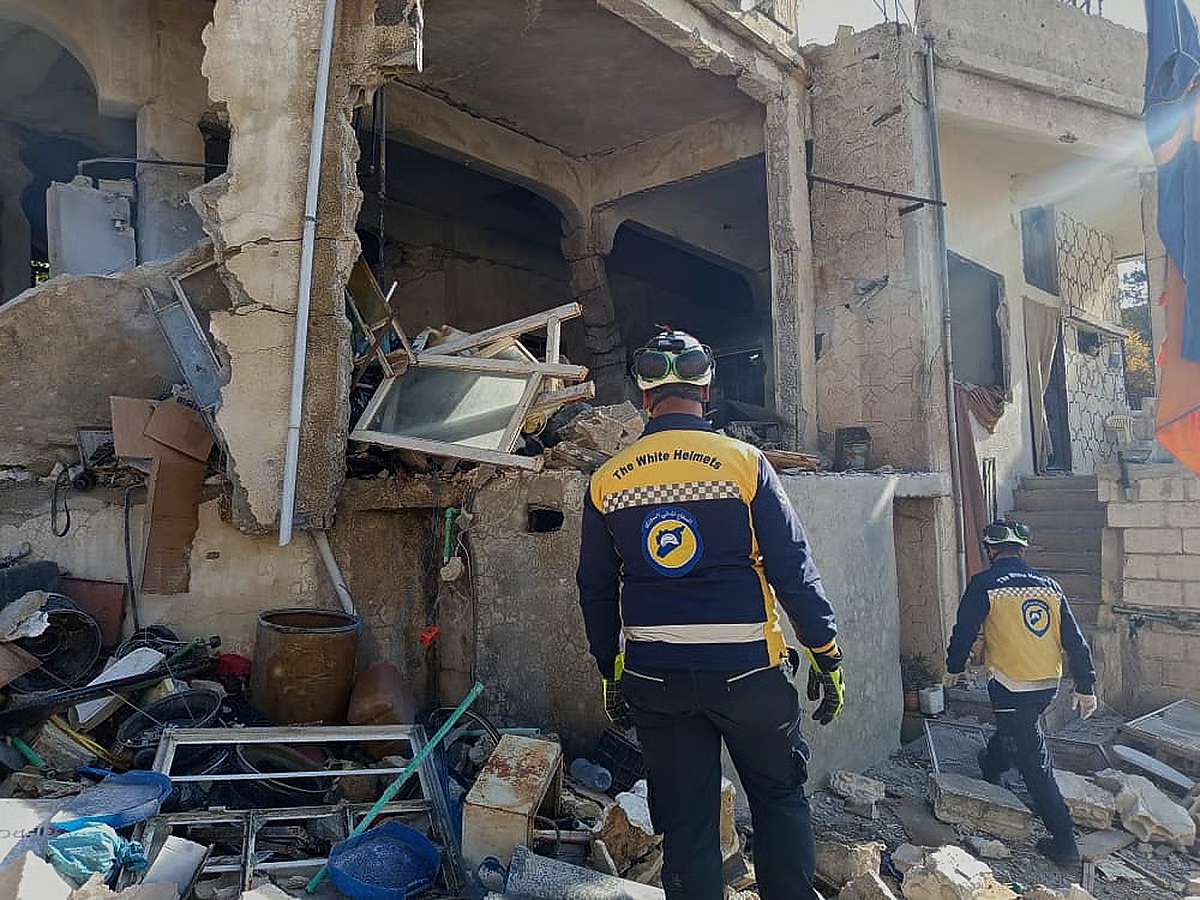
According to reports from several international news agencies, the recent Israeli strikes have resulted in casualties and damage to infrastructure. However, independent verification of these claims is often difficult due to restricted access to the affected areas. The Syrian government has consistently condemned the Israeli actions as violations of its sovereignty.
Meanwhile, the international community has largely reacted with cautious statements, urging restraint and emphasizing the need for a de-escalation. The United Nations has repeatedly called for respect for international law and the protection of civilians in Syria. The lack of a unified international response underscores the challenges in addressing the multifaceted crisis.
The regional security implications of this latest escalation are significant. Increased tensions could potentially lead to a wider conflict involving other actors in the region. Furthermore, the instability in Syria continues to fuel humanitarian crises and displacement, impacting neighboring countries and international aid organizations. The situation also raises concerns about the potential for the resurgence of extremist groups.
In contrast to some other regional actors, the UAE has consistently advocated for a diplomatic approach to resolving the Syrian conflict. The country has played a role in facilitating talks between various parties and has provided substantial humanitarian aid to Syrian refugees and internally displaced persons. The UAE believes that a political solution, involving all stakeholders, is the only way to achieve lasting peace and stability in Syria.
The UAE’s condemnation of the Israeli military actions also comes as it continues to normalize relations with Israel through the Abraham Accords. This normalization process, however, does not preclude the UAE from voicing its concerns regarding actions that it believes undermine regional stability. The UAE maintains that its commitment to peace and cooperation with Israel is contingent upon a broader effort to address the root causes of conflict in the region.
The report indicates that the timing of the escalation is particularly sensitive, coinciding with ongoing efforts to de-escalate tensions between Saudi Arabia and Iran, with China brokering a deal. Any further destabilization in Syria could potentially derail these positive developments and complicate the broader regional landscape. The UAE has been supportive of these de-escalation efforts and views them as crucial for fostering a more peaceful and cooperative environment.
Looking ahead, the situation in Syria remains highly volatile and unpredictable. Further Israeli strikes are possible, particularly if Israel perceives a growing threat from Iranian-backed groups. The Syrian government is likely to continue to condemn these actions and seek support from its allies. The international community will be closely monitoring the situation and urging restraint from all parties. A key development to watch will be the response from Russia, a major backer of the Assad regime, and whether it will attempt to mediate a de-escalation. The next steps will likely depend on the reactions of all involved parties within the next week.