


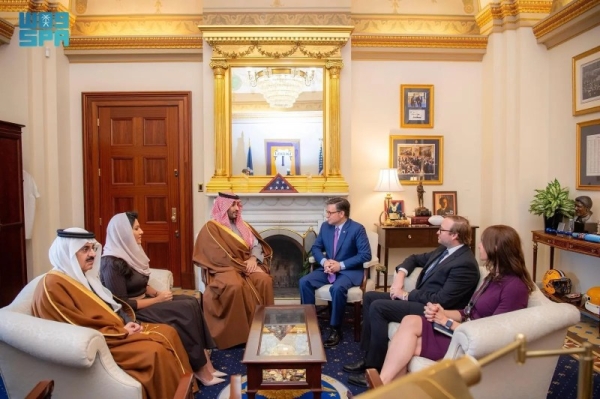

WASHINGTON — Saudi Crown Prince and Prime Minister Mohammed bin Salman met with U.S. House Speaker Mike Johnson and other congressional leaders at the Capitol on Wednesday, underscoring the continued importance of the Saudi Arabia-US relationship despite ongoing geopolitical tensions. The discussions focused on regional stability, international affairs, and avenues for expanded economic cooperation between the two nations. The visit, which occurred amidst heightened scrutiny of the kingdom’s policies, signals a desire to maintain dialogue with the U.S. legislative branch.
The meetings, held throughout the day, involved leaders and members of various House committees, suggesting a broad interest in exploring cooperation with Saudi Arabia. Key topics included the ongoing conflicts in Ukraine and the Middle East, particularly the situation in Gaza, and efforts to stabilize global energy markets. The Saudi delegation also included several ministers involved in key economic portfolios.
Strengthening the Saudi Arabia-US Relationship: Key Discussion Points
The visit is a noteworthy development given recent strains in the relationship stemming from disagreements over oil production policies and human rights concerns. Saudi Arabia’s decision to coordinate with OPEC+ on oil output cuts last year, for example, drew criticism from the Biden administration, which sought lower prices to ease domestic inflation. However, the meeting at the Capitol appears aimed at re-establishing a more consistent and collaborative dialogue.
According to statements released by both sides, the discussions centered on deepening economic ties. This includes potential investments in various sectors – diversification away from oil is a stated goal of Saudi Vision 2030 – and collaboration on technologies of the future. The Saudi–U.S. Strategic Economic Partnership Committee played a prominent role in preparations for the meeting, signifying the economic focus of the discussions.
Regional Stability and Security Concerns
Geopolitical stability in the Middle East was a central theme. The Crown Prince and House leaders likely discussed Iran’s regional influence and the potential for further escalation of conflicts, particularly given the ongoing Houthi attacks in the Red Sea. The United States relies on Saudi Arabia as a key partner in countering terrorism and maintaining security in the region.
The situation in Yemen was also likely addressed. Saudi Arabia has been involved in a protracted conflict there, and the U.S. has consistently called for a peaceful resolution. Analysts suggest that the U.S. may be seeking Saudi support for broader de-escalation efforts across the region. The wider impact of the conflict in Gaza and future humanitarian needs could also have been a significant factor in the conversation.
Economic Cooperation and Investment
The Saudi delegation, comprised of ministers overseeing key economic areas, emphasized the Kingdom’s commitment to the strategic partnership with the U.S. This commitment manifests in discussions surrounding potential U.S. investment in Saudi Arabia’s ambitious diversification projects. These projects represent a significant opportunity for American companies seeking new markets and collaborations.
Energy security was another critical aspect of the economic discussions. While Saudi Arabia’s role as a major oil producer is well-established, the Kingdom is also increasing its investments in renewable energy sources. Collaboration with U.S. firms on these projects could benefit both countries, aligning with global efforts to transition to a cleaner energy future. Discussions also considered improvements to supply chains and opportunities for increased trade.
Additionally, the potential for collaboration in emerging technologies, such as artificial intelligence and digital infrastructure, was explored. Saudi Arabia’s “Vision 2030” plans include significant investment in technological innovation, and the U.S. could play a key role in providing expertise and resources.
The Saudi side emphasized its desire for a more predictable and stable regulatory environment in the U.S. to encourage further investment. The Kingdom also reaffirmed its commitment to responsible energy policies and its willingness to work with the U.S. to address global economic challenges.
In contrast to some past criticisms, the tone of public statements following the meeting was largely positive, with both sides noting their continued commitment to a strong bilateral relationship. This doesn’t necessarily diminish the underlying disagreements, however, but suggests a willingness to address them through ongoing dialogue.
The delegation’s visit follows recent high-level meetings between U.S. officials and their Saudi counterparts, including Secretary of State Antony Blinken’s trip to the region. These engagements indicate a renewed push for diplomatic solutions to complex regional issues and the maintenance of crucial defense alliances.
While the specifics of any agreements reached during the meetings have not been publicly disclosed, the level of engagement suggests a serious intent to navigate current challenges and explore new areas of cooperation. Officials from both countries have indicated that further discussions are planned, with a focus on implementing concrete steps to strengthen their economic ties and address shared security concerns.
Looking ahead, the practical implications of these discussions will depend on the follow-through from both governments. Key issues to watch include concrete investments announced from the Saudi Public Investment Fund, any adjustments to Saudi oil production policies, and progress towards a lasting ceasefire in Yemen. The ongoing congressional review of U.S. foreign policy toward Saudi Arabia will also influence the future trajectory of the relationship and may introduce hurdles to broader agreements.
The level of bipartisan support shown during the Crown Prince’s visit is a significant factor, but potential disagreements over human rights and arms sales could emerge as sticking points in future negotiations. The next major opportunity for progress could come during upcoming international forums, where U.S. and Saudi officials are likely to meet and continue their discussions.