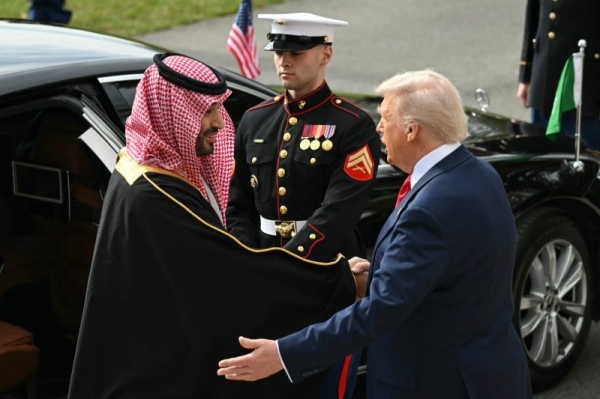

U.S.-Saudi relations were on display Tuesday as President Donald Trump officially welcomed Saudi Crown Prince Mohammed bin Salman to the White House. The visit, a significant event in diplomatic relations, underscored continued security and economic ties between the two nations despite ongoing scrutiny of the Crown Prince’s human rights record. The arrival included a full display of military honors, signaling the importance the U.S. places on the partnership.
The high-profile meeting occurred on Tuesday evening in Washington, D.C., with President Trump personally greeting the Crown Prince upon his arrival at the White House. The event featured a formal ceremony with national anthems and a flyover by American fighter jets, intended as a gesture of respect for the visiting head of state and his delegation.
Strengthening U.S.-Saudi Diplomatic Relations
The visit signals a continued effort by the Trump administration to maintain a strong alliance with Saudi Arabia, primarily driven by shared interests in regional stability and countering Iranian influence. Despite calls for distance following the 2018 murder of journalist Jamal Khashoggi, the U.S. has consistently prioritized arms sales and security cooperation with the Kingdom. This approach reflects a pragmatic foreign policy prioritizing perceived national security interests over human rights concerns, a stance that has drawn criticism from some lawmakers and advocacy groups.
According to sources familiar with the discussions, key topics included oil production, regional security, and potential investment opportunities. Oil policy is particularly crucial as global energy markets remain volatile, and the United States has historically relied on Saudi Arabia to help stabilize prices. The Kingdom plays a large role in providing energy security to world markets.
Focus on Regional Conflicts
Discussions also likely centered on ongoing conflicts in Yemen and Syria, where Saudi Arabia and the United States have overlapping, though not always identical, strategic goals. The U.S. has expressed concerns about civilian casualties in Yemen, where a Saudi-led coalition has been engaged in a military campaign against Houthi rebels. However, Washington continues to provide logistical and intelligence support to the coalition, citing the need to counter Iranian support for the Houthis.
Additionally, the situation in Iran was undoubtedly a major point of discussion. Both the U.S. and Saudi Arabia view Iran as a destabilizing force in the region and have expressed shared concerns about its nuclear program and support for proxy groups. The Trump administration’s withdrawal from the Iran nuclear deal in 2018, and imposition of sanctions, aligned with Saudi Arabia’s long-held position on Iran.
Economic Cooperation and Investment
Beyond security issues, the meeting provided an opportunity to discuss potential economic cooperation. Saudi Arabia is a major investor in the U.S. economy, and there is potential for further investment in areas such as infrastructure and technology. The Crown Prince’s “Vision 2030” plan aims to diversify the Saudi economy away from oil, and attracts foreign investment in sectors like tourism and renewable energy.
Meanwhile, the U.S. benefits from substantial arms sales to Saudi Arabia, which are a significant source of revenue for American defense contractors. These sales, however, are often scrutinized due to human rights concerns, and some in Congress have called for restrictions. Efforts to balance security interests with ethical considerations—a consistent challenge in the US foreign policy — remain at the forefront of debates surrounding the relationship.
In contrast to previous administrations, the Trump administration has generally avoided public criticism of Saudi Arabia’s human rights record. This stands in contrast to the Biden administration, which has since signaled a reassessment of the relationship with increased emphasis on human rights and accountability. Though the Trump administration’s approach prioritized transactional benefits over public censure.
The visit takes place against a backdrop of increasing global competition for influence in the Middle East. China and Russia are both actively seeking to expand their presence in the region, and the U.S. is keen to maintain its strategic partnerships to counter their inroads. Maintaining strong ties with Saudi Arabia is seen as crucial to this effort.
The Saudi Press Agency reported that the Crown Prince also met with senior White House officials and business leaders during his visit, further emphasizing the multifaceted nature of the diplomatic relations between the two countries. The Department of State has not released a detailed readout of all meetings as of Wednesday morning.
Looking ahead, the impact of this meeting will likely be felt in several areas. Negotiation outcomes regarding oil production targets will be closely monitored, with potential implications for global energy prices. Further, observers will watch for any tangible steps towards resolving the conflict in Yemen. The future direction of U.S.-Saudi relations under the incoming Biden administration, and how much of the past approach will be retained, remains a major uncertainty.