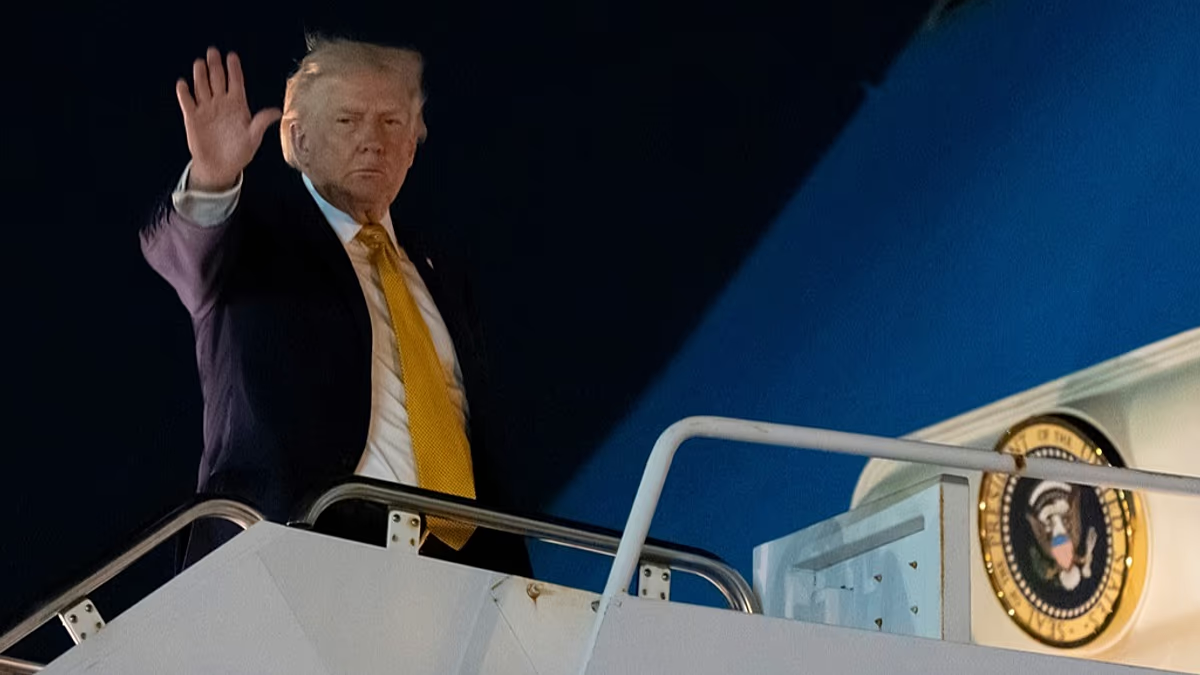

US President Donald Trump has stated that American officials found no evidence to support Russian claims that Ukraine attempted a drone strike targeting President Vladimir Putin’s residence. This development follows initial expressions of “deep concern” from Trump regarding the allegations, which were swiftly denied by Ukrainian President Volodymyr Zelenskyy. The situation adds another layer of complexity to ongoing efforts to broker peace in the Ukraine war.
Russian authorities initially reported a wave of drones launched towards a state residence used by Putin in the Novgorod region last week, asserting that their air defenses successfully intercepted the threat. Foreign Minister Sergey Lavrov criticized Ukraine for the timing of the alleged attack, coinciding with intensified diplomatic initiatives. However, these claims have been met with skepticism from Western officials.
Trump Administration Disputes Ukraine Drone Strike Allegations
The initial assessment from the Trump administration appeared cautious, with the president expressing anger about the accusation, as reported by several news outlets. He indicated Putin raised the issue during a recent phone call. This initial reaction drew attention, given it predated independent verification of the Russian claim.
However, following an investigation, Trump publicly stated that, according to US officials, the drone strike did not target Putin’s residence. He added that “something” occurred in the vicinity, but refrained from specific details. This shift in tone mirrors concerns voiced by European leaders who viewed the Russian allegations as a possible disinformation tactic.
The timing of the accusations is notable, coming just after President Zelenskyy’s visit to Trump’s Mar-a-Lago estate in Florida. During this meeting, the two leaders reportedly discussed a 20-point US peace plan for Ukraine. Zelenskyy publicly refuted the claim that Ukraine was behind the alleged drone attack.
Moscow’s Demands & Stalled Diplomacy
Putin has consistently signaled that any peace negotiations must fully satisfy Russia’s objectives. These reportedly include maintaining control over the Donbas region and imposing limitations on Ukraine’s future military capabilities. These maximalist demands present a significant obstacle to progress toward a ceasefire or long-term resolution.
According to sources familiar with the peace plan, the US proposal continues to evolve, but aims for a framework that addresses both security concerns and territorial integrity. The plan’s details have not been made public, but reports indicate significant disagreements remain regarding territorial concessions.
The allegation of a drone attack, even if unsubstantiated, adds to the mistrust hindering diplomatic efforts. Additionally, accusations of attempted assassination directly against a head of state raise the stakes and complicate negotiations. Some analysts suggest Russia may be attempting to use the incident to garner domestic support for the ongoing conflict and justify further escalation.
The differing accounts—Russia’s claim of an attack and the US assessment of no direct targeting—highlight the challenges of verifying information amidst the ongoing war. Misinformation and propaganda have been pervasive throughout the conflict, making it difficult to determine the truth. The ongoing geopolitical tensions are further complicated by these narratives.
With both Trump and Zelenskyy acknowledging some progress during their recent talks, the focus now shifts to whether Putin will demonstrate a willingness to compromise. The future of the peace process, and the fate of Ukraine, hinges on Moscow’s response to the US proposal and its commitment to de-escalation. Observers will be closely watching for any further shifts in the positions of all parties involved.
Additional sources • AP