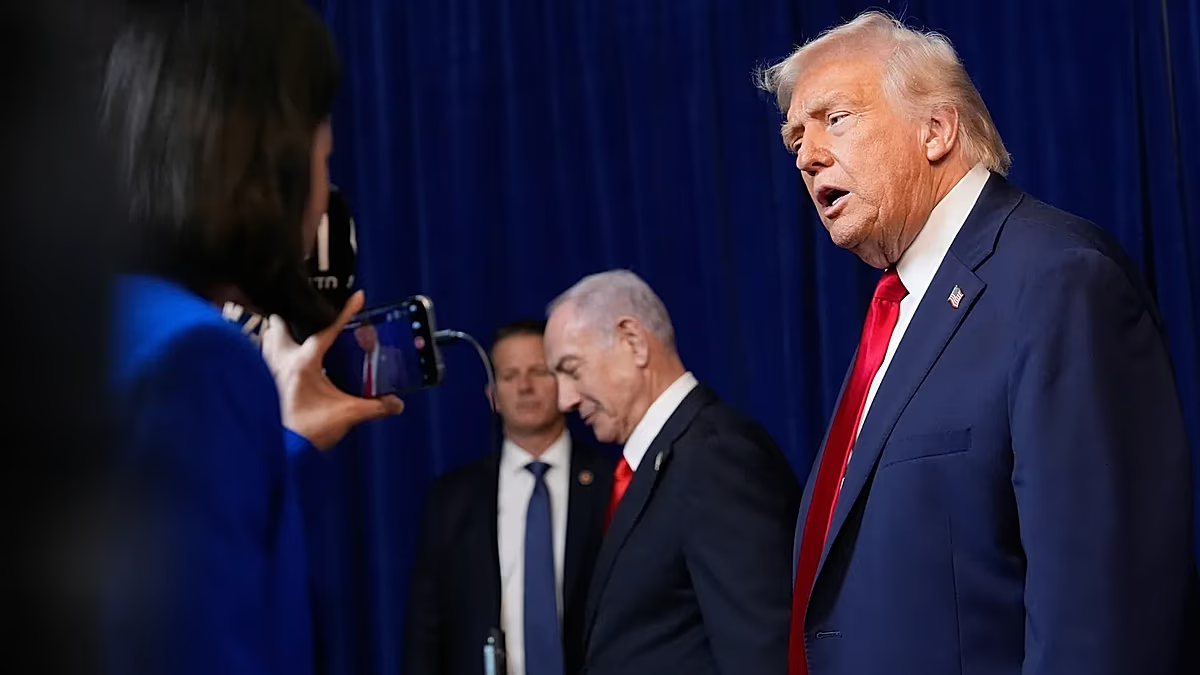

US President Donald Trump issued a stark warning to Hamas on Monday, stating the militant group has a “very short period” to fully disarm, or face severe consequences. The ultimatum came during a press conference in Florida following talks with Israeli Prime Minister Benjamin Netanyahu, as both nations navigate the complex second phase of the Gaza ceasefire agreement. The situation remains volatile as efforts to establish a lasting peace continue.
The meeting, the sixth between the two leaders this year, focused on the implementation of the ceasefire and the future of Gaza. The initial phase of the agreement, which began on October 10th, successfully halted fighting that started in 2023 and facilitated the exchange of Israeli hostages for Palestinian prisoners. However, the path forward is fraught with challenges, particularly regarding the complete disarmament of Hamas and the establishment of a governing structure for the devastated territory.
The Challenge of Hamas Disarmament
Trump emphasized that Hamas had previously agreed to disarm, and failure to do so will result in repercussions. “If they don’t disarm – as they agreed to do, they agreed to it – then there’ll be hell to pay for them,” he stated. This demand forms a central pillar of Trump’s broader peace plan, which envisions a demilitarized Gaza under international supervision.
However, Hamas has signaled a reluctance to fully relinquish its weapons. The group has indicated a willingness to discuss “freezing or storing” its arsenal, but maintains its right to armed resistance while Israel occupies Palestinian territory. This position presents a significant obstacle to the successful implementation of the ceasefire’s second phase. According to a US official, a potential solution being considered is a “buyback” program offering financial incentives for weapons surrendered.
Reconstruction and Governance
Beyond disarmament, the reconstruction of Gaza is a monumental task. The United Nations estimates that over 80% of the Strip’s buildings have been destroyed in recent years of conflict. Trump stated he expects reconstruction to begin “pretty soon,” but provided no specific timeline or details regarding funding or responsibility.
The plan also calls for the establishment of a “technocratic, apolitical” Palestinian committee to govern Gaza on a temporary basis, overseen by a body known as the Board of Peace, chaired by Trump. Israeli officials are reportedly taking considerable time to vet and approve members of this committee, further delaying progress. Additionally, the formation of an International Stabilisation Force, intended to maintain security, remains stalled.
West Bank Tensions and Regional Concerns
The discussion between Trump and Netanyahu also touched upon the occupied West Bank. While Trump acknowledged disagreements with Netanyahu regarding the West Bank, he expressed confidence that a resolution would be reached. This comes despite recent moves by Israeli lawmakers to advance a preliminary vote in favor of annexing the West Bank, a move widely condemned by Palestinians and the international community as detrimental to the possibility of a two-state solution. Trump previously stated he would not allow such