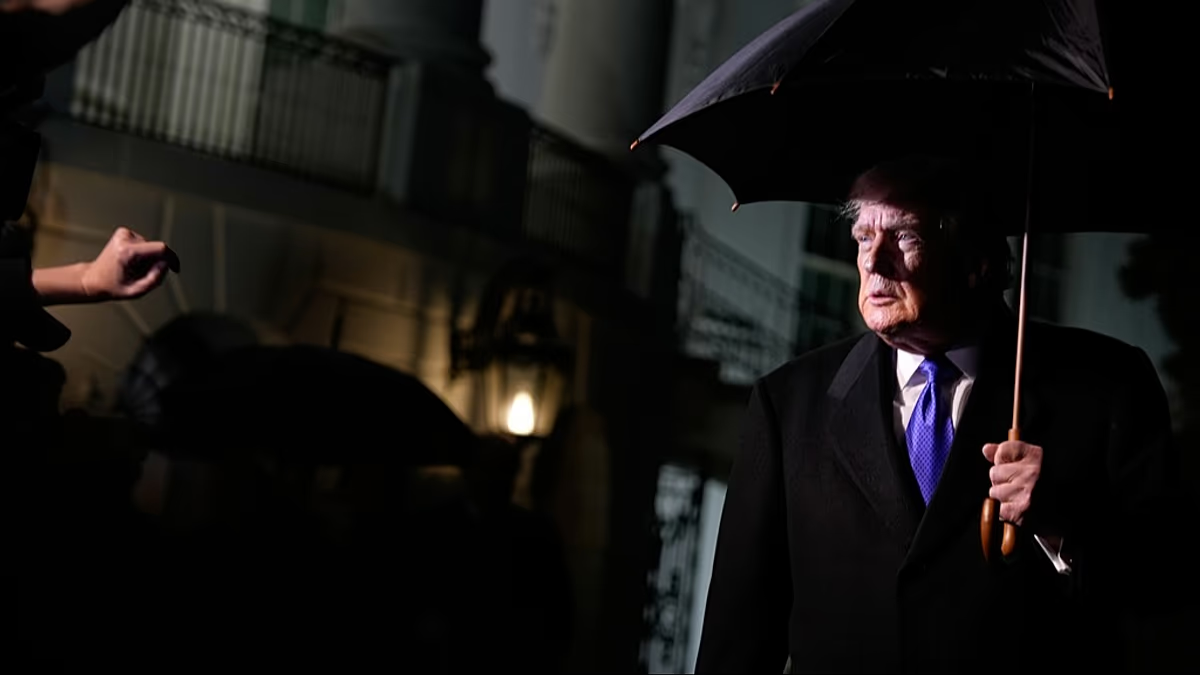

US President Donald Trump has issued a stark warning to Cuba, suggesting a potential oil deal with Washington as he threatens to cut off all economic support from Venezuela following a recent US military intervention there. The move raises significant questions about Cuba’s future energy security and geopolitical alignment. This development comes amid escalating tensions between the US and Havana, with accusations and counter-accusations flying between the two nations regarding their respective roles in regional affairs and the Cuba oil supply.
The situation unfolded after the US military successfully removed Venezuelan President Nicolas Maduro from power. Trump, via his social media platform ‘Truth Social’, accused Cuba of providing “security services” to Maduro’s regime in exchange for substantial oil and financial assistance. He stated that this support will cease immediately, urging Cuba to proactively seek a new arrangement with the United States.
The Shifting Dynamics of Cuba Oil and US Policy
For decades, Venezuela has been a crucial economic partner for Cuba, providing a consistent supply of oil at preferential rates. This relationship, forged under Hugo Chavez, helped sustain the Cuban economy despite the longstanding US embargo. According to reports, the Venezuelan oil supply accounted for a significant portion of Cuba’s energy needs. However, with Maduro’s removal and the US intervention, that lifeline is now severed.
Trump’s statement signals a potential shift in US policy towards Cuba, offering a conditional path towards economic engagement – albeit one predicated on a break with its traditional ally. He has also hinted at the possibility of expanding military operations to other nations in the region, including Colombia and Mexico, further escalating regional instability.
Cuban Response and International Law
Cuba’s Foreign Minister, Bruno Rodriguez, vehemently denied the accusations of receiving compensation for security services. He asserted Cuba’s sovereign right to engage in trade with any nation it chooses, without external interference. Rodriguez also criticized the US intervention in Venezuela as a violation of international law and condemned what he described as “criminal and uncontrolled hegemonic” behavior.
The Cuban government maintains that its relationship with Venezuela was based on mutual cooperation and solidarity, not financial exchange. They argue that the US is attempting to exert undue pressure on Havana to abandon its foreign policy principles. Additionally, Rodriguez emphasized Cuba’s right to secure fuel from willing exporters, regardless of US sanctions.
Meanwhile, the US President has continued to escalate rhetoric, even reposting a social media user’s suggestion that Florida Senator Marco Rubio could become the president of Cuba. This action has been widely interpreted as a provocative gesture aimed at undermining the Cuban government.
Implications for Regional Stability and Energy Markets
The disruption of the Venezuela oil flow to Cuba has immediate implications for the island nation’s energy sector. Cuba may now be forced to seek alternative suppliers, potentially at higher costs, or face energy shortages. This could exacerbate existing economic challenges and fuel social unrest. The situation also raises concerns about the broader regional impact of the US intervention in Venezuela and the potential for further instability.
The US move also impacts global energy security. Venezuela possesses significant oil reserves, and the change in leadership could lead to shifts in production and export policies. The long-term consequences of these changes remain uncertain, but they are likely to be felt throughout the energy markets.
The future of US-Cuba relations remains highly uncertain. While Trump has offered a conditional olive branch, his aggressive rhetoric and threats of further intervention suggest a willingness to escalate tensions. Observers will be closely watching how Cuba responds to the US ultimatum and whether a diplomatic solution can be reached. The coming weeks will be critical in determining the trajectory of this evolving geopolitical crisis.
For further information on the US embargo against Cuba, please see the US Department of State website.
Additional sources • AP
Stay informed about the developing situation in Venezuela and its impact on Cuba by following reputable news sources.