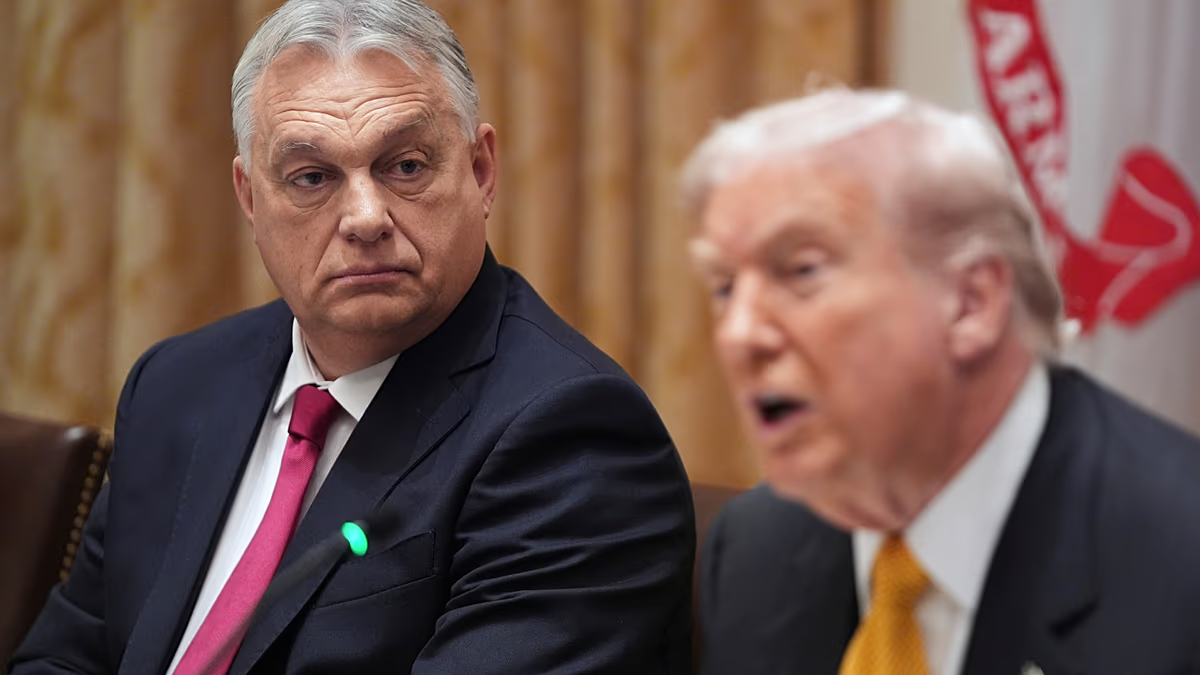

Former US President Donald Trump has indicated he will likely visit Hungary at the invitation of Prime Minister Viktor Orbán, as the nation prepares for a pivotal election in April. The potential visit, revealed through a letter published by Orbán, has drawn attention to the strengthening relationship between the two leaders and its possible impact on the upcoming Hungary election. This development occurs as Orbán faces a strong challenge from the Tisza party.
Trump’s letter praised the current state of US-Hungarian relations and expressed interest in expanding cooperation on defense, energy, and migration. The timing of a potential visit coinciding with the election campaign has raised questions about possible political implications, particularly given Trump’s endorsement of Orbán’s leadership.
Trump’s Potential Visit and the Hungary Election
The invitation from Orbán follows a meeting in Washington last November, where Hungary secured a temporary exemption from US tariffs on Russian oil. According to the letter, Trump lauded Orbán’s commitment to “faith, family, and national sovereignty,” values he suggests America respects. This aligns with the Trump administration’s previous statements regarding fostering relationships with governments challenging the existing European Union framework.
However, the visit is occurring during a critical juncture for Orbán. Recent opinion polls suggest his Fidesz-KDNP coalition is trailing the Tisza party, led by Péter Magyar, in the lead-up to the April vote. Trump’s expressed support and potential presence in Hungary could be seen as a boost to Orbán’s campaign, though the extent of that impact remains to be seen.
Strengthening US-Hungary Ties
The relationship between the US and Hungary has evolved in recent years. The Trump administration signaled a willingness to engage with nations pursuing alternative paths within Europe. This stance was outlined in a national security document released last year, which indicated a desire to support parties and governments resisting the “current trajectory” of the EU. The US State Department provides further information on US-Hungary relations.
Additionally, Trump has consistently praised Orbán’s policies, particularly his efforts to control illegal migration. This shared focus on border security and national sovereignty appears to be a key factor in the growing rapport between the two leaders. The exemption granted to Hungary regarding Russian oil tariffs further demonstrates a willingness to prioritize bilateral cooperation.
Implications for European Politics
The potential visit and Trump’s endorsement could have broader implications for European politics. Orbán has often positioned himself as a defender of national interests against perceived overreach by the EU. Trump’s support reinforces this narrative and could embolden other nationalist movements across the continent.
Meanwhile, the outcome of the Hungary election will be closely watched by EU officials. A victory for the Tisza party could signal a shift in Hungarian policy and potentially lead to a more cooperative approach with Brussels. A continued hold on power by Orbán, potentially aided by Trump’s influence, would likely maintain the current tensions. The election is a key event in the ongoing debate about the future of the European Union and its member states.
The Trump administration’s approach to European politics differed significantly from previous administrations, prioritizing bilateral deals and challenging established norms. This approach continues to resonate with certain leaders, like Orbán, who see it as a more effective way to advance their national interests. The concept of European integration and its challenges are detailed by the Council on Foreign Relations.
As the April election draws closer, all eyes will be on Hungary. The possibility of a Trump visit adds another layer of complexity to the campaign and underscores the growing geopolitical significance of the country. Follow ongoing coverage to stay informed about developments in the Hungary election and the evolving relationship between Hungary and the United States.