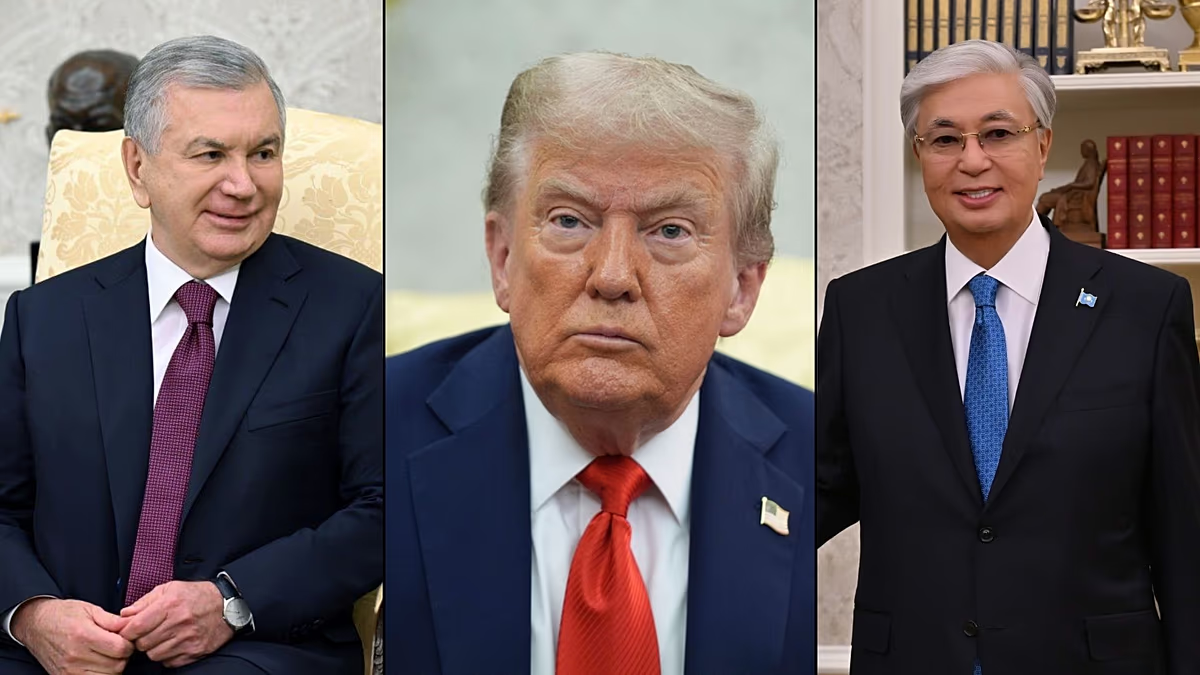

Former US President Donald Trump has announced he will invite the Presidents of Kazakhstan and Uzbekistan, Kassym-Jomart Tokayev and Shavkat Mirziyoyev respectively, to the 2026 G20 Summit in Miami. The invitations signal a renewed US focus on Central Asia, prioritizing peace efforts, economic collaboration, and access to the region’s significant mineral resources. Trump revealed the plans following separate phone conversations with both leaders on December 23, 2025.
The move underscores a potential shift in US foreign policy, with increased attention being paid to nations in Central Asia. This region is becoming increasingly important due to its strategic location and wealth of natural resources, including critical minerals needed for green technologies. According to Trump’s social media post, relations with both Kazakhstan and Uzbekistan are currently “spectacular.”
Strengthening US Ties with Central Asia
The invitations to the G20 Summit are part of a broader effort to deepen engagement with Kazakhstan and Uzbekistan. This includes fostering economic partnerships and addressing shared international concerns, such as regional stability and conflict resolution. The US has been actively seeking to diversify its supply chains and reduce reliance on certain countries for key minerals, making Central Asia a more attractive partner.
During his call with President Tokayev, Trump discussed bilateral relations and global challenges, including the ongoing conflict in Ukraine. Tokayev’s press service reported that he emphasized the complexity of the situation, highlighting the importance of compromise and a patient approach to finding a peaceful resolution. Kazakhstan has offered to host negotiations if requested, maintaining a position of neutrality and goodwill.
Additionally, Tokayev reportedly praised Trump’s past leadership in resolving international disputes and bolstering US economic strength. Last month, Kazakhstan announced its intention to join the Abraham Accords, an initiative spearheaded during Trump’s first term aimed at normalizing relations between Israel and several Arab nations. This move aligns with the US goal of reviving diplomatic and commercial ventures initially launched under the previous administration.
Expanding Economic Cooperation with Uzbekistan
President Mirziyoyev’s conversation with Trump centered on expanding trade and strategic cooperation between the two countries. The leaders reviewed the progress of existing agreements and explored new opportunities for collaboration. Mirziyoyev also commended Trump’s diplomatic achievements and noted the increasing frequency of high-level contacts between the US and Uzbekistan.
Economic ties between the US and Uzbekistan are rapidly growing, with projects valued at tens of billions of dollars underway in sectors such as civil aviation, automotive manufacturing, mining, agriculture, energy, infrastructure, chemistry, and information technology. The launch of the US-Uzbekistan Business and Investment Council is designed to support these projects and attract further investment, including the establishment of a joint investment fund.
Regional cooperation is also gaining momentum, with delegations from three Uzbek regions recently visiting the US to forge partnerships at the state level. Both Presidents extended invitations for Trump to visit their respective countries, signaling a desire for closer diplomatic engagement. The US State Department provides further information on US policy in Central Asia.
The Role of Critical Minerals
A key driver of increased US interest in Central Asia is the region’s abundance of critical minerals. These resources are essential for the production of electric vehicles, renewable energy technologies, and other advanced industries. Securing access to these minerals is seen as vital for US economic competitiveness and national security. The focus on trade and investment in these sectors is expected to intensify.
The upcoming G20 Summit in Miami will provide a platform for advancing these priorities. By combining discussions on conflict resolution with concrete economic initiatives, the United States aims to strengthen its partnerships in Central Asia, promote regional stability, and expand trade opportunities. Observers will be watching closely to see how these relationships develop and what specific agreements are reached during and after the summit. Stay informed about developments in US foreign policy and the evolving dynamics of Central Asia.