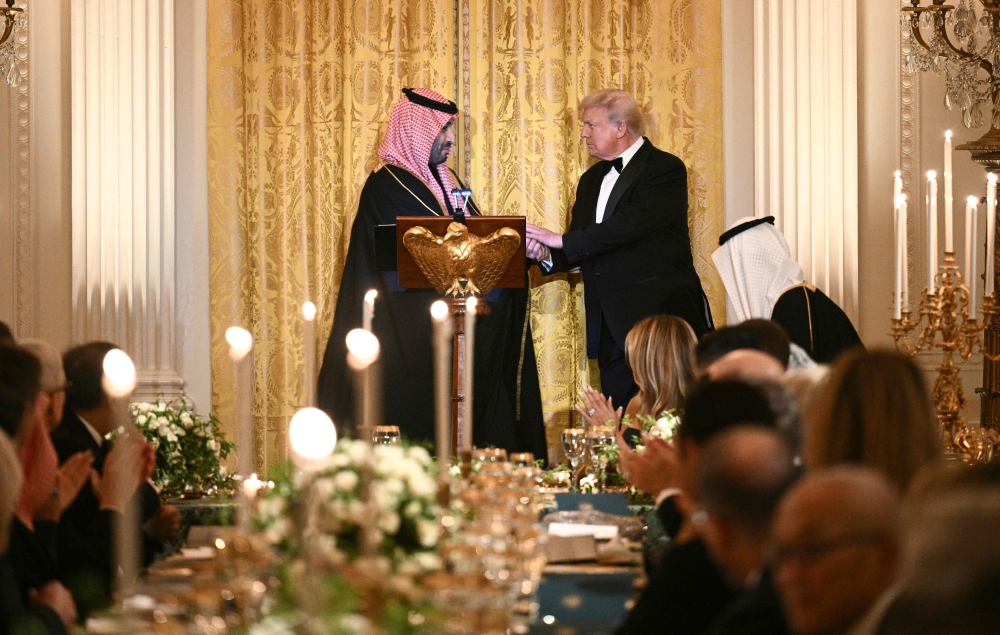

Washington D.C. – In a move signaling strengthened ties, the United States formally designated Saudi Arabia as a major non-NATO ally on Tuesday. The announcement, made by President Donald Trump during a state dinner with Saudi Crown Prince and Prime Minister Mohammed bin Salman, aims to enhance military cooperation between the two nations. This major non-NATO ally designation is a significant step in the ongoing evolution of the U.S.-Saudi relationship.
The dinner, held at the White House, provided the backdrop for Trump to reveal the decision, stating it was a matter of importance to the Saudi government. According to the White House, the designation reflects the United States’ commitment to regional stability and its close partnership with Saudi Arabia in addressing shared security concerns. Only 19 other countries currently hold this status.
What Does Becoming a Major Non-NATO Ally Mean?
The major non-NATO ally status is a designation granted by the U.S. government to close partners that have strategic working relationships with the U.S. military. It doesn’t imply the same level of security commitment as NATO membership, but it does offer several benefits. These include preferential access to military equipment, training, and cooperative defense projects.
Specifically, countries with this designation are eligible for surplus defense articles, can participate in certain security cooperation programs, and may receive expedited consideration for arms sales. However, the benefits aren’t automatic and are subject to annual review by the U.S. Department of Defense. The designation is largely symbolic, demonstrating a strong and enduring relationship.
Historical Context of U.S.-Saudi Relations
The United States and Saudi Arabia have maintained a close, albeit complex, relationship for over eight decades, rooted in oil and security interests. The U.S. has historically relied on Saudi Arabia as a key oil supplier, while Saudi Arabia has depended on the U.S. for security assistance and defense. This partnership has faced periods of strain, particularly concerning human rights issues and regional conflicts.
Previous administrations have also granted the major non-NATO ally status, including to countries like Israel, Japan, and Australia. The designation is often used to reward allies and encourage further cooperation on issues of mutual concern, such as counterterrorism and regional security. The current move is seen by some analysts as a continuation of the Trump administration’s focus on strengthening relationships with key partners in the Middle East.
The timing of the announcement is noteworthy, coming amidst ongoing efforts to address regional instability and concerns about Iran’s influence. The U.S. and Saudi Arabia share a common interest in countering Iranian activities in the region, and enhanced military cooperation could play a role in achieving that goal. This is a key aspect of U.S. foreign policy in the area.
Meanwhile, the decision has drawn scrutiny from some lawmakers and advocacy groups. Concerns have been raised regarding Saudi Arabia’s human rights record, particularly in the wake of the killing of journalist Jamal Khashoggi. Critics argue that granting the designation sends the wrong message and could undermine U.S. efforts to promote human rights globally. The defense partnership is therefore a sensitive topic.
Additionally, the move could have implications for the ongoing arms sales to Saudi Arabia. While the major non-NATO ally status doesn’t guarantee arms sales, it could streamline the process and make it more difficult for Congress to block such sales. This has been a point of contention in recent years, with some lawmakers calling for greater restrictions on arms exports to Saudi Arabia due to its involvement in the Yemen conflict.
The Saudi Ministry of Foreign Affairs released a statement welcoming the designation, calling it a “historic step” that would further strengthen the strategic partnership between the two countries. The statement also reaffirmed Saudi Arabia’s commitment to regional security and its cooperation with the U.S. on counterterrorism efforts. This strategic alliance is expected to continue to evolve.
Looking ahead, the implementation of the major non-NATO ally designation will be closely watched. The U.S. Department of Defense will need to assess the specific benefits that will be extended to Saudi Arabia and develop a plan for enhancing military cooperation. Further details regarding the scope and duration of the designation are expected to be released in the coming weeks. The long-term impact of this decision on the broader geopolitical landscape remains to be seen.