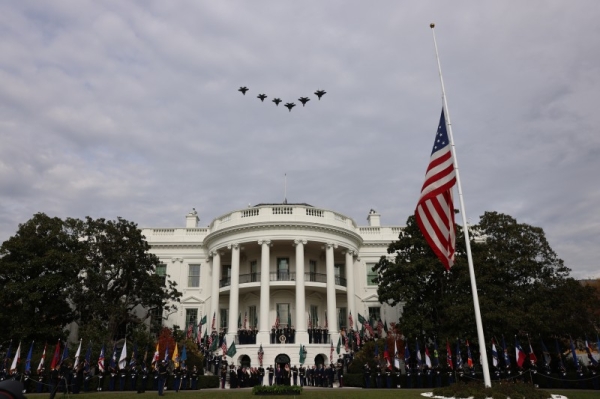

WASHINGTON — President Trump has authorized a substantial arms sale to Saudi Arabia, including the potential for future deliveries of F-35 fighter jets and nearly 300 tanks. This defense sale, announced by the White House, aims to strengthen U.S. national security interests and maintain a strong military partnership with the Kingdom. The move has been met with both support from defense industry advocates and scrutiny from lawmakers concerned about human rights issues.
The agreement, finalized in recent days, involves a complex series of transactions designed to enhance Saudi Arabia’s defense capabilities while simultaneously bolstering the American defense industrial base. Deliveries of the included military hardware are expected to occur over several years, with ongoing maintenance and support contracts adding long-term value. The deal underscores the continued, albeit evolving, strategic relationship between the United States and Saudi Arabia.
Strengthening Saudi Arabia’s Military with a Major Defense Sale
The core of the agreement centers on the potential sale of F-35 Lightning II fighter jets, considered among the most advanced aircraft in the world. While the exact number of jets included in the deal remains undisclosed, the possibility of their delivery represents a significant upgrade to the Royal Saudi Air Force’s fleet. Additionally, the package includes the sale of approximately 300 M1A2 Abrams tanks, a mainstay of the U.S. Army, providing substantial ground combat capabilities.
Economic Impact on the United States
The White House emphasized the positive economic impact of the sale, stating it will support hundreds of jobs within the U.S. manufacturing sector. Defense contractors like Lockheed Martin (the F-35 manufacturer) and General Dynamics (a key producer of the Abrams tank) are expected to benefit directly from the increased production and associated support services. This influx of work is seen as a welcome boost to the American defense industry, particularly as it navigates shifting global priorities and budgetary constraints.
However, some analysts question the extent of the job creation, noting that a portion of the work may be subcontracted internationally. The Congressional Budget Office has previously estimated that arms sales, while beneficial to specific companies, do not necessarily translate into broad-based economic growth.
Geopolitical Implications in the Middle East
The arms sale is widely viewed as a signal of continued U.S. commitment to regional security, particularly in the face of Iranian influence. According to the State Department, the sale is intended to bolster collective deterrence and improve the operational readiness of Saudi Arabia, a key partner in countering terrorism and maintaining stability in the Persian Gulf.
Meanwhile, critics argue that providing advanced weaponry to Saudi Arabia could exacerbate existing regional tensions and potentially contribute to further conflict. Concerns have been raised about the Kingdom’s involvement in the Yemen civil war and its human rights record, leading some lawmakers to call for greater oversight and restrictions on arms transfers. The Biden administration had previously paused similar sales, citing these concerns.
The decision to proceed with the sale also comes amidst ongoing negotiations to revive the Iran nuclear deal. Some observers believe the increased military support for Saudi Arabia is intended to provide a measure of reassurance to Riyadh, particularly if the nuclear deal is reinstated and potentially reduces the perceived threat from Iran.
Past Restrictions and Recent Policy Shifts
Previous administrations have faced similar debates regarding arms sales to Saudi Arabia. Concerns over civilian casualties in Yemen led to increased congressional scrutiny and, at times, temporary halts to certain types of weapons transfers. The Trump administration, however, adopted a more lenient approach, prioritizing the strengthening of the U.S.-Saudi relationship and the economic benefits of arms sales.
The recent policy shift reflects, in part, a re-evaluation of these priorities. The White House asserts that maintaining a strong defense partnership with Saudi Arabia is crucial for managing regional security challenges and protecting U.S. interests. The U.S. has a long history of providing military aid to Saudi Arabia, dating back to the 1940s, based largely on shared strategic goals relating to oil and security.
Additionally, the administration is likely responding to pressure from defense industry lobbyists and allies in Congress who advocate for increased arms exports. This arms sale represents a significant win for those advocating for a stronger, more transactional relationship with Saudi Arabia.
The move also has implications for the broader balance of power in the Middle East. While enhancing Saudi Arabia’s defense capabilities, the sale could prompt other regional actors, such as the United Arab Emirates, to seek similar advanced weaponry, potentially escalating an arms race. There’s ongoing discussion about diversifying Saudi Arabia’s sources of military equipment, potentially reducing its reliance on the United States.
The details of the financing arrangements for the defense equipment are currently being finalized. It is expected to involve a combination of direct commercial sales and potentially Foreign Military Financing (FMF), although the latter would likely be subject to further congressional review.
Looking ahead, the sale is subject to ongoing congressional oversight, and lawmakers may attempt to introduce legislation to impose conditions or restrictions on future arms transfers. The State Department will be required to provide notifications to Congress regarding the specifics of the agreement, triggering a review period. The completion of the deal hinges on securing final approvals and navigating any potential legislative challenges. Developments surrounding the Yemen conflict and the Kingdom’s human rights record will remain key factors influencing the debate.