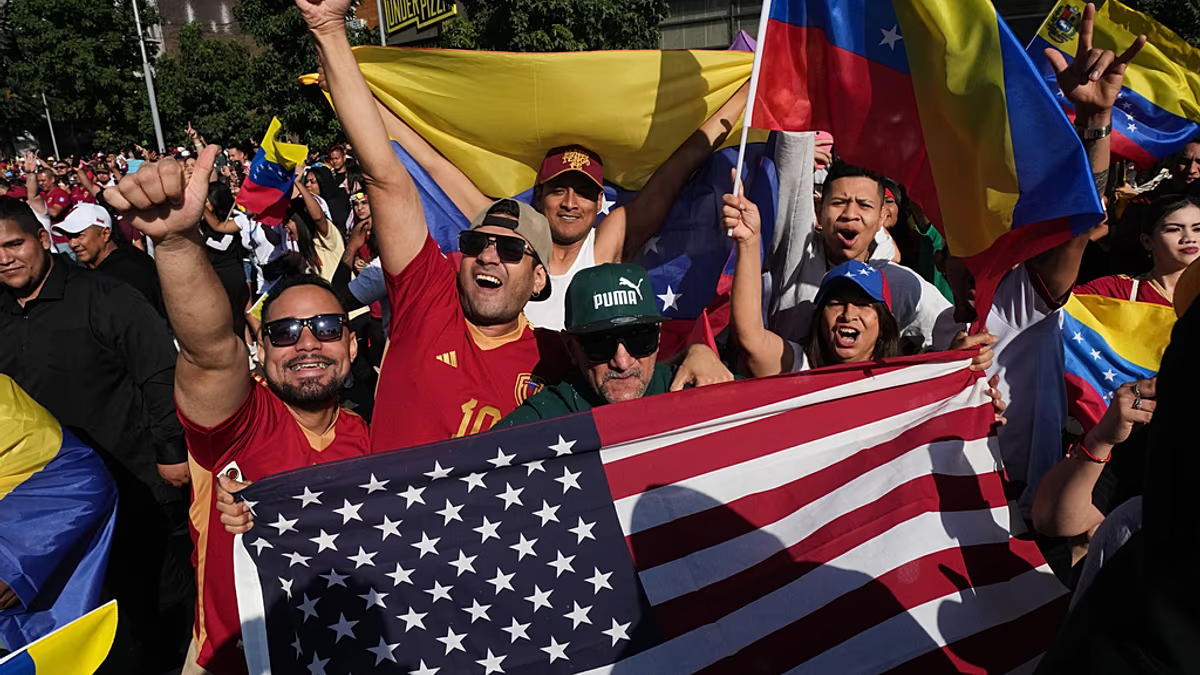

In a dramatic escalation of U.S. involvement in the region, former President Donald Trump announced Saturday that the United States will take interim control of Venezuela following the arrest of President Nicolás Maduro and his wife, Cilia Flores. The arrests, reportedly carried out by multiple branches of the U.S. armed forces, have prompted international scrutiny and debate over the legality and implications of direct U.S. intervention in the South American nation. This move signals a significant shift in Washington’s policy toward Venezuela and raises concerns about regional stability.
Trump, speaking from his Mar-a-Lago resort, stated the U.S. would govern Venezuela “until such time as we can do a safe, proper and judicious transition.” He emphasized the need to prevent a potentially detrimental outcome should another individual assume power, adding that the U.S. would “run the country with a group,” naming Secretary of State Marco Rubio, Defence Secretary Pete Hegseth, and Chairman of the Joint Chiefs of Staff, General Dan Caine, as key figures in the administration.
U.S. Intervention in Venezuela: A Contentious Takeover
While details remain sparse, Trump indicated a willingness to deploy “boots on the ground” if necessary. A primary objective, he stated, is to revitalize Venezuela’s oil industry, with U.S. oil companies poised to invest “billions of dollars” to repair infrastructure and generate revenue. He also suggested preparedness for a “second and much larger attack” should the situation demand it. The use of the term “attack” has drawn criticism and further fueled the debate surrounding the legality of the operation.
Secretary of State Rubio defended the operation, stating that it was a law enforcement action targeting a fugitive from U.S. justice. Maduro was indicted in the United States in 2020, and Rubio suggested the $50 million reward for his capture is now avoided. He further asserted that Congressional notification was not required due to the nature of the operation.
Criticism and Concerns from Washington
The move has been met with swift and sharp criticism from within the U.S. political landscape. Democratic Senator Mark Warner voiced concerns that this action sets a dangerous precedent. He questioned whether it would justify similar interventions by other global powers, specifically citing China and Taiwan, and Russia and Ukraine. Warner also highlighted the perceived hypocrisy, referencing Trump’s previous pardon of former Honduran President Juan Orlando Hernández, who faced drug trafficking charges in the U.S.
However, support for Trump’s decision has come from some Republicans. Senator Roger Wicker commended the “successful mission” to arrest Maduro, framing it as a culmination of efforts to dismantle “narco-terrorist organizations” linked to his government. Wicker expressed hope that the Venezuelan people would now establish “peace and prosperity” for their nation.
Implications for Regional Stability and US Interests
Analysts like Daniel DePetris of Defense Priorities suggest the operation could trigger significant upheaval in Venezuela. He warned of potential scenarios including military divisions, a surge in criminal activity, civil war, and the rise of an even more authoritarian regime. These possibilities raise concerns about wider regional instability and potential threats to U.S. interests in the Western Hemisphere. The situation is further complicated by Venezuela’s ongoing political crisis and humanitarian challenges.
The Trump administration’s justification for increased pressure on Venezuela has evolved in recent months, ranging from combating drug trafficking and reclaiming alleged stolen oil resources to promoting democracy. Throughout these shifts, Venezuela has been consistently portrayed as a direct threat to U.S. security. However, DePetris argues that this characterization is overstated, given Venezuela’s current economic struggles and status as a “bankrupt state.”
The arrest of Maduro and the subsequent announcement of U.S. interim control represent an unprecedented level of U.S. intervention in Venezuela. The coming weeks and months will be crucial in determining the future of the country and the broader implications for regional security. Expect continued debate in Washington and international condemnation or support as the situation unfolds. Stay informed about developments in Venezuela as this story develops.