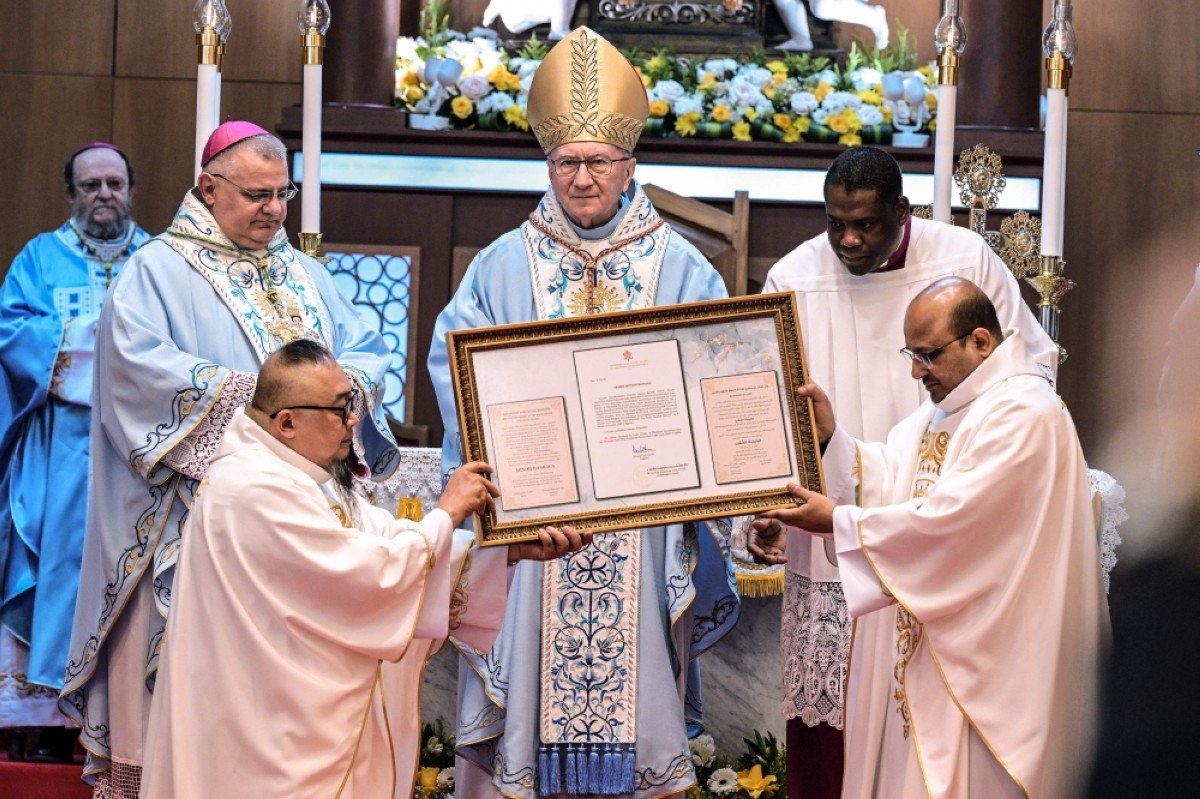

Kuwait marked a historic moment for the Catholic community in the Arabian Gulf with the dedication of Our Lady of Arabia in Ahmadi as a Minor Basilica. The ceremony, led by Vatican Secretary of State Cardinal Pietro Parolin on Friday, signifies a profound recognition of the church’s spiritual and architectural importance within the region. This event underscores the growing, albeit largely migrant, Christian presence in Kuwait and the broader Gulf states.
A Historic Milestone: Our Lady of Arabia Becomes a Minor Basilica
The elevation of Our Lady of Arabia to Minor Basilica status is a landmark achievement, representing the first church in the Arabian Gulf to receive this prestigious title from the Vatican. The solemn Pontifical Mass, attended by a diverse group of dignitaries including Assistant Foreign Minister for Europe Affairs Sadeq Marafi, Vatican Ambassador Eugene Martin Nugent, and key representatives from the Kuwait Oil Company (KOC), highlighted the significance of the occasion. KOC, the founding entity of the church in 1948, played a crucial role in its development and continues to support the community.
The designation of a church as a Minor Basilica isn’t simply honorary. It’s bestowed upon places of worship that demonstrate exceptional liturgical and pastoral importance, alongside notable historical, spiritual, or architectural merit. This recognition elevates Our Lady of Arabia as a central point of pilgrimage and devotion for Catholics throughout the Gulf.
The Significance of Location and History
Cardinal Parolin, in his homily, eloquently connected the church’s location to the broader narrative of faith. He noted that the basilica, “built upon the sands of the desert,” echoes the journey of Mary, the mother of Jesus, who herself sought refuge in similar arid landscapes. This connection resonates deeply, reminding the congregation of the enduring power of faith even in challenging environments.
A Church Rooted in Community
The church’s origins are intrinsically linked to the expatriate workforce of KOC. Established to serve the spiritual needs of its employees, Our Lady of Arabia has grown alongside the company and the nation of Kuwait. This history of service and inclusivity is a key factor in the Vatican’s decision to grant it the basilica title. The church has become a vital hub for the Catholic community, offering not only religious services but also social and educational programs.
The Growing Catholic Population in Kuwait and the Gulf
While the majority of Christians in Kuwait are expatriate workers, comprising approximately 20% of the population, a small but significant number hold Kuwaiti citizenship. These citizens are largely descendants of immigrants from countries with established Christian communities, such as Lebanon and Palestine. This demographic is mirrored across other Gulf nations like Bahrain, the UAE, and Qatar, where the Christian population is predominantly made up of migrant workers.
However, Kuwait and Bahrain stand out as the only Gulf countries with a native-born Christian citizenry, albeit a small one. This unique aspect adds another layer of historical and cultural significance to the establishment of a Catholic church of this stature. The presence of a dedicated space for worship like Our Lady of Arabia is particularly important for these communities, providing a sense of belonging and continuity.
Cardinal Parolin’s Message of Faith and Identity
Cardinal Parolin’s homily centered on the pivotal question posed by Jesus to his disciples: “Who do people say that the Son of Man is?” He emphasized the importance of recognizing Jesus’ true identity, particularly during the recent Christmas season. He stressed that genuine welcome of the Christmas spirit requires acknowledging the profound truth of Christ’s divinity and humanity.
The Cardinal’s message resonated with the diverse congregation, which included local Catholics, political figures, diplomats, and representatives from KOC. It served as a powerful reminder of the core tenets of the faith and the importance of maintaining a strong spiritual foundation. The event also highlighted the positive relationship between the Vatican and Kuwait, fostering an environment of mutual respect and understanding.
Looking Ahead: The Future of Catholicism in the Arabian Peninsula
The dedication of Our Lady of Arabia as a Minor Basilica is more than just a ceremonial event; it’s a symbol of hope and a testament to the enduring faith of the Catholic community in the Arabian Peninsula. The new basilica will undoubtedly serve as a beacon of spiritual guidance and a focal point for religious observance for years to come.
This milestone also encourages further dialogue and collaboration between the Vatican and Gulf nations, potentially paving the way for increased religious freedom and understanding. As the Christian population in the region continues to grow, the need for dedicated spaces for worship and community building becomes ever more critical. The story of Our Lady of Arabia is a powerful example of how faith can flourish even in the most unexpected of places, and its elevation to a Minor Basilica marks a truly historic chapter in the religious landscape of the Gulf.