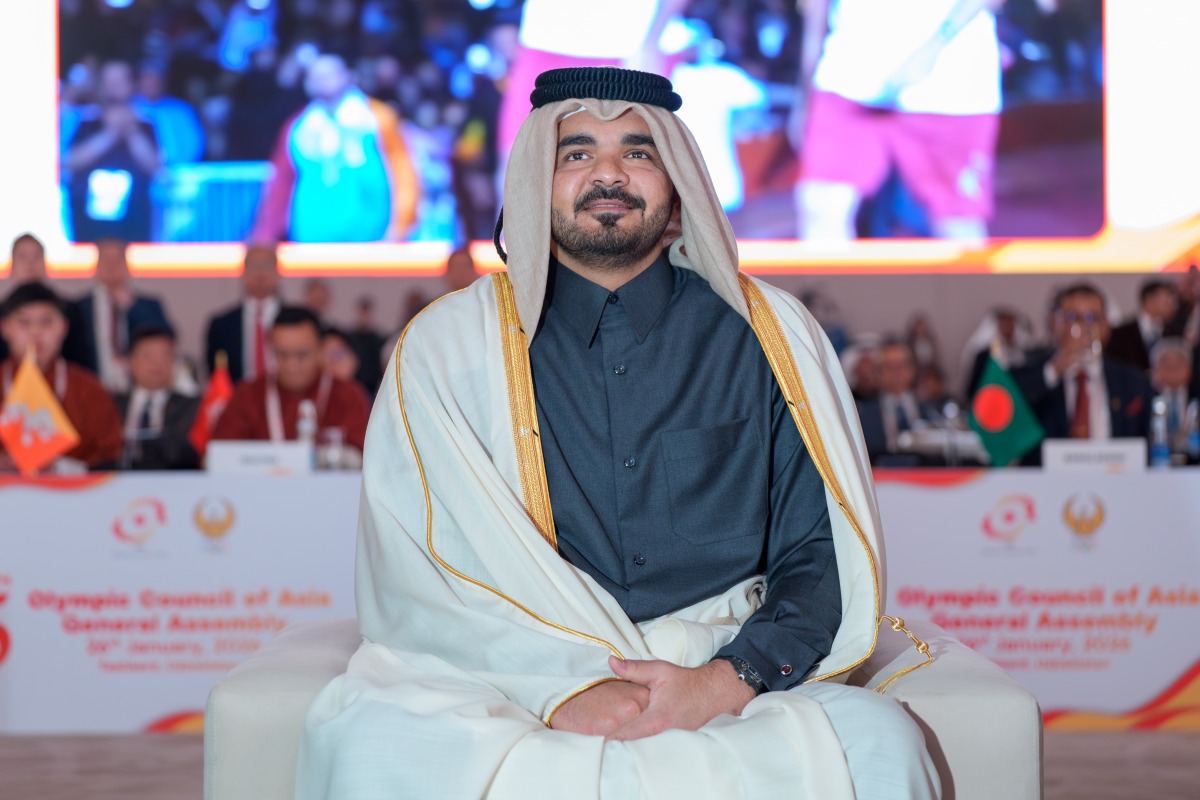

Doha, Qatar – Sheikh Joaan bin Hamad Al-Thani, President of the Qatar Olympic Committee (QOC), has been elected President of the Olympic Council of Asia (OCA) by acclamation. The election, held in Tashkent, Uzbekistan, is expected to significantly boost Asian sport and further solidify Qatar’s role as a global sporting hub. Officials from across Asia and the Gulf Cooperation Council (GCC) have voiced strong support for Sheikh Joaan’s leadership.
Sheikh Joaan’s appointment comes at a pivotal time for the OCA, as it prepares for future Asian Games and navigates the evolving landscape of international sports governance. He was the sole candidate for the position, signaling widespread confidence in his ability to lead the organization. The election process took place during the OCA’s General Assembly meeting on Wednesday.
A New Era for Asian Sport Under Sheikh Joaan
The election of Sheikh Joaan is widely seen as a testament to Qatar’s growing influence in the international sporting community. He has been a prominent figure in the Olympic Movement for years, currently serving as a member of the IOC’s Olympism 365 Commission and a Board Member of the Olympic Refuge Foundation. His experience extends to leadership roles within the Association of National Olympic Committees (ANOC), where he is Senior Vice President and Vice President for Asia.
During his tenure as President of the QOC, Qatar achieved its most successful Olympic and Paralympic Games results, including a historic first Olympic gold medal at Tokyo 2020. He also oversaw the successful bidding and execution of numerous major international sporting events hosted in Qatar, demonstrating the nation’s capacity for large-scale event management. This experience will be invaluable as the OCA plans for future competitions.
Regional Support and Confidence
Leaders from neighboring countries have expressed enthusiastic support for Sheikh Joaan’s election. Prince Fahd bin Jalawi Al-Saud, Vice President of the Saudi Olympic and Paralympic Committee (SOPC), described the outcome as a “triumph for sport across the entire Asian continent,” and highlighted the strong relationship between Qatar and Saudi Arabia. He affirmed his full confidence in Sheikh Joaan’s expertise to elevate Asian Games and other sporting events.
Sheikh Fahad Nasser Sabah Al-Ahmad Al-Sabah, President of the Kuwait Olympic Committee, echoed this sentiment, stating that Sheikh Joaan’s leadership is a “gain for the entire Asian continent.” Faris Al Mutawa, Secretary-General of the United Arab Emirates National Olympic Committee, expressed pride for GCC nations and anticipated strengthened cooperation under Sheikh Joaan’s guidance. Jibril Rajoub, President of the Palestine Olympic Committee, emphasized Qatar’s consistent support for sports development in Asia.
Mohammed Yousef Al Manaa, QOC Vice President, described the General Assembly meeting as a “historic day” that will lead to a major transformation for the OCA. He believes Sheikh Joaan’s vision will usher in a new phase of ambitious development for athletes across the continent. Dr. Thani bin Abdulrahman Al Kuwari, Second Vice President of the QOC and Vice President of the OCA for West Asia, noted the election was the culmination of a distinguished sporting career.
The election of Sheikh Joaan is also expected to foster greater collaboration between the OCA and other international sports organizations. His existing relationships within the IOC and ANOC will likely facilitate smoother communication and coordination on key initiatives. This could lead to increased investment in Asian sports programs and infrastructure.
Looking ahead, Sheikh Joaan will immediately begin outlining his strategic priorities for the OCA. A key focus will likely be on ensuring the success of the upcoming Asian Games, as well as promoting inclusivity and accessibility within Asian sports. The OCA’s next major decision will be the selection of host cities for future events, a process that will be closely watched by nations across the continent. The long-term impact of his leadership on the future of Olympic sports in Asia remains to be seen.
(With inputs from QNA)