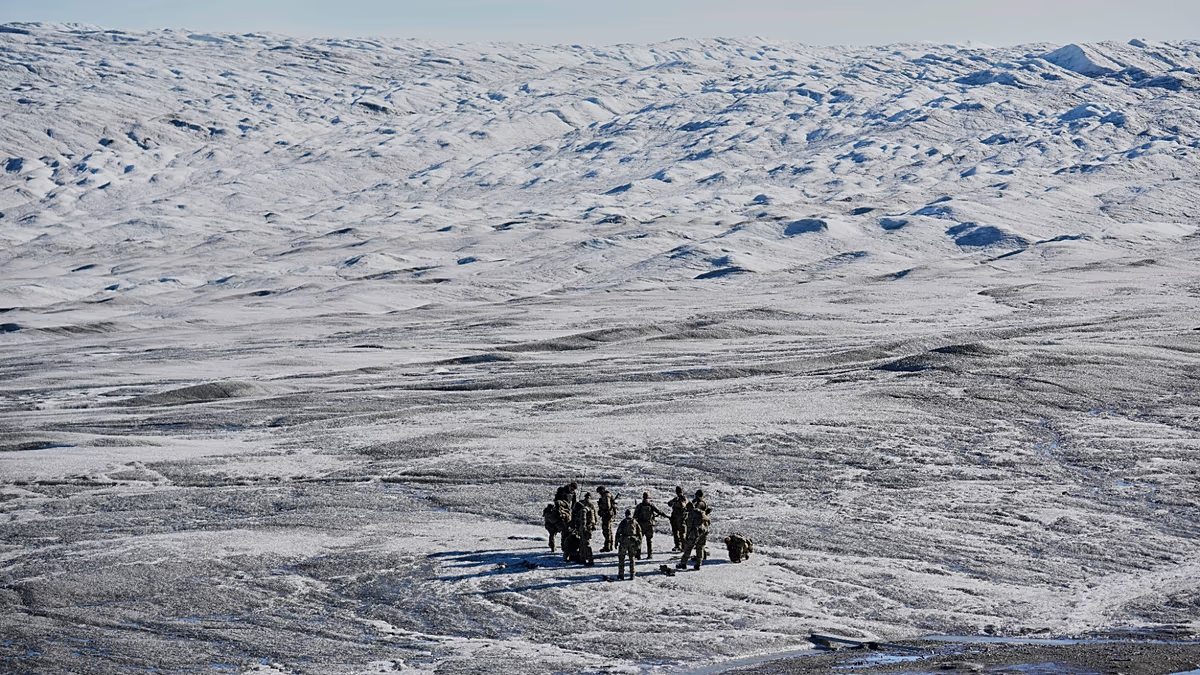

Europe is increasingly focused on securing access to rare earth minerals, vital components in green technologies and defense systems. This heightened interest, initially highlighted by geopolitical events like former President Trump’s proposal regarding Greenland, stems from a heavy reliance on foreign imports, primarily from China. The EU aims to reduce this dependency and bolster its own supply chain for these critical resources.
The need for security of supply is pressing as demand for these materials grows alongside the expansion of renewable energy and electric vehicle production. Greenland, with its substantial untapped deposits, exemplifies the strategic importance of regions containing these minerals. But Europe’s challenges extend beyond geographic access, encompassing extraction, processing, and refinement capabilities.
The Growing Importance of Rare Earth Minerals
Rare earth minerals aren’t actually rare in terms of abundance, but they are rarely found in concentrated, economically viable deposits. This makes extraction and processing complex and often environmentally challenging. These 17 elements – the lanthanides, plus scandium and yttrium – possess unique magnetic and luminescent properties.
Their applications are widespread and expanding. They are crucial in the manufacturing of permanent magnets used in wind turbines and electric vehicle motors, as well as in the production of smartphones, screens, and various defense technologies. Consequently, access to a stable supply of rare earth minerals is now considered a matter of national and economic security by many European nations.
China’s Dominance & EU Concerns
Currently, China dominates the global production of rare earth minerals, controlling an estimated 70% of the market. According to the United States Geological Survey, this dominance raises concerns about potential supply disruptions and geopolitical leverage. The EU relies on imports for almost all of its requirements, making it vulnerable to price fluctuations and political considerations in China.
This dependence became particularly stark during periods of trade tension, prompting Europe to seek alternative sources and develop its own domestic capabilities. This desire for diversification is a key driver of increased interest in potential mining operations within Europe, including in Greenland, Sweden, and Finland.
Additionally, establishing robust recycling systems for end-of-life products containing these materials is gaining traction. The European Commission has outlined strategies to recover these resources from waste streams, reducing the need for primary mining and bolstering circular economy initiatives.
European Efforts to Secure Supply
Several initiatives are underway across Europe to address the rare earth mineral supply gap. The European Raw Materials Alliance (ERMA) is a key platform fostering collaboration between industry, government, and research institutions to strengthen the EU’s raw materials value chain.
Investment is flowing into exploration and development projects for deposits within Europe. For example, the Kiruna mine in Sweden holds significant reserves of rare earth oxides, and projects are being evaluated to extract and process these materials locally. The Norwegian government is also investigating seabed mineral resources, though this is subject to ongoing environmental debate.
Meanwhile, research and development efforts are focused on reducing the reliance on traditional rare earth elements through materials innovation. Scientists are exploring alternative materials and refining processes to minimize the use of these critical resources in key technologies. The EU aims to develop a more resilient industrial strategy, reducing its dependence on single suppliers.
In contrast to focusing solely on extraction, some argue greater investment should be made in refining and processing capabilities within Europe. Currently, much of the raw material extracted even from non-Chinese mines is still sent to China for processing, limiting the true benefits of diversification.
The push for resource security also extends to partnerships with other countries, such as the United States, Canada, and Australia, who also possess significant rare earth mineral reserves. These collaborations aim to create alternative supply chains and reduce collective vulnerability.
The debate over the “price” Europe should pay to catch up centers around economic viability, environmental sustainability, and geopolitical considerations. Increased domestic production will likely involve higher costs compared to China, but it could offer greater stability and control. Balancing these factors will be crucial for a successful strategy.
As competition for these vital resources intensifies, Europe’s progress in securing its rare earth mineral supply chain will be closely watched. The outcome of current initiatives and emerging technologies will determine the continent’s ability to successfully transition to a green and digitally advanced economy.
Take our poll and share your view on how Europe should prioritize its efforts in the race for rare earth minerals.