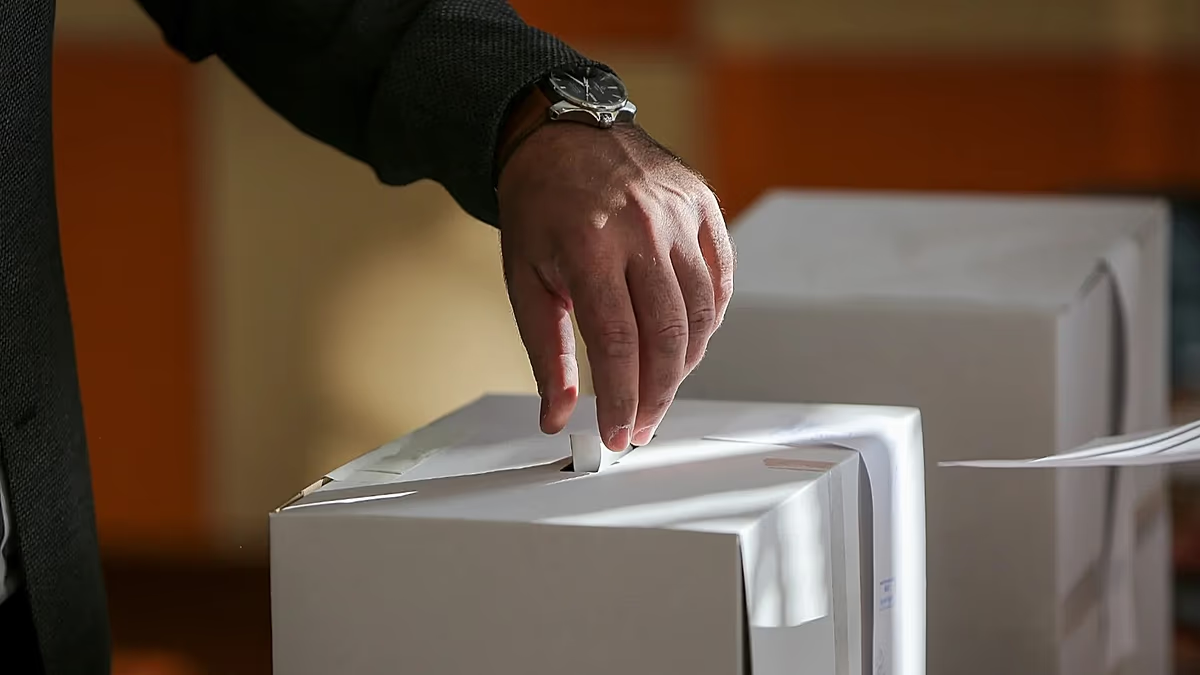

The year 2026 is poised to be a critical juncture for the European Union, with a series of high-stakes elections across the bloc occurring against a backdrop of ongoing geopolitical instability. From potential shifts in power in Hungary to crucial regional votes in major economies like Germany and France, these electoral tests will significantly shape Europe’s political landscape and its response to challenges like the war in Ukraine and rising internal divisions. The outcomes will have far-reaching implications for the EU’s future direction and its standing on the world stage.
Following a 2025 marked by political upheaval and foreign interference attempts – notably in Romania and Poland – the EU enters 2026 with a complex set of priorities. Tensions with the United States are escalating, while the need for a unified approach to supporting Ukraine remains a key concern. These upcoming elections will serve as a barometer of public sentiment and a potential catalyst for change within the Union.
Hungary: Will the Orbán Era End?
Perhaps the most closely watched election will be in Hungary, where Viktor Orbán is seeking a sixth term as prime minister. Orbán has been in power continuously since 2010, making him the longest-serving leader in the EU. However, he now faces a formidable challenge from Péter Magyar, a former insider of Orbán’s Fidesz party who has emerged as a leading opposition figure.
While both Fidesz and Magyar’s Tisza party share similar positions on social issues, Magyar is campaigning on a platform of economic improvement and a more constructive relationship with Brussels. He argues that Hungary’s purchasing power is among the lowest in Europe and seeks to unlock EU funding currently withheld due to concerns over the rule of law. Recent polls suggest Magyar’s Tisza party holds a 13-point lead, signaling a potential shift in Hungarian politics.
Orbán’s continued leadership has been a cornerstone of the national-conservative movement within Europe. His skepticism towards the EU, particularly on issues of migration and democratic standards, has often put him at odds with mainstream European policies. A change in government in Hungary could significantly alter the balance of power within the European Council and impact the EU’s approach to Ukraine.
Key Elections in Major EU Powers
Beyond Hungary, several other EU member states will hold important elections in 2026. Spain, Germany, France, and Italy will all participate in regional and municipal votes that will provide a crucial temperature check on the political mood within these nations.
In Spain, Prime Minister Pedro Sánchez’s socialist PSOE party is facing headwinds after a disappointing regional election result in Extremadura and ongoing struggles to pass a national budget. Upcoming regional elections in Aragon, Castilla y León, and Andalusia will be pivotal in gauging the PSOE’s strength and the potential for a shift towards the centre-right People’s Party (PP). The question remains whether the PP can secure a majority without relying on the support of the far-right Vox party.
France will also hold municipal elections in March, serving as a precursor to the 2027 presidential election. The country is currently grappling with political instability and a surge in support for the far-right National Rally (RN), despite its leader, Marine Le Pen, being barred from standing for office.
Italy will see municipal elections in several key cities, including Rome and Milan, alongside a referendum on a constitutional reform of the justice system. These votes will be seen as a test of public support for Prime Minister Giorgia Meloni’s coalition government ahead of the 2027 general election.
Germany will hold regional elections in Baden-Württemberg, Rhineland-Palatinate, Saxony-Anhalt, Berlin, and Mecklenburg-Vorpommern. These votes will assess the popularity of Chancellor Friedrich Merz and measure the continued rise of the far right, particularly in the former East Germany.
Other Notable Elections and Global Influences
Sweden is preparing for a general election in September, with Prime Minister Ulf Kristersson expressing concern over the “serious security situation” and the threat of foreign interference. The Swedish defence ministry has bolstered its cybersecurity capabilities in response to potential meddling, similar to that experienced in Germany.
Denmark will also hold a national vote after losing Copenhagen in recent local elections. Analysts suggest that Prime Minister Mette Frederiksen’s tough stance on immigration may not have resonated with voters, and her position could be at risk.
Bulgaria will adopt the euro in January 2026, but remains politically unstable following the resignation of its government and subsequent protests. Parliamentary and presidential elections are expected to address the ongoing political deadlock.
Finally, elections in countries outside the EU, such as the United States, Brazil, Israel, and Russia, will also have implications for the bloc. The US Congressional midterm elections could influence the direction of transatlantic relations, while the Brazilian presidential election will impact the future of the Mercosur trade agreement.
As 2026 unfolds, the EU will navigate a complex political landscape shaped by these crucial elections. The outcomes will determine the bloc’s ability to address pressing challenges and maintain its influence on the global stage. Stay tuned to Euronews for continued coverage of these pivotal events.