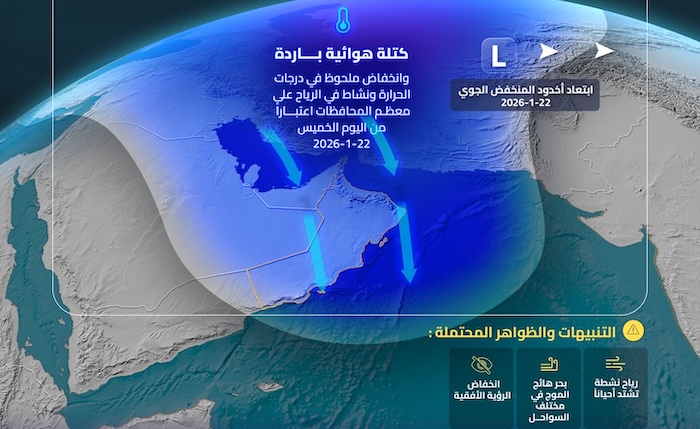

Muscat, Oman is bracing for a significant shift in weather conditions as a cold air mass is forecast to impact the Sultanate starting Thursday, January 22, 2026. The Civil Aviation Authority (CAA) has issued warnings about a noticeable temperature drop and increased wind activity across most governorates, prompting residents and visitors to prepare for cooler weather. This cold snap in Oman is expected to last for several days, potentially affecting daily life and requiring extra precautions.
Understanding the Approaching Cold Air Mass
The CAA has confirmed that the impending weather change is due to the influence of a strong cold air mass moving over the region. This system is also interacting with changes in atmospheric pressure, further contributing to the unstable conditions. Data collected from various Omani weather stations on the morning of January 21st already indicates strengthening winds, a precursor to the full impact of the cold front.
Current Wind Conditions
As of 10:00 a.m. local time, several locations have reported significant wind gusts. Muscat and Fahud recorded winds reaching 26 knots, while Ibri experienced gusts of 31 knots. Other areas reporting strong winds include Haima and Jabal Harim at 21 knots, and Masirah at 23 knots. These figures demonstrate the widespread nature of the increasing wind activity and highlight the potential for disruption.
Impacts of the Cold Weather on Oman
The primary impact of this weather system will be a substantial decrease in temperatures across Oman. While specific temperature forecasts vary by governorate, residents can generally expect cooler days and significantly colder nights. This Oman weather forecast also includes warnings about secondary effects related to the cold air and strong winds.
One major concern is reduced horizontal visibility, particularly in areas prone to dust storms. The strong winds are likely to stir up dust and sand, creating hazardous conditions for drivers and potentially disrupting air travel. Coastal areas are also expected to experience rough sea conditions, making sea travel dangerous.
Additionally, the CAA advises that the strong winds could pose a risk to infrastructure, such as power lines and trees. Residents are encouraged to secure loose objects and report any potential hazards to the authorities. The combination of low temperatures and wind chill will make it feel even colder, increasing the risk of hypothermia for those exposed to the elements for extended periods.
Safety Precautions and Travel Advice
Given the potential for hazardous conditions, authorities are urging the public to exercise extreme caution. Motorists are advised to reduce speed, increase following distances, and be prepared for sudden gusts of wind. They should also ensure their vehicles are in good working order, with functioning headlights and windshield wipers. This winter weather in Muscat requires preparation.
Sea-goers are strongly advised to avoid venturing out to sea during the period of rough conditions. Those already at sea should seek safe harbor immediately. It’s crucial to heed all warnings issued by the Coast Guard and other maritime authorities.
For individuals working outdoors, it is essential to dress warmly in layers, take frequent breaks to warm up, and stay hydrated. The elderly and those with pre-existing health conditions are particularly vulnerable to the cold and should take extra precautions.
Staying Updated with the Latest Weather Information
The National Multi-Hazard Early Warning Centre is actively monitoring the development of the cold air mass and will continue to provide updates as the situation evolves. It is vital for the public to stay informed about the latest weather forecasts and warnings.
Reliable sources of information include the CAA’s official website and social media channels, as well as local news outlets. Regularly checking these sources will allow residents to make informed decisions and take appropriate measures to protect themselves and their property. The CAA emphasizes the importance of relying on official sources and avoiding the spread of misinformation regarding the Muscat cold weather.
Furthermore, understanding the nuances of Oman’s climate is crucial for residents. While generally warm, Oman does experience occasional cold snaps, particularly during the winter months. Being prepared for these events can significantly mitigate their impact.
Conclusion
The approaching cold air mass promises a significant change in weather for Muscat and the wider Sultanate of Oman. With a noticeable drop in temperatures and increased wind activity expected from January 22, 2026, it’s essential for residents and visitors to stay informed, take necessary precautions, and prioritize safety. By following the guidance of the Civil Aviation Authority and staying updated with the latest forecasts, everyone can navigate this period of cooler weather responsibly. Remember to check official sources for the most current information and be prepared for potentially hazardous conditions.