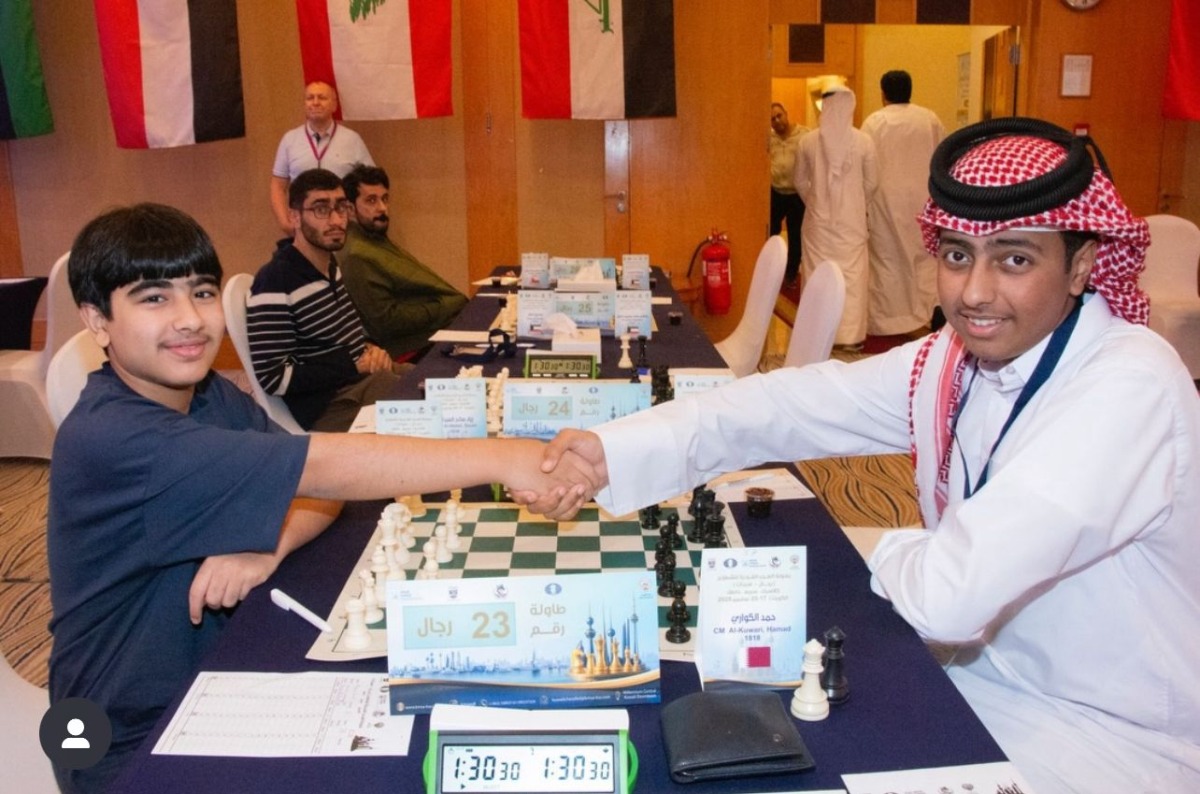

Doha, Qatar – The Qatari national chess team has commenced its participation in the Arab Chess Championship, currently underway in Kuwait. The tournament, which features 87 players from 18 Arab nations, began with the first two rounds of classical play and continues through November 25th. This event is a key opportunity for Qatari players to gain international rating points and experience against top Arab competition.
The championship, organized by the Arab Chess Federation, draws competitors from across the Arab world to vie for titles and bolster their rankings. Both men’s and women’s teams from Qatar are represented, competing not only in the classical format but also in rapid and blitz events scheduled to follow. The presence of established players signifies the tournament’s growing importance within the regional chess landscape.
Qatar’s Performance in the Early Rounds of the Arab Chess Championship
In the men’s competition, Hussein Aziz experienced a mixed start. He fell in his opening match against Syria’s Aghid Miro, but demonstrated resilience with a subsequent victory over Kuwait’s Bader Al Hajri, earning his first point in the tournament. Aziz is now preparing to face Emirati player Mohammed Saeed in the upcoming third round.
Meanwhile, Hamad Al Kuwari also faced an initial setback, losing to Morocco’s Yasser Hajji. However, he quickly recovered, securing a win against Kuwaiti Hussein Suleiman in the second round. Al Kuwari is slated to compete against Iraq’s Ali Laith Al Othman as the classical rounds progress.
The women’s side saw Qatari player Ghada Al Khalifi facing challenging opponents. She lost both of her initial matches, first to Egypt’s Jana Zaki and then to Morocco’s Khadija Al Mutairi. Al Khalifi’s next opponent will be Oman’s Anah Al Issaie in the third round.
Significance of Regional Competition
Hamad Al Tamimi, Executive Director of the Qatar Chess Federation, emphasized the strategic value of participating in the chess championship. According to statements to the Qatar News Agency (QNA), the tournament offers a crucial platform for Qatari players looking to improve their international rankings and gain exposure to diverse playing styles. The competition’s high technical level and robust organization contribute to a competitive environment beneficial for player development.
The Arab Chess Championship has evolved into a prominent fixture on the Arab Chess Federation’s calendar due to its increasing technical sophistication. Additionally, the awarding of international titles to the winners elevates its prestige and attracts a higher caliber of players. This year’s participation reflects Qatar’s commitment to fostering chess talent and enhancing its presence in international competitions.
Beyond the classical format, Qatar intends to actively contend in the rapid and blitz portions of the tournament. Al Tamimi expressed optimism regarding the team’s potential to achieve positive results across all formats and to gather invaluable experience from competing against diverse chess schools of thought. He believes this exposure will be instrumental in refining their skills and strategies.
The performance of Arab nations in international chess events has been gradually improving, with players like Bassem Amin of Egypt and Salem Saleh of the UAE achieving notable successes. This trend has led to increased investment in chess programs and a greater emphasis on cultivating young talent throughout the region.
The remaining rounds of the classical competition, as well as the subsequent rapid and blitz events, will determine the final standings and medalists. While early results present both challenges and opportunities for the Qatari team, their continued participation offers valuable competitive experience. The tournament is scheduled to conclude on November 25th, and observers will be watching to see if Qatari players can capitalize on their experience and secure podium finishes in the remaining events.
It remains to be seen how the Qatari team will perform against the stronger contenders in the later stages of the tournament, particularly in the faster time control formats. The outcomes could potentially influence team selection for future international events and contribute to the development of a long-term strategy for Qatari chess.