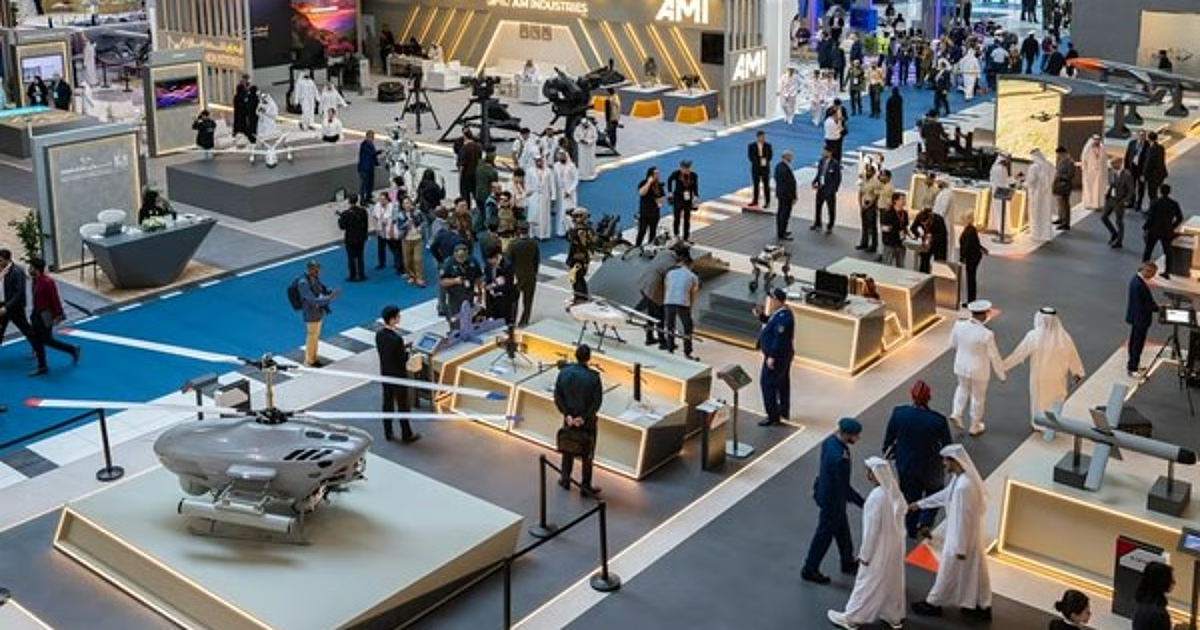

The UAE’s defense sector is experiencing significant growth, underscored by recent major contract awards to EDGE Group totaling over Dh1.5 billion. These agreements, announced at a recent defense exhibition, focus on the development and procurement of advanced autonomous systems and aircraft, highlighting the nation’s commitment to bolstering its national security capabilities and becoming a leader in defense technology. The contracts signal continued investment in the UAE’s domestic defense industry.
The deals include a Dh10.556 million contract for the development of the NIMR autonomous vehicle, a Dh45.140 million agreement for QX unmanned aerial systems, and a substantial Dh1.396126 billion procurement of ANAVIA HT-750 aircraft. A separate Dh8 million contract was also signed with Houbara Defence and Security for remotely operated vehicles used in explosive ordnance disposal (EOD). Further announcements are anticipated, according to spokespersons, promising additional investments in the sector.
EDGE Group Expands Capabilities in Defense Technology
EDGE Group, established in 2019, is a leading advanced technology group for defense and security, based in Abu Dhabi. It aims to establish the UAE as a global leader in advanced technologies and to reduce reliance on foreign suppliers. These recent contracts are a direct reflection of that ambition, showcasing the company’s expanding portfolio and increasing role in national defense initiatives.
Autonomous Systems Development
The contract for the NIMR autonomous vehicle represents a key step in the development of unmanned ground vehicles within the UAE. Autonomous vehicles are increasingly seen as vital for reducing risk to personnel in dangerous environments and enhancing operational efficiency. The development will likely incorporate artificial intelligence and machine learning to improve navigation and decision-making capabilities.
Unmanned Aerial Systems Advancement
The QX unmanned aerial systems contract further demonstrates the UAE’s focus on aerial surveillance and reconnaissance. Unmanned aerial vehicles (UAVs) offer cost-effective and versatile solutions for a range of applications, including border security, critical infrastructure monitoring, and disaster response. The investment in QX systems suggests a desire for advanced capabilities in this domain, potentially including longer flight times and improved sensor technology.
Strengthening Air Assets
The procurement of ANAVIA HT-750 aircraft signifies a commitment to modernizing and expanding the UAE’s air fleet. While details regarding the specific role of these aircraft are limited, the HT-750 is a versatile platform often used for training and light attack missions. This acquisition contributes to the overall strengthening of the UAE’s air defense capabilities.
The contract with Houbara Defence and Security for remotely operated vehicles (ROVs) for EOD highlights the importance of safeguarding personnel involved in handling explosive threats. These ROVs allow for the safe and remote investigation and disposal of unexploded ordnance, minimizing risk to bomb disposal teams. This is a critical component of maintaining security in a region with complex geopolitical challenges.
Artificial intelligence (AI) is emerging as a central theme in the modernization of the UAE’s defense sector. The development of autonomous systems, like the NIMR vehicle, relies heavily on AI algorithms for navigation, object recognition, and decision-making. Furthermore, AI is being integrated into data analysis and intelligence gathering to provide a more comprehensive understanding of potential threats. This focus on AI aligns with the UAE’s broader national strategy to become a global hub for innovation in this field.
The UAE has been steadily increasing its investment in its domestic defense industry as part of its “Make it in the Emirates” initiative. This strategy aims to diversify the economy and reduce reliance on oil revenues by fostering the growth of high-tech manufacturing sectors. The EDGE Group is a key pillar of this initiative, and these contracts demonstrate the success of the program in attracting investment and developing local capabilities. The country is also actively seeking partnerships with international defense contractors to transfer technology and expertise.
Analysts suggest that these investments are driven by regional security concerns and the need to maintain a credible deterrent. The UAE faces a complex security environment, with ongoing tensions in the Gulf region and the presence of non-state actors. Strengthening its defense capabilities is therefore seen as essential for protecting its national interests and ensuring regional stability. The focus on advanced military equipment reflects a desire to maintain a technological edge.
Further announcements are expected on the final day of the exhibition, potentially revealing additional contracts and partnerships. The long-term impact of these investments will depend on the successful implementation of the projects and the ability of the UAE to continue attracting skilled personnel and fostering innovation in the defense sector. The ongoing geopolitical situation in the region will also play a significant role in shaping future defense priorities and spending.