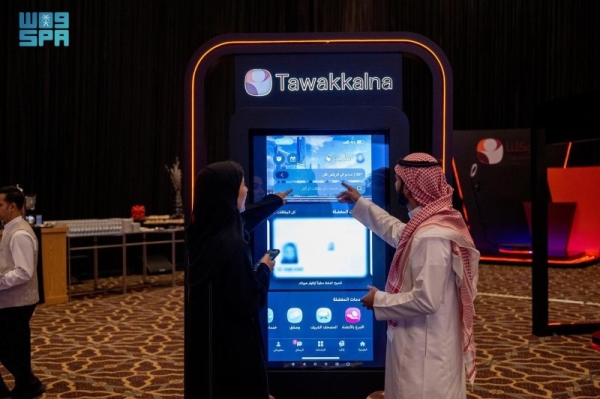

Saudi Arabia is continuing to expand the capabilities of its Tawakkalna application, now offering over 1,100 services and leveraging artificial intelligence (AI) to improve connectivity and user experience. Announced at the Google Cloud Saudi Summit in Riyadh on Monday, the ongoing development aims to align with the nation’s Vision 2030 goals for a more advanced digital infrastructure. The app currently serves over 34 million daily users, including citizens, residents, and visitors.
Eng. Saleh Musaibah, Assistant Director of the National Information Center for the Tawakkalna System at the Saudi Data and Artificial Intelligence Authority (SDAIA), detailed the platform’s evolution and its growing role in streamlining government and private sector interactions. The summit, held in Riyadh, gathered technology leaders and experts from across the globe to discuss cloud computing and digital innovation. The expansion highlights Saudi Arabia’s commitment to digital government initiatives and overall technological advancement.
The Expansion of Tawakkalna and the Role of AI
The Tawakkalna application initially gained prominence as a vital tool during the COVID-19 pandemic for contact tracing and managing public access to facilities. However, its purpose has dramatically evolved since then. It is now positioned as a unified national platform, sometimes referred to as a “super app,” integrating a wide range of services into a single, accessible interface.
From Pandemic Tool to National Platform
Beyond its initial health-focused applications, Tawakkalna now handles tasks such as appointment scheduling, document verification, payment processing, and access to various government programs. This diversification reflects a broader national strategy to move away from fragmented digital services toward a more integrated and efficient system. According to SDAIA, this streamlining offers a considerable advantage for citizens and residents alike.
Leveraging Advanced Technologies
Musaibah emphasized the critical role of AI in this transformation. The integration of AI technologies allows for more personalized and responsive services, improved data analysis, and enhanced security measures. Specifically, AI is being used to optimize service delivery, predict user needs, and automate routine tasks. This focus on advanced technology supports the Kingdom’s ambitions in the digital economy.
The adoption of cloud infrastructure, as showcased at the Google Cloud Summit, is also a key enabler. Cloud computing provides the scalability and flexibility needed to support a rapidly growing user base and an expanding suite of services. This allows the Tawakkalna platform to handle peak loads efficiently and deliver consistent performance.
The SDAIA has been actively pursuing partnerships with leading technology companies, including Google, to accelerate its digital transformation efforts. Collaboration allows the agency to tap into global expertise and best practices in areas like AI, data analytics, and cybersecurity. These efforts are consistent with Saudi Arabia’s broader strategy of attracting foreign investment in the technology sector.
This shift towards a “super app” model isn’t unique to Saudi Arabia; similar developments are occurring globally as governments seek to improve citizen engagement and streamline public services. However, the scale and speed of Tawakkalna’s expansion appear to be particularly noteworthy. The application’s success provides a template for other nations pursuing comprehensive digital government initiatives.
The platform’s development also addresses considerations of digital identity and data privacy. Musaibah highlighted the importance of robust security protocols to protect user information, a critical element for building trust in digital services. The application incorporates multi-factor authentication and data encryption to mitigate potential risks.
While the convenience of a unified platform is clear, some analysts have noted potential challenges related to vendor lock-in and the concentration of sensitive data. Maintaining flexibility and interoperability is essential as the Tawakkalna ecosystem continues to grow and integrate with other systems. According to industry reports, maintaining open standards will be important.
The ongoing refinement of the user interface and user experience (UI/UX) is also a high priority. The SDAIA is actively soliciting user feedback and employing data-driven design principles to ensure the application remains intuitive and accessible to all segments of the population. Investing in usability is critical for driving adoption and maximizing the platform’s impact. This commitment to user experience is considered a distinguishing feature of the platform.
Looking ahead, the SDAIA is expected to announce further expansions of the Tawakkalna platform in the coming months, focusing on integrating more specialized services and enhancing the AI capabilities. The agency is also likely to address evolving cybersecurity threats and prioritize data privacy concerns. It remains to be seen how quickly new services will be added, and how effectively challenges related to interoperability can be addressed, but the trajectory suggests continued significant development.
The next steps will likely focus on deepening the integration with the Kingdom’s wider digital infrastructure and exploring opportunities for cross-border services. Monitoring user adoption rates and assessing the overall effectiveness of the platform will be crucial for guiding future development and ensuring it continues to meet the needs of Saudi Arabia’s population.