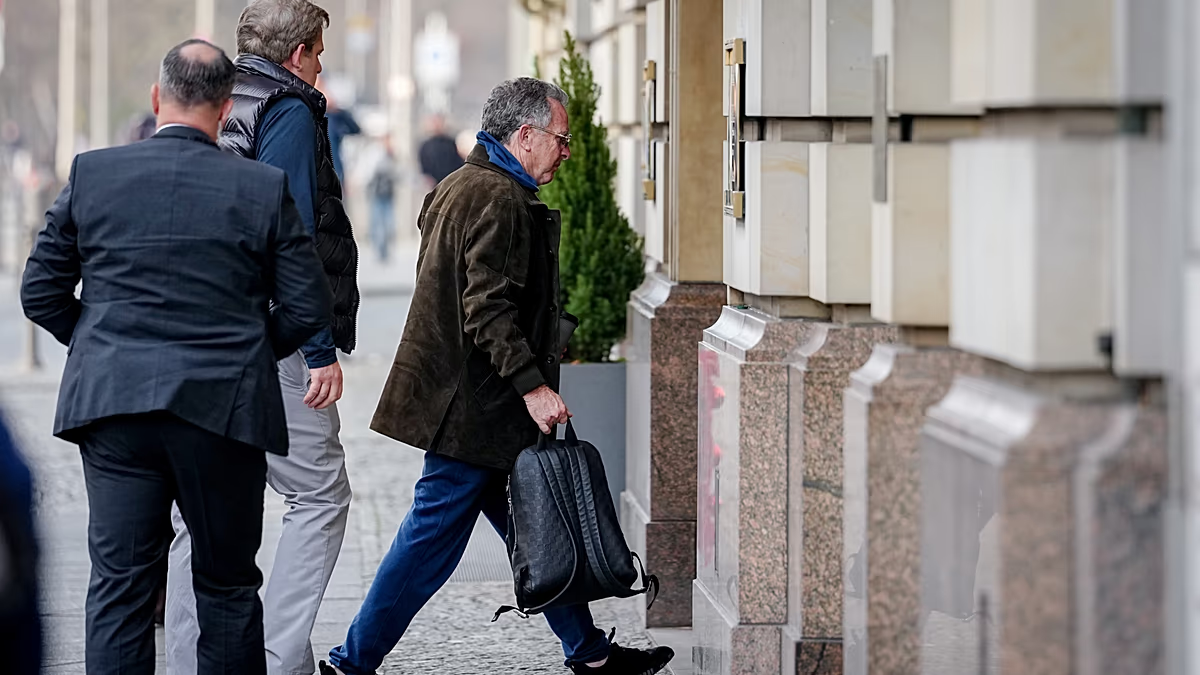

Negotiations for a potential end to the Ukraine war resumed in Berlin on Sunday, with Ukrainian President Volodymyr Zelenskyy and US envoys meeting amidst growing pressure for concessions from both sides. The talks, involving US President Donald Trump’s special envoy Steve Witkoff and son-in-law Jared Kushner, center on a US peace plan and Ukraine’s future security guarantees. Zelenskyy signaled a willingness to consider alternatives to NATO membership, but stressed the need for robust security assurances.
The meeting comes as Washington attempts to mediate a resolution, while Trump pushes for a swift conclusion to the conflict. Significant obstacles remain, particularly regarding control of the Donetsk region and the shape of security guarantees for Ukraine. The situation is further complicated by Russia’s firm stance on key demands.
Ukraine Peace Talks Focus on Security Guarantees
President Zelenskyy indicated a shift in position regarding Ukraine’s long-held aspiration to join NATO, acknowledging that full membership doesn’t currently have unanimous support from allied nations. He proposed exploring comparable security guarantees from the European Union and the United States, specifically referencing Article 5-style mutual defense commitments. “We are talking about bilateral security guarantees between Ukraine and the US – namely Article 5-like guarantees – as well as security guarantees from our European partners,” Zelenskyy stated.
On Monday, Zelenskyy is scheduled to meet with German Chancellor Friedrich Merz and other European leaders, as well as representatives from NATO. He confirmed he is awaiting a response from the US regarding Ukraine’s latest proposals for a peace plan. The US has been actively involved in mediation efforts for months, but faces increasing frustration with the lack of progress.
Russian Demands and Obstacles to Peace
Meanwhile, Russia continues to insist on Ukraine’s withdrawal from the occupied parts of the Donetsk region and a permanent renunciation of any plans to join NATO. These demands represent core conditions for Russia to consider a peace agreement. According to Vladimir Putin’s foreign policy advisor, Yuri Ushakov, Russian security forces will remain in parts of the Donbas region even if a demilitarized zone is established.
Ushakov warned that reaching a compromise could be a lengthy process, claiming that initial US proposals, which had incorporated Russian demands, were subsequently weakened by changes suggested by Ukraine and its European allies. He expressed skepticism about the constructive nature of contributions from Ukraine and European nations. The territorial issue was reportedly a key topic during recent discussions between Witkoff, Kushner, and Putin.
Additionally, Ushakov stated that Moscow has “very strong objections” to the current direction of the negotiations. He indicated that the Americans are aware of Russia’s position on the matter.
Europe’s Shifting Security Landscape
European leaders are also reassessing their security arrangements in light of the ongoing conflict. Friedrich Merz observed that the era of “Pax Americana” is waning for Europe and Germany. He cautioned that Putin’s ultimate goal may be a fundamental reshaping of European borders and a restoration of the former Soviet Union. “If Ukraine falls, he will not stop,” Merz warned.
Putin, however, has consistently denied any intentions of reviving the Soviet Union or attacking European allies. The situation highlights the growing complexity of European security and the need for a coordinated response to Russian aggression. The conflict in Ukraine has prompted a broader discussion about defense spending and collective security within the EU and NATO.
As talks continue, the key question remains whether a compromise can be reached that addresses the security concerns of both Ukraine and Russia. The coming days will be crucial in determining the future trajectory of the Ukraine war and the broader geopolitical landscape. Observers will be closely watching for any signs of flexibility from both sides and the potential for a breakthrough in negotiations. For more information on the ongoing conflict, you can visit Reuters’ Europe coverage.