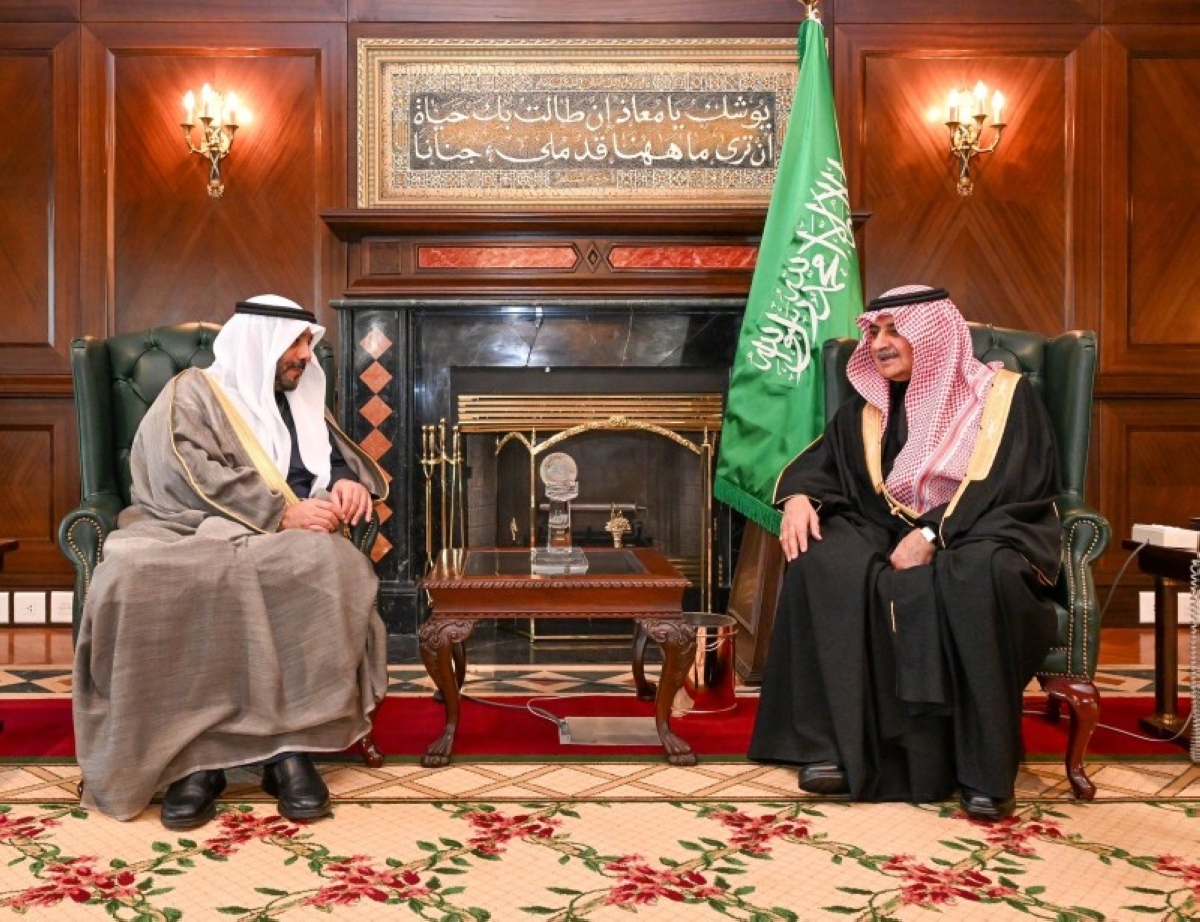

TABUK, SAUDI ARABIA – Prince Fahd bin Sultan bin Abdulaziz, the emir of Tabuk, received Kuwait’s Ambassador to Saudi Arabia, Sheikh Sabah Nasser Sabah Al-Ahmad Al-Sabah, and a delegation on Tuesday. The meeting, held at the governorate headquarters, focused on strengthening Saudi-Kuwait relations and exploring opportunities for increased collaboration between the two nations. Discussions encompassed a range of mutual interests and regional developments.
The visit underscores the ongoing diplomatic efforts to foster closer ties between Saudi Arabia and Kuwait, key partners in the Gulf Cooperation Council (GCC). Sheikh Sabah Al-Sabah’s delegation arrived in Tabuk on Tuesday and was warmly welcomed by Prince Fahd bin Sultan, signaling the importance Saudi Arabia places on its relationship with Kuwait. The meeting took place amidst broader regional stability initiatives.
Strengthening Saudi-Kuwait Relations Through Dialogue
The primary focus of the meeting was to reaffirm the strong fraternal bonds between Saudi Arabia and Kuwait. Both Prince Fahd bin Sultan and Sheikh Sabah Al-Sabah emphasized the historical ties and shared interests that underpin their countries’ cooperation. This commitment to collaboration is particularly significant given the complex geopolitical landscape of the Middle East.
Areas of Cooperation Discussed
While specific details of the discussions were not publicly released, sources indicate that several key areas of cooperation were reviewed. These likely included economic partnerships, particularly in the energy sector, given both nations’ prominent roles as oil producers. Additionally, discussions likely touched upon security cooperation and joint efforts to address regional challenges.
The two sides also reportedly exchanged views on issues of mutual interest, potentially encompassing regional security concerns, trade facilitation, and investment opportunities. According to diplomatic sources, the meeting provided a platform for open and frank dialogue on matters of importance to both countries. This type of direct communication is crucial for maintaining stability and addressing potential misunderstandings.
Sheikh Sabah Al-Sabah expressed his gratitude for the warm reception and hospitality extended by Prince Fahd bin Sultan. He also noted the significant developmental progress he observed throughout the Tabuk region, highlighting advancements in infrastructure, healthcare, and education. This observation suggests Kuwait’s potential interest in future investment and collaboration within Tabuk Province.
The Tabuk region, located in northwestern Saudi Arabia, is undergoing significant economic diversification as part of the Kingdom’s Vision 2030 plan. This plan aims to reduce Saudi Arabia’s reliance on oil and develop a more sustainable and diversified economy. The region’s strategic location and natural resources make it an attractive destination for foreign investment, including from Kuwait.
Meanwhile, Kuwait has been actively pursuing its own economic diversification strategies, focusing on sectors such as tourism, finance, and logistics. The potential for synergy between these initiatives was likely a topic of discussion during the meeting. Increased bilateral trade could benefit both economies.
However, regional geopolitical factors continue to influence the dynamics between Saudi Arabia and Kuwait. The ongoing conflicts in Yemen and Syria, as well as tensions with Iran, require close coordination and cooperation between GCC member states. Maintaining a unified front is seen as essential for safeguarding regional stability.
In contrast to some regional relationships, Saudi-Kuwait ties have historically been strong and characterized by mutual respect and understanding. This foundation of trust allows for open dialogue and effective collaboration on a wide range of issues. The recent meeting in Tabuk reinforces this positive trajectory.
The visit also comes at a time when both countries are navigating the global economic challenges posed by fluctuating oil prices and the COVID-19 pandemic. Strengthening economic ties and exploring new avenues for cooperation are seen as crucial for mitigating these challenges. Further economic development is a shared goal.
Looking ahead, further discussions are expected to take place between Saudi and Kuwaiti officials to explore specific areas of collaboration identified during the meeting. A joint committee may be formed to oversee the implementation of any agreements reached. The timeline for these follow-up actions remains uncertain, dependent on ongoing diplomatic efforts and internal approvals within both governments. Observers will be watching for concrete announcements regarding investment projects or new trade agreements in the coming months, as well as continued efforts to bolster regional stability.