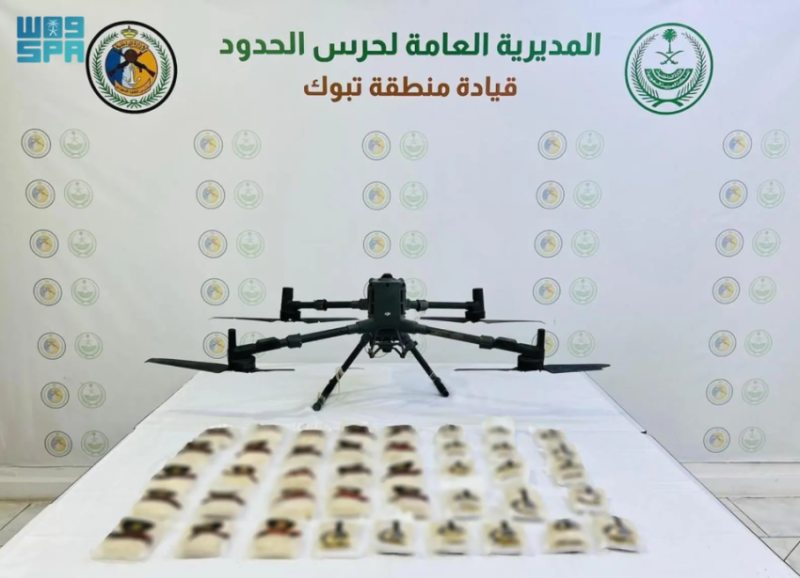

Saudi Arabian border guards in the Tabuk region recently intercepted a significant drug smuggling operation utilizing an unmanned aerial vehicle (UAV), commonly known as a drone. The attempt to introduce 41,000 amphetamine pills into the Kingdom was thwarted by coastal patrol teams operating in the Haql sector. The incident highlights a growing trend of utilizing advanced technology for illicit activities along Saudi Arabia’s extensive borders.
The seizure occurred in the northwestern Tabuk region, a coastal area bordering the Red Sea, and represents a notable escalation in smuggling techniques. Authorities confirmed the initial legal procedures have been completed and the recovered narcotics have been turned over to the relevant agencies for further investigation and disposal. The incident underscores the ongoing efforts of Saudi security forces to combat the flow of illegal drugs into the country.
The Rise of Drone-Based Drug Smuggling in Saudi Arabia
This latest operation brings into focus the increasing sophistication of groups attempting to smuggle narcotics into Saudi Arabia. Law enforcement agencies have observed a growing reliance on drones for transporting contraband, bypassing traditional border controls. This approach presents unique challenges for detection and interception, prompting adaptations in surveillance strategies.
The use of drones for smuggling isn’t isolated to the Tabuk region. Reports indicate similar attempts have been detected in other areas, including along the southern border with Yemen. The relative ease of access to drone technology and the ability to carry payloads over difficult terrain are seen as key factors driving this trend.
Challenges to Border Security
Traditional border security measures, while robust, are designed to counter land and sea-based smuggling. Detecting small, low-flying drones requires specialized equipment and trained personnel. According to security analysts, the Kingdom is investing in counter-drone technology, including radar systems and electronic warfare capabilities, to address this evolving threat.
The remote and often sparsely populated areas along Saudi Arabia’s borders further complicate detection efforts. Drones can exploit these vulnerabilities, making it difficult to track and intercept them before they reach their intended destination. This necessitates a layered approach to security, combining physical patrols with technological surveillance.
The amphetamine pills seized represent a substantial quantity of illicit substances. Saudi Arabia maintains a strict zero-tolerance policy towards drugs, with severe penalties for possession, trafficking, and consumption. This policy is driven by concerns about public health and national security, as well as religious and cultural values.
The Saudi government has been actively working to disrupt drug networks both domestically and internationally. Cooperation with neighboring countries and international law enforcement organizations is considered crucial in tackling the transnational nature of narcotics trafficking. These efforts include intelligence sharing, joint operations, and capacity building programs.
The General Directorate of Narcotic Control has repeatedly urged citizens and residents to report any suspicious activity related to drugs. Authorities provided multiple channels for reporting, including the 911 emergency number in major regions, 999 and 994 in other areas, a dedicated reporting hotline 995, and an email address ([email protected]). The security sources emphasized that all reports are handled with complete confidentiality.
This commitment to confidentiality is intended to encourage public participation in combating drug crime. The Directorate recognizes that community involvement is vital for identifying and disrupting smuggling operations. Additionally, the government has implemented public awareness campaigns to educate citizens about the dangers of drug abuse and the importance of reporting suspicious behavior.
The incident also raises questions about the origin of the drugs and the routes used by smugglers. While authorities have not released specific details about the source, the region’s proximity to major drug-producing areas is a significant factor. The investigation will likely focus on identifying the individuals involved in the smuggling attempt and tracing the supply chain back to its origin. Border control is a key component of this investigation.
The use of drones for illegal substance transport is not unique to Saudi Arabia; it’s a growing global trend. Similar cases have been reported in other countries, including those bordering conflict zones or areas with significant drug production. This emphasizes the need for international cooperation in developing effective counter-drone strategies.
Looking ahead, Saudi authorities are expected to continue enhancing their border security capabilities, particularly in the realm of drone detection and interception. Further investment in technology and training of personnel will be critical in countering this evolving threat. The results of the current investigation into the Tabuk smuggling attempt are anticipated within the coming weeks, potentially revealing further insights into the methods and networks employed by traffickers. The sustained commitment of Saudi Arabia to fighting drug trafficking will remain a high priority.
The Kingdom will likely continue to share intelligence with international partners to address the broader issue of regional drug supply and demand.