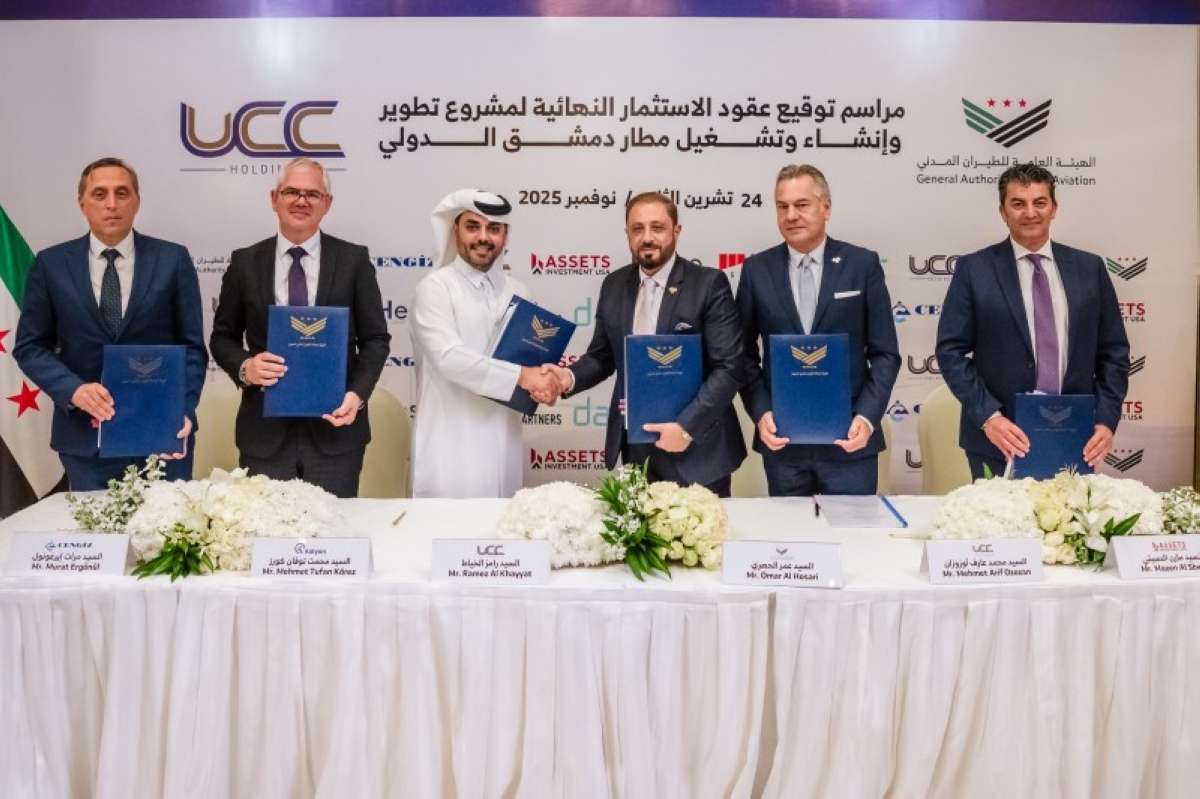

Damascus International Airport is set for a major overhaul following the signing of a $4 billion concession agreement with an international consortium led by UCC Holding. The deal, representing the largest foreign investment in Syria’s history, aims to modernize and expand the airport, significantly increasing its capacity and restoring its role as a regional air travel hub. Implementation has already begun, with development work on Terminal 2 underway.
The consortium includes participation from Cengiz İnşaat and Kalyon İnşaat of Turkey, and Assets Investments of the United States. The Syrian General Authority of Civil Aviation finalized the contracts, signaling a commitment to rebuilding the nation’s infrastructure after years of conflict, and bolstering the Damascus Airport development.
Revitalizing Syria’s Air Gateway: The Damascus Airport Project
The project’s primary goal is to elevate Damascus Airport to a modern facility capable of handling 31 million passengers annually. This expansion is seen as critical for strengthening the Syrian economy, opening up employment opportunities and attracting further foreign investment. According to officials, the investment reflects growing international confidence in Syria’s recovery.
Project Phases and Key Improvements
The development will unfold in several stages, starting with the immediate refurbishment of existing infrastructure and the construction of Terminal 2. This initial phase is targeted for completion before the upcoming Hajj season, ensuring operational readiness for increased passenger traffic. Simultaneously, work is commencing on improving the road leading to the airport, addressing logistical challenges.
Following this, Terminal 1 will undergo a redesign and modernization, increasing the airport’s total capacity to 6 million passengers annually by the end of 2026. The subsequent phase involves a substantial expansion of airside and logistical facilities, including new aircraft stands and cargo centers.
The centerpiece of the expansion will be the construction of Terminal 3, adhering to the highest international standards set by organizations like ICAO (International Civil Aviation Organization) and IATA (International Air Transport Association). This terminal will boast 32 gates equipped with modern boarding bridges, alongside a world-class duty-free zone, restaurants, and cafes.
Architectural Design and Economic Impact
The architectural design of the new airport is a collaboration between the project consortium and Zaha Hadid Architects, aiming to create a modern urban landmark that reflects the history and culture of Damascus. The design features fluid forms, spacious layouts, and abundant natural light, integrating smart infrastructure and advanced aviation technologies.
Beyond increasing passenger capacity, the project aims to create over 90,000 direct and indirect job opportunities across various sectors. These include engineering, air operations, ground services, logistics, trade, and hospitality, providing a significant boost to the Syrian labor market. The initiative also includes a $250 million financing program to support the acquisition of new aircraft for Syrian airlines, further strengthening the aviation sector.
Additionally, the implementation of technologies like electronic gates (E-Gates) will streamline passenger processing and enhance overall airport efficiency. This focus on technological upgrades is intended to position Damascus Airport as a competitive regional hub. The project is expected to stimulate economic transformation in the surrounding region, fostering sustainable growth.
Looking Ahead: Challenges and Timelines
While the signing of the contracts and the commencement of work represent a significant step forward, the project faces ongoing challenges related to regional stability and logistical complexities. The consortium is committed to adhering to a precise work plan and operational methodologies, but unforeseen circumstances could impact the timelines.
The next key milestone will be the operationalization of Terminal 2 before the Hajj season. Following that, the completion of the Terminal 1 redesign by the end of 2026 will be closely watched. The successful execution of this ambitious airport development project will be a crucial indicator of Syria’s broader economic recovery and its reintegration into the global aviation network. The long-term success of the project will depend on continued investment in infrastructure and a stable operating environment.