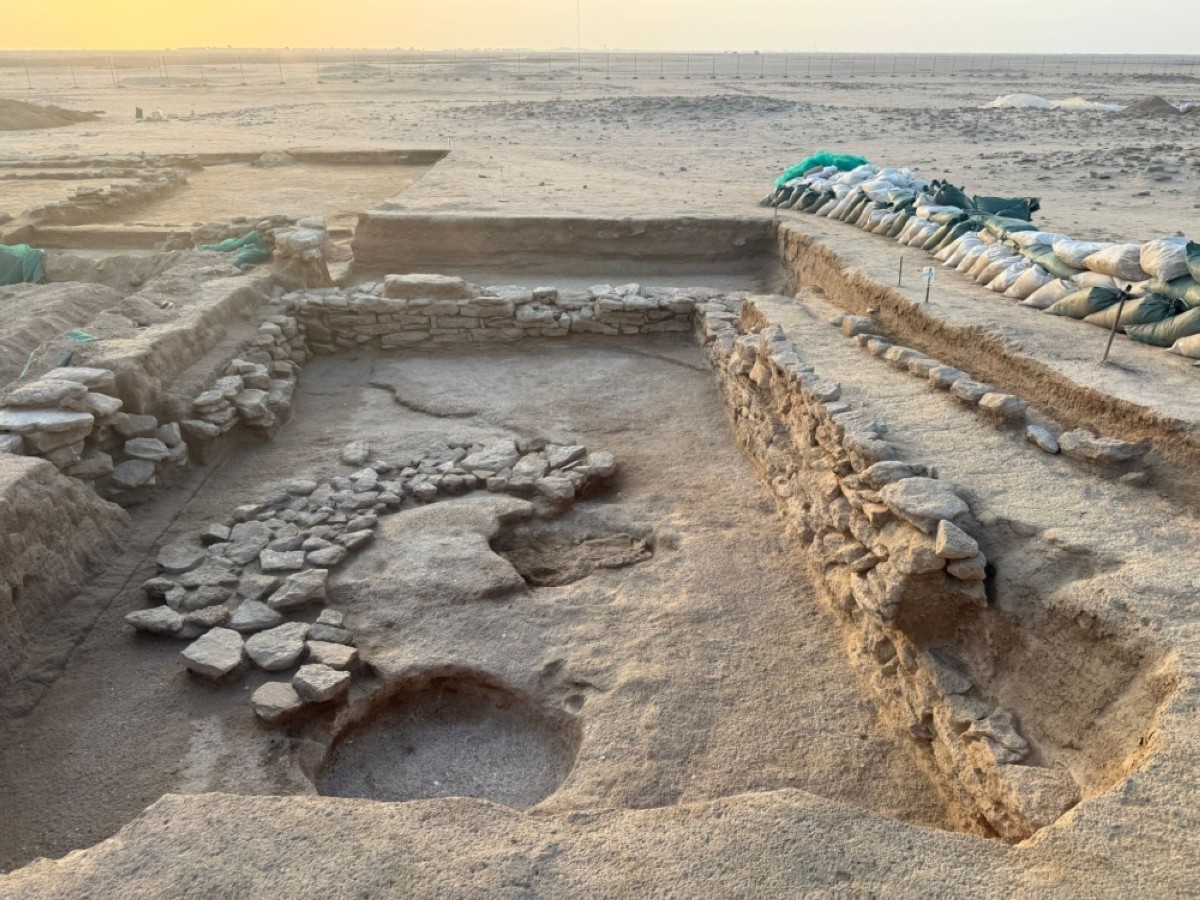

Recent archaeological discoveries on Failaka Island, Kuwait, are rewriting our understanding of the region’s rich history. A joint Kuwaiti-French mission has unearthed significant remains at Deir Al-Qusur, revealing a thriving Christian monastic settlement alongside early Islamic structures. These findings, including pottery with Failaka Island archaeology and artifacts dating back to the Umayyad and Abbasid periods, offer a fascinating glimpse into a period of religious coexistence and daily life over 1,200 years ago.
Unearthing History: New Discoveries at Deir Al-Qusur
The National Council for Culture, Arts and Letters announced the breakthrough on Wednesday, detailing the wealth of material recovered from the Deir Al-Qusur site. Excavations, ongoing since 2011, have steadily revealed the layers of history embedded within the island’s soil. This latest find is particularly significant, confirming the presence of a substantial Eastern Syriac monastic community.
The discoveries aren’t simply about identifying a religious presence; they’re about understanding how people lived. The artifacts paint a picture of a well-organized community, engaged in both spiritual practice and practical daily routines. This adds a crucial dimension to the historical narrative of early Islamic Kuwait.
A Monastery Complex Revealed
The archaeological team uncovered a large, decorated church, indicating a significant investment in religious architecture. Adjacent to the church were a refectory – a dining hall for the monks – and a dedicated food preparation area. These structures demonstrate a communal lifestyle, suggesting a sizable and self-sufficient monastic order.
Additionally, the team found Syriac ostraca – pottery fragments used as writing surfaces – providing invaluable insights into the language, beliefs, and potentially even the personal lives of the monks who resided there. The presence of coins, perfume bottles, and sophisticated construction materials like artificial basalt further illustrates the level of craftsmanship and economic activity on the island.
Religious Coexistence in Early Islamic Kuwait
Perhaps the most compelling aspect of these findings is the evidence of peaceful coexistence between Christian and Muslim communities during Kuwait’s early Islamic period. The presence of both a Christian monastery and early Islamic-era architectural remains at the same site suggests a level of tolerance and interaction that challenges previous assumptions.
This period, spanning from the mid-7th to mid-9th centuries AD, was a time of significant cultural exchange. The historical sites in Kuwait often reflect this blending of traditions. Understanding this dynamic is crucial for a nuanced understanding of the region’s development.
Insights into Daily Life and Economic Activity
The artifacts recovered aren’t limited to religious items. The discovery of perfume bottles and coins points to trade and economic activity, suggesting that the monastery wasn’t isolated but actively engaged with the wider world. The advanced construction materials, like the artificial basalt, demonstrate a level of technological skill and resourcefulness.
Experts believe these findings will significantly contribute to our understanding of daily life, economic activity, and religious practices on Failaka Island during this period. The Kuwaiti cultural heritage is being actively preserved and studied through these ongoing archaeological efforts.
The Significance of Failaka Island Archaeology
The discoveries at Deir Al-Qusur are more than just a collection of ancient artifacts. They represent a vital piece of the puzzle in reconstructing the history of Kuwait and the broader Arabian Gulf region. The ongoing collaboration between Kuwaiti and French archaeologists highlights the importance of international cooperation in preserving and understanding our shared past.
This latest excavation reinforces Failaka Island’s position as a key location for archaeological research. The island’s strategic location and long history have made it a crossroads of cultures for millennia. Further research promises to reveal even more about the lives of those who once called this island home.
In conclusion, the recent findings at Deir Al-Qusur are a testament to the rich and complex history of Kuwait. The evidence of a thriving Christian monastic community alongside early Islamic structures offers a unique window into a period of religious coexistence and cultural exchange. We encourage further exploration of Kuwait history and support for the ongoing archaeological work on Failaka Island to unlock even more of its secrets.