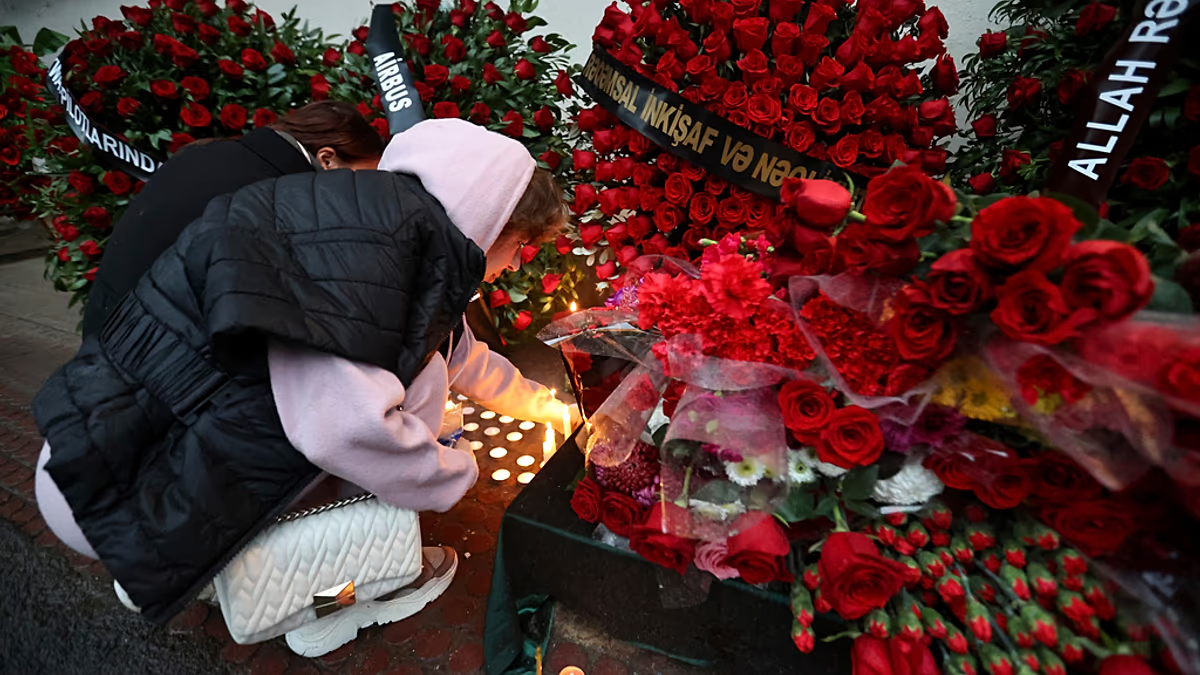

As the one-year anniversary of the Azerbaijan Airlines crash that killed 38 people approaches, families of the victims and survivors continue to seek accountability and clarity surrounding the incident. The December 25, 2024, tragedy, involving Flight 8432 en route from Baku to Grozny, has sparked an international investigation and raised serious questions about airspace safety and military operations. The pursuit of justice for those lost in the Azerbaijan Airlines crash remains a central focus.
The aircraft went down near Aktau, Kazakhstan, resulting in the deaths of 38 passengers and crew, while 29 individuals sustained injuries. Initial reports were met with denials from the Kremlin regarding any involvement, suggesting potential causes like bird strikes. However, evidence quickly pointed towards a far more complex and troubling scenario.
Investigation into the Azerbaijan Airlines Crash Reveals Russian Missile Involvement
Azerbaijani authorities swiftly asserted that the crash was caused by fragments from a Russian air-defense missile that exploded near the civilian aircraft. This claim was supported by witness testimonies and preliminary findings from the flight recorders. According to government sources, the pilots had attempted to land at Russian airports after sustaining damage but were not granted permission, forcing them to divert towards Kazakhstan.
For months, Russia maintained a position of non-responsibility, but in October 2025, President Vladimir Putin acknowledged the role of Russian air defenses. He stated that the missile was launched in response to perceived Ukrainian drone activity over Chechnya, and offered compensation to the victims’ families. This admission, while belated, marked a significant turning point in the investigation.
The incident represents the deadliest aviation disaster in the history of Azerbaijan Airlines. The quick thinking and professionalism of the flight crew, tragically both lost in the event, were credited with mitigating an even greater loss of life. The airline has since implemented enhanced safety protocols and provided support to the families affected by the tragedy.
Survivor Accounts and the Search for Closure
Zulfugar Asadov, a flight attendant with 36 years of experience who survived the crash, now works as an inspector for the airline. He regularly visits a memorial dedicated to his fallen colleagues, grappling with the emotional toll of the event. “Recently, we visited the city of Aktau and went to the site of the incident. It felt as though I was reliving the events of that day,” Asadov shared.
He added, “This accident left a deep mark on my life. I realised more clearly how valuable human life is. My perspective on many things has changed – what once seemed ordinary now feels far more important.” Asadov emphasized the importance of his emergency training in maintaining composure and assisting passengers during the crisis.
Passengers aboard Flight 8432 reported hearing a loud explosion and observing debris impacting the fuselage. These accounts corroborate the Azerbaijani government’s findings regarding the missile fragments. The incident has prompted renewed scrutiny of coordination between civilian air traffic control and military operations in contested airspace.
Families Demand Accountability
Hamlet Ismayilov, whose 38-year-old son Ismayil was among those killed, expressed his belief that the downing of the plane was intentional. “Videos appeared on YouTube and other sources suggest that this plane was shot down intentionally,” he stated. He and other family members are determined to see those responsible held accountable.
“A year has passed since the incident, and we believe that those responsible will soon be identified and brought to justice. The relatives of the victims, as well as those who survived, continue to wait for justice to prevail,” Ismayilov said. He recounted the devastating moment he learned of his son’s death, describing the shock and grief that engulfed his family.
Ismayilov described his son as a kind and family-oriented individual, highlighting the outpouring of support they received from friends and community members following the disaster. The emotional and financial burden on the families remains substantial.
As the investigation continues, the focus shifts towards establishing a clear timeline of events and determining the extent of responsibility. The incident underscores the critical need for improved communication and deconfliction procedures to prevent similar tragedies in the future. The families of the victims are closely monitoring the progress of the investigation and advocating for a transparent and thorough accounting of the circumstances surrounding the Azerbaijan Airlines crash.
The coming months will be crucial in determining the final outcome of the investigation and whether those responsible will face legal consequences. Continued international pressure and a commitment to transparency are essential to ensuring that justice is served and that lessons are learned from this devastating event. For updates on this developing story, follow reputable news sources and official statements from the investigating authorities.