
The recent celestial event of a supermoon captivated observers across the United Arab Emirates, inspiring a surge of stunning photographs shared by residents and visitors. Images showcasing the dramatically enlarged lunar disc alongside iconic UAE landmarks, including mosques and desert landscapes, have circulated widely on social media platforms. The peak of the supermoon occurred on September 18th and 19th, 2024, visible throughout the country.
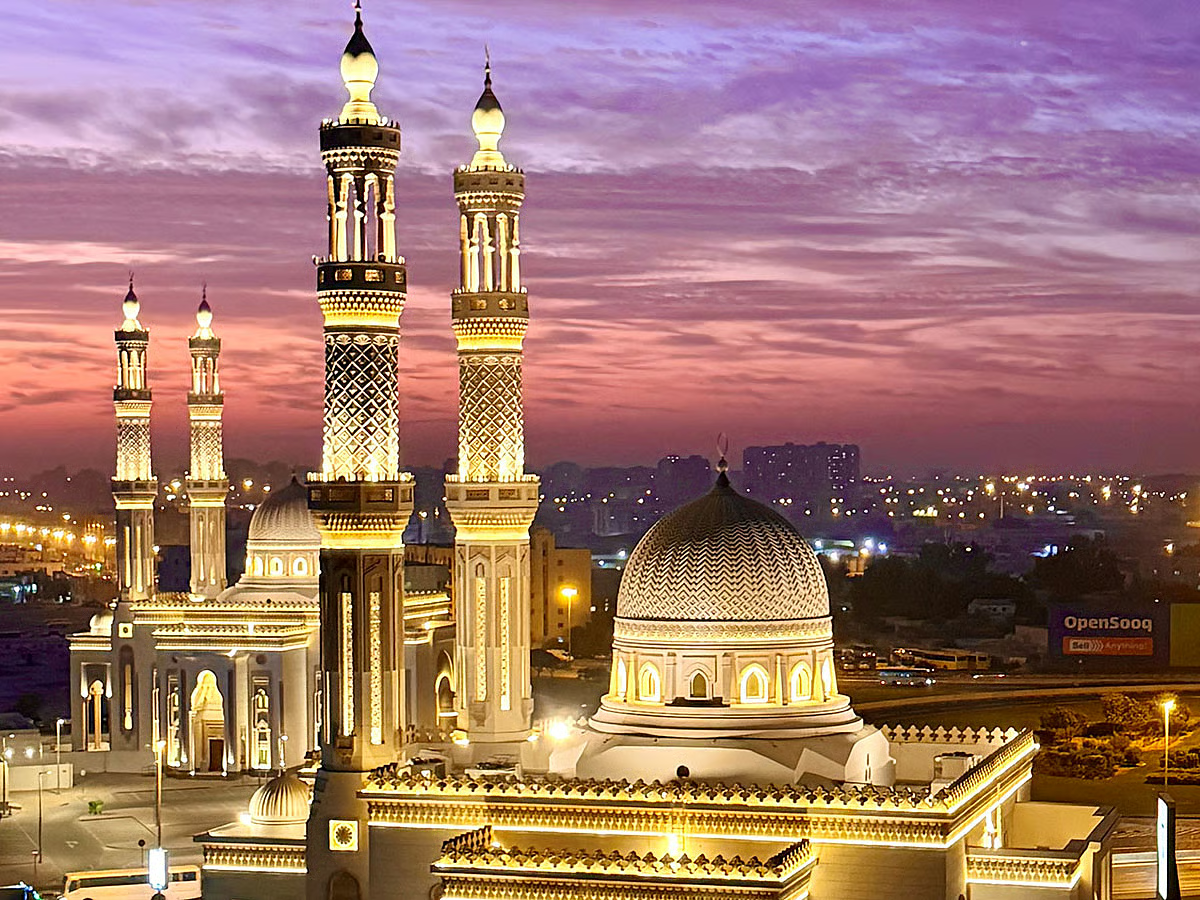
The phenomenon drew attention from amateur and professional photographers alike, resulting in a diverse collection of images highlighting the beauty of the UAE’s architecture and natural environment. Many submissions focused on the interplay between the bright moon and the intricate designs of local mosques, while others captured the vastness of the Arabian desert illuminated by the lunar glow. These photos offer a unique perspective on familiar scenes.
Understanding the September 2024 Supermoon
A supermoon occurs when a full moon coincides with the moon’s closest approach to Earth in its orbit, a point known as perigee. This proximity makes the moon appear up to 14% larger and 30% brighter than a typical full moon. According to NASA, the September full moon is traditionally called the Harvest Moon, due to its brightness aiding farmers harvesting crops late into the season.
The Science Behind the Illusion
The increased size and brightness are not merely perceptual illusions, though psychological factors do play a role. The moon’s orbit around Earth is elliptical, not perfectly circular. This means the distance between the Earth and the moon varies throughout the month. When a full moon happens near perigee, the effect is maximized.
Additionally, the “moon illusion” – the tendency for the moon to appear larger when near the horizon – was particularly noticeable during this supermoon. Scientists attribute this to the way the human brain perceives objects relative to foreground elements like trees and buildings. This effect is independent of the actual supermoon phenomenon, but it amplified the visual impact.
UAE Landscapes and Architectural Highlights
The UAE’s unique landscape provided a striking backdrop for the supermoon. Photographs from the Liwa Oasis showcased the moon rising over the towering sand dunes, creating a dramatic contrast between the celestial body and the earthly terrain. The desert’s clear skies also offered optimal viewing conditions.
Mosques throughout the Emirates were frequently featured in submitted photos. The intricate Islamic architecture, often illuminated at night, provided a beautiful foreground for the bright moon. The Sheikh Zayed Grand Mosque in Abu Dhabi, in particular, was a popular subject, with photographers capturing its white marble facade bathed in lunar light. These images highlight the cultural richness of the region.
Beyond the desert and mosques, urban areas also offered compelling photographic opportunities. Skylines of Dubai and Sharjah were often framed by the supermoon, demonstrating the blend of modern architecture and natural beauty within the UAE. The contrast between the artificial lights of the cities and the natural glow of the moon created a visually interesting effect.
Social Media and Public Engagement
The supermoon sparked significant engagement on social media platforms like Instagram, X (formerly Twitter), and Facebook. Users shared their photos using hashtags such as #Supermoon, #UAE, #MoonPhotography, and #HarvestMoon, creating a virtual gallery of the event. The Ministry of Climate Change and Environment also encouraged residents to share their observations and photos.
However, the increased attention also led to some misinformation circulating online. Some posts falsely claimed the supermoon would cause unusual weather patterns or other disruptive events. Authorities urged the public to rely on official sources for accurate information regarding astronomical events.
Meanwhile, local astronomy clubs and observatories hosted public viewing events, providing opportunities for people to learn more about the supermoon and other celestial phenomena. These events often included telescopes and expert guidance, enhancing the viewing experience for participants. The Dubai Astronomy Group reported a significant increase in inquiries about the supermoon and its visibility.
Impact on Tourism and Photography
The supermoon is likely to have had a positive, though currently unquantified, impact on tourism in the UAE. The event attracted amateur astronomers and photographers specifically to witness and capture the spectacle. Hotels and tour operators in areas with clear desert skies may have seen increased bookings.
In contrast, the event also presented challenges for astrophotographers. Light pollution in urban areas can make it difficult to capture detailed images of the moon. Photographers often had to travel to remote locations to find dark skies suitable for their work. The report indicates that specialized filters and long-exposure techniques were commonly used to overcome these challenges.
The popularity of supermoon photography also highlights the growing interest in astrophotography as a hobby. The availability of affordable cameras and image processing software has made it easier for people to capture stunning images of the night sky. This trend is expected to continue, with future celestial events likely to generate similar levels of public enthusiasm.
Looking ahead, the next full moon is scheduled for October 17th, 2024, but it will not be a supermoon. The frequency of supermoons varies, with several occurring within a single year and sometimes longer gaps between them. Astronomers will continue to monitor the moon’s orbit and provide accurate predictions for future events. The potential for increased cloud cover during the winter months remains a factor influencing visibility of future lunar displays.