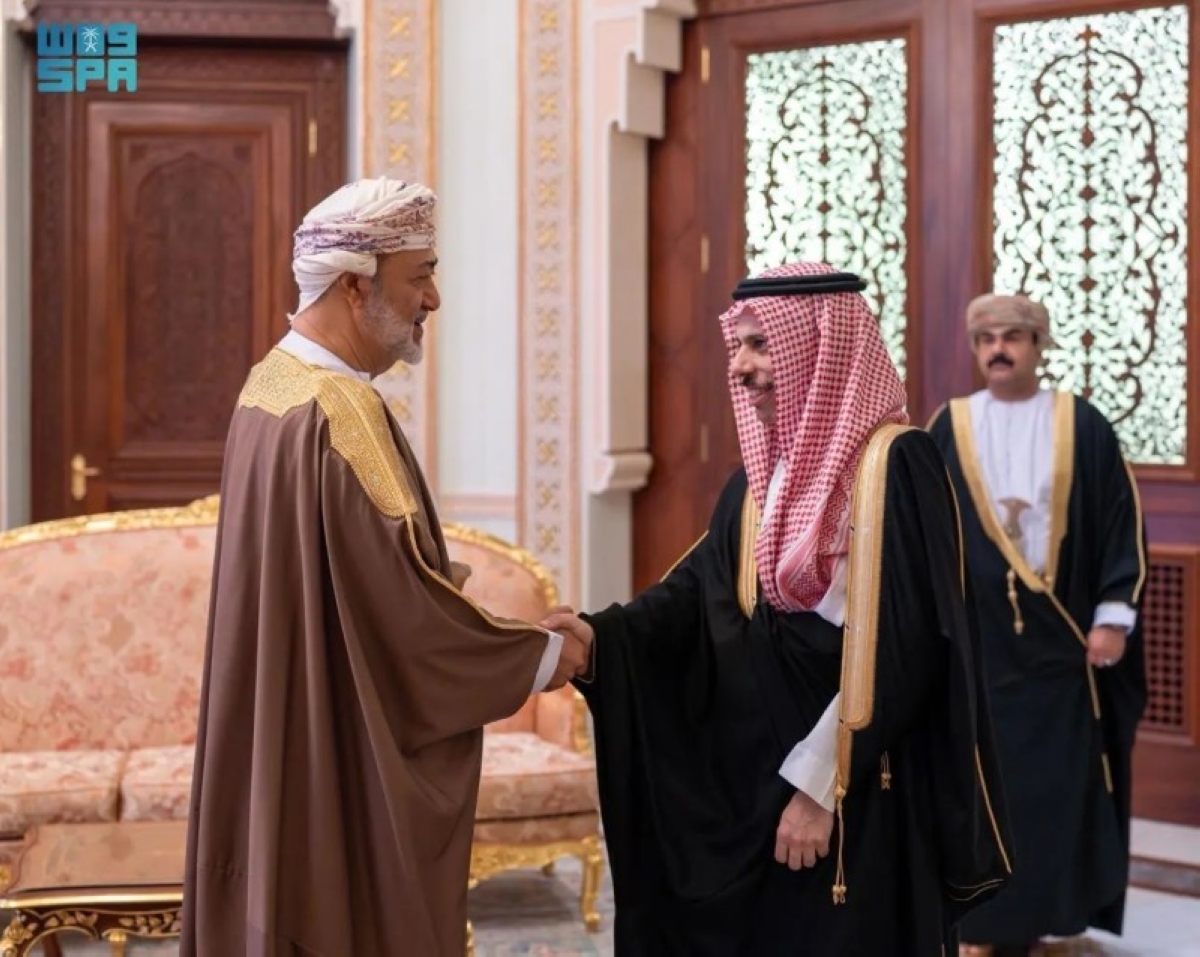

MUSCAT – Sultan Haitham bin Tarik of Oman and Saudi Foreign Minister Prince Faisal bin Farhan Al Saud convened for discussions at Al-Baraka Palace in Muscat on Tuesday, focusing on bilateral ties and the evolving geopolitical landscape. The meeting underscores the ongoing diplomatic efforts between the two Gulf nations to foster regional stability and address shared concerns. This Oman Saudi relations dialogue comes amid heightened tensions in the Middle East and increased international focus on mediation efforts.
The talks, held on November 14, 2023, centered on strengthening the longstanding fraternal relationship between Oman and Saudi Arabia, as well as reviewing current events impacting the region and the wider world. Prince Faisal conveyed greetings from King Salman and Crown Prince Mohammed bin Salman to Sultan Haitham, expressing wishes for continued prosperity for Oman. The Omani Sultan reciprocated with similar sentiments directed towards the Saudi leadership.
Strengthening Oman Saudi Relations Through Diplomacy
The meeting represents a continuation of increasingly frequent high-level engagements between Muscat and Riyadh. Both countries share a border and are key members of the Gulf Cooperation Council (GCC), a regional political and economic alliance. However, despite this shared membership, their approaches to regional issues have sometimes differed, making direct dialogue crucial.
According to a statement released by the Omani news agency, the discussions covered a broad range of topics, including economic cooperation, security concerns, and joint initiatives to promote peace and stability. The two sides reportedly reaffirmed their commitment to a unified GCC stance on critical issues. This commitment is particularly important given ongoing disputes in Yemen and the broader implications of the Israel-Hamas conflict.
Regional Security Concerns
The situation in Yemen was likely a significant point of discussion. Saudi Arabia has been leading a military intervention in Yemen since 2015, while Oman has maintained a neutral stance and actively engaged in mediation efforts with the Houthi rebels. The report indicates a desire for a coordinated approach to finding a lasting resolution to the conflict.
Additionally, the escalating tensions between Israel and Hamas, and the wider ramifications for the region, were undoubtedly addressed. Oman and Saudi Arabia both advocate for a two-state solution and a peaceful resolution to the Israeli-Palestinian conflict. The ministers likely exchanged views on potential diplomatic avenues and strategies for de-escalation.
Economic Cooperation and Investment
Beyond security, the meeting also highlighted the importance of economic ties. Bilateral trade between Oman and Saudi Arabia has been steadily increasing in recent years, and both countries are keen to explore new opportunities for investment and collaboration. The energy sector, in particular, is a key area of focus, with potential projects related to oil, gas, and renewable energy.
Recent initiatives, such as the development of a joint land border crossing, demonstrate a commitment to facilitating trade and movement of people between the two nations. This border crossing, expected to be operational in the coming months, is anticipated to boost economic activity and strengthen people-to-people connections. The Saudi Public Investment Fund has also been exploring investment opportunities in Oman, signaling a growing confidence in the Omani economy.
In contrast to some other regional dynamics, Oman and Saudi Arabia have generally enjoyed a stable and cooperative relationship. Oman’s traditionally neutral foreign policy and its role as a mediator have often been welcomed by Saudi Arabia, particularly in navigating complex regional challenges. This approach differs from the more assertive foreign policies adopted by some other Gulf states.
The visit by Prince Faisal follows a series of diplomatic initiatives aimed at fostering dialogue and de-escalation in the Middle East. Saudi Arabia has been actively engaging with various regional and international actors, including Iran, in an effort to reduce tensions and promote stability. Oman has consistently supported these efforts, providing a discreet but important channel for communication.
Meanwhile, analysts suggest that the strengthening of bilateral ties between Oman and Saudi Arabia is also driven by a shared concern over potential threats to regional security, including maritime security and the proliferation of weapons. Both countries are heavily reliant on oil exports and are therefore vulnerable to disruptions in shipping lanes. Increased cooperation on security matters is seen as a way to mitigate these risks.
The ongoing Gulf Cooperation is vital for the region’s economic and political future. A unified GCC stance on key issues is seen as essential for maintaining stability and promoting collective interests. However, achieving consensus within the GCC can be challenging, given the diverse priorities and perspectives of its member states.
Looking ahead, further meetings and consultations between Omani and Saudi officials are expected in the coming weeks and months. The focus will likely remain on finding common ground on regional security issues and expanding economic cooperation. The success of these efforts will depend on the willingness of both sides to compromise and prioritize shared interests. The evolving situation in Yemen and the Israeli-Palestinian conflict will continue to be key areas of attention, and the role of Oman and Saudi Arabia in mediating these disputes will be closely watched.
The next significant development to observe will be the implementation details of the planned land border crossing and any announcements regarding Saudi investments in Oman. Uncertainty remains regarding the long-term trajectory of regional conflicts, and the ability of Oman and Saudi Arabia to maintain a constructive dialogue will be crucial for navigating these challenges.