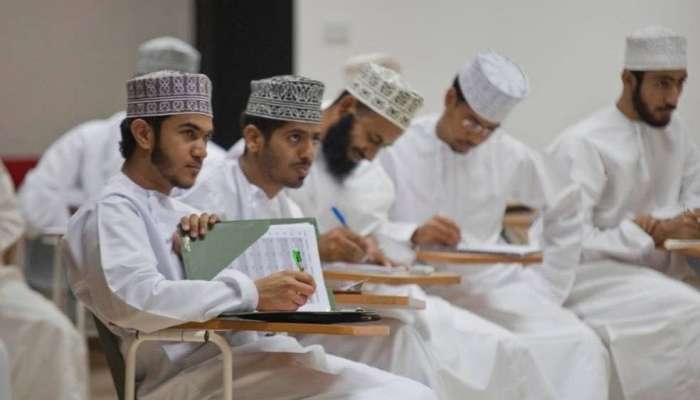

Oman is actively pursuing a knowledge-based economy, but a recent academic study suggests a critical component is being overlooked: the humanities. Researchers at Sultan Qaboos University are advocating for a renewed focus on disciplines like history, literature, and archaeology, arguing they are not merely cultural enrichments but essential for building a balanced and sustainable future for the Sultanate. This call for re-evaluation comes as Oman strives to achieve its ambitious goals outlined in Oman Vision 2040.
The Core Argument: Why the Humanities Matter for Oman’s Future
The study, titled “Reimagining the Knowledge Economy: A Critical Call to Recentre the Humanities in Omani Higher Education,” and published in the Journal of Arabian Studies, challenges the prevailing notion that economic progress is solely driven by advancements in science and technology. Authored by Dr. Maryam bint Ali Al-Hanaei and Prof. Mohammed bin Ali Al-Balushi, the research highlights the crucial role the humanities play in fostering critical thinking, ethical reasoning, and a strong sense of cultural identity – all vital for a thriving nation.
Bridging the Gap Between Vision and Practice
The researchers point to a disconnect between Oman’s national strategies – particularly Oman Vision 2040 and the Cultural Strategy 2021–2040 – and the current emphasis within higher education. While these strategic frameworks explicitly value cultural identity, creativity, and sustainable development, the reality is a system that often prioritizes scientific, technical, and business-related fields. This imbalance, they argue, undermines the very foundations of the future Oman is trying to build.
Analysis of faculty distribution and student enrollment reveals a gradual decline in the proportion of students pursuing humanities degrees, especially those choosing to study abroad. While the humanities remain present in areas like education and cultural preservation, their overall influence is waning in comparison to the growing dominance of engineering and technical disciplines.
Beyond Economic Utility: The Strategic Necessity of a Holistic Education
Dr. Al-Hanaei and Prof. Al-Balushi emphatically state that investing in the humanities is not a luxury, but a strategic imperative. They contend that true innovation requires more than just technical skill; it demands a deep understanding of ethical implications, social contexts, and cultural values. Without this holistic perspective, technological progress risks becoming disconnected from the needs and aspirations of Omani society.
The study advocates for policy changes that promote the integration of the humanities with other disciplines. This includes developing interdisciplinary curricula, providing dedicated research support for humanities projects, and embedding humanities-based knowledge within national innovation systems. Such integration would ensure that Oman’s pursuit of a knowledge society is firmly rooted in its unique identity and open to global collaboration.
The Risk of Cultural Homogenization
From an intercultural communication standpoint, Dr. Al-Hanaei warns that a knowledge economy devoid of humanistic and ethical grounding could lead to cultural homogenization and the erosion of local knowledge. She stresses the importance of preserving Oman’s rich heritage and ensuring that innovation is guided by social responsibility. This aligns with broader discussions around cultural preservation in a rapidly globalizing world.
Prof. Al-Balushi adds that the current prioritization of applied sciences often reduces culture and heritage to mere economic resources, stripping them of their historical and symbolic significance. This shift transforms a relationship of understanding and interpretation into one of functional exploitation, ultimately diminishing the value of Oman’s cultural legacy.
Reclaiming Meaning and Identity Through the Humanities
The researchers argue that the humanities restore the human element to the knowledge process, emphasizing the importance of interpreting cultural and historical elements rather than simply utilizing them. They highlight that both Oman Vision 2040 and the Cultural Strategy recognize the central role of identity and heritage in sustainable development, making the humanities indispensable to achieving these goals.
Without a strong foundation in the humanities, initiatives aimed at preserving and promoting Omani heritage risk becoming technically proficient but culturally superficial. Furthermore, sidelining these disciplines weakens society’s ability to critically assess the impact of technology and allows scientific advancements to shape values without meaningful public discourse. This is a critical point in the ongoing debate about higher education reform in the region.
In conclusion, the study presents a compelling case for the revitalization of the humanities in Oman’s higher education system. It’s a call to move beyond a purely utilitarian view of education and embrace a more holistic approach that nurtures not only technical competence but also ethical awareness, cultural understanding, and intellectual responsibility. Investing in the humanities is, therefore, not just about preserving the past, but about building a more sustainable, meaningful, and uniquely Omani future. Readers are encouraged to explore Oman Vision 2040 and the Cultural Strategy 2021-2040 to understand the context of this important discussion.