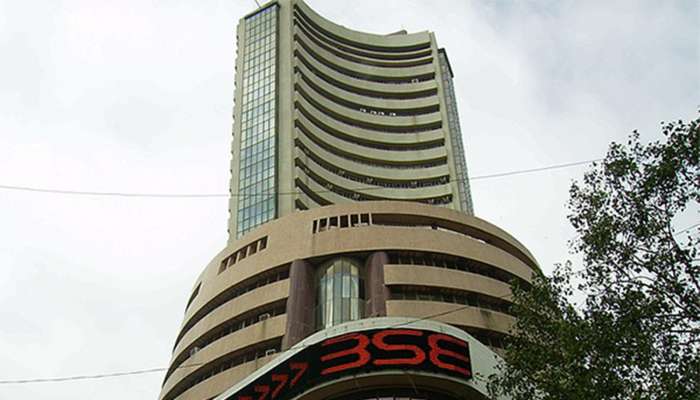

India’s stock market experienced a period of consolidation on Friday, with benchmark indices ending the day on a largely flat note after reaching all-time highs the previous day. The Nifty 50 closed around 26,200, signalling a potential pause after a strong upward trajectory. This development comes amidst a backdrop of positive indicators, including softening US inflation data and consistent foreign portfolio investment (FPI) inflows, but also cautious sentiment related to rupee volatility and PSU bank selling.
Market Overview: A Pause After Record Highs
Thursday saw a surge in market sentiment, with the Sensex breaching the 86,000 mark and the Nifty 50 surpassing 26,300. The Sensex climbed over 400 points to a record high of 86,055.86, a 0.50% increase. Correspondingly, the Nifty 50 saw a gain of 0.40% to achieve an all-time high of 26,310.45. However, Friday’s trading session provided a contrasting picture.
The Sensex concluded at 85,706.67, down 13.71 points (0.02%), while the Nifty 50 settled at 26,202.95, a decrease of 12.60 points (0.05%). Initial trading saw slight gains, with the Nifty opening at 26,237.45 and the Sensex at 85,791.55. The relatively subdued performance suggests a period of profit-booking as investors assessed recent gains.
Breadth of the Market
While the headline indices remained largely unchanged, the broader market showed mixed signals. Approximately 1,945 shares advanced, exceeding the 2,023 shares that declined. A smaller number, 152 shares, ended the day without a change. Both the BSE Midcap and Smallcap indices mirrored the overall trend, concluding the session on a flat note, demonstrating a widespread cautious approach amongst investors.
Sectoral Performance: Diverging Trends
Friday’s market activity revealed differing fortunes across various sectors. Nifty Auto and Pharma sectors emerged as the primary gainers, indicating investor interest in these areas. Pharma and media stocks saw gains of 0.5-1%, while the auto sector also experienced a similar positive trend.
Conversely, the Nifty CPSE and Nifty Oil & Gas indices faced selling pressure and ended as the biggest losers. Sectors like power, oil & gas, and telecom experienced declines ranging from 0.5-1% each. This divergence highlights a selective approach from investors, favouring certain sectors over others.
Top Gainers and Losers on Nifty
Within the Nifty 50, several stocks stood out. Leading the gains were Adani Enterprises, M&M (Mahindra & Mahindra), Adani Ports, Sun Pharma, and HUL (Hindustan Unilever). On the losing side, SBI Life Insurance, Shriram Finance, HDFC Life, Power Grid Corporation, and Bharti Airtel saw the most significant declines. These movements suggest shifting expectations and risk assessments concerning these specific companies.
Rupee and Expert Outlook
The Indian Rupee experienced a slight depreciation, ending 15 paise lower at 89.45 against the US dollar, compared to the previous closing rate of 89.30. This volatility in the currency market contributed to the overall cautious sentiment.
Sudeep Shah, Head – Technical and Derivatives Research at SBI Securities, pointed to a key resistance zone for the Nifty 50 between 26,300 and 26,350. He believes that a sustained break above 26,350 could trigger a further rally, potentially pushing the index towards 26,550 and eventually 26,800. Conversely, he identifies support levels between 26,150 and 26,100.
Experts also suggest that the softer US inflation data, easing global bond yields and the continuing inflow of Foreign Portfolio Investment (FPI) underpin the positive trend in the Indian market.
Weekly Performance and Future Outlook
Despite the flat closing on Friday, the benchmarks recorded their third consecutive week of gains, rising by approximately half a percent. While the upwards trend remains intact, the volatility in the rupee and selective profit-taking in PSU banks necessitate caution.
Ponmudi R, CEO of Enrich Money, emphasized the importance of a “buy-on-dips” approach and highlighted the need for increasing trading volumes before confirming any breakout. This suggests that investors are awaiting stronger signals of sustained momentum before committing to further buying.
The Indian stock market continues to be influenced by a complex interplay of global and domestic factors. Continued monitoring of inflation data, geopolitical developments, and FPI flows will be crucial in assessing the future trajectory of the market. Investors should remain vigilant and consider a balanced approach, prioritizing risk management alongside potential growth opportunities.