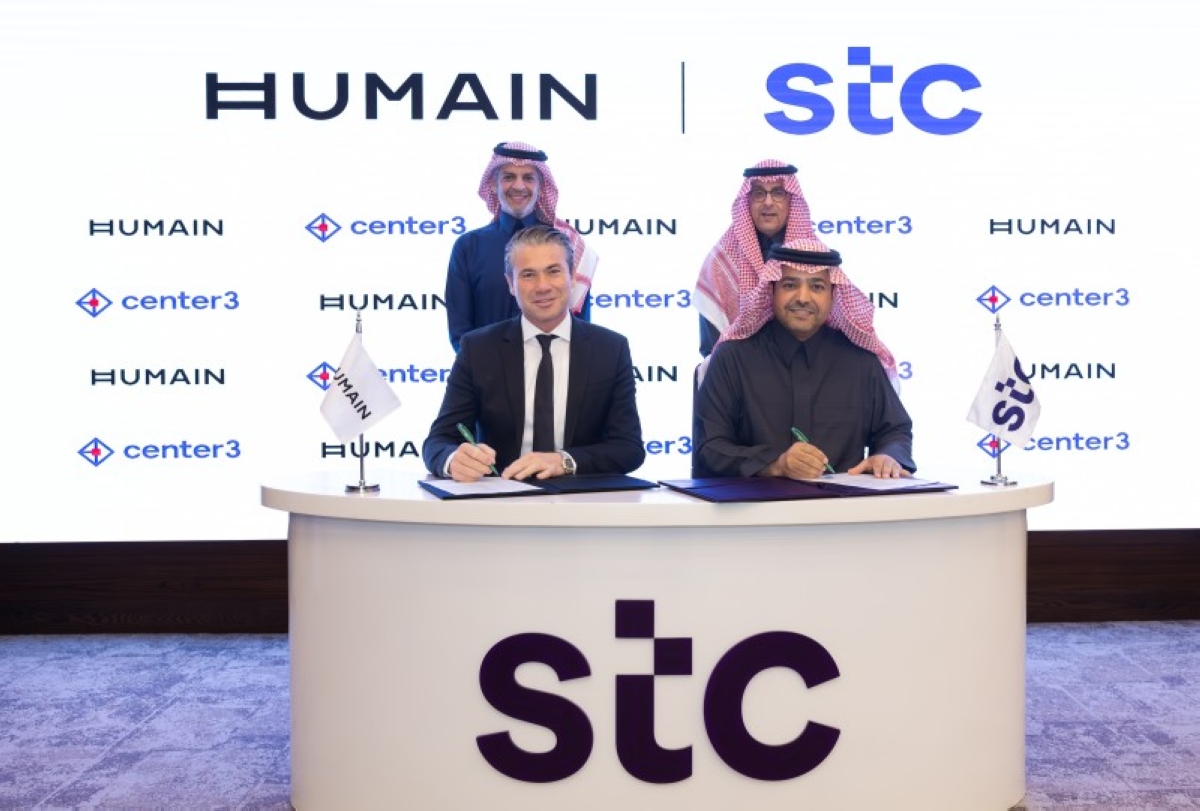

stc group, through its data center subsidiary center3, and HUMAIN, a company backed by Saudi Arabia’s Public Investment Fund (PIF), have formed a joint venture to construct and operate AI data centers within Saudi Arabia. Announced this week, the partnership aims to address the growing demand for robust infrastructure capable of supporting advanced artificial intelligence applications. The initiative is intended to build out enough capacity to host up to 1 gigawatt (GW) of AI workloads, signaling significant investment in the Kingdom’s digital future.
The joint venture will focus on developing next-generation data center infrastructure designed specifically for the intensive computational requirements of artificial intelligence. This collaboration responds to a global surge in AI adoption and a strategic desire by Saudi Arabia to become a regional hub for AI development and deployment. Currently, much of the AI processing occurs in established data center regions like the United States and Europe.
Building the Foundation for AI Growth in Saudi Arabia
The partnership brings complementary strengths to the table. Center3, a leading provider of data centers in the Middle East, provides the physical infrastructure, regional connectivity, and operational expertise. HUMAIN, established to accelerate the adoption of full-stack artificial intelligence, contributes its focus on the specific needs of AI workloads and its alignment with Saudi Arabia’s Vision 2030.
According to stc group CEO Olayan Alwetaid, the venture “reinforces our commitment to enabling the region’s digital future.” This project is part of Saudi Arabia’s broader strategy to diversify its economy away from oil and towards technology-driven sectors. Investments in infrastructure like data centers are considered crucial for attracting foreign investment and fostering innovation.
Addressing the Demand for Specialized Infrastructure
Developing countries are rapidly adopting cloud services and AI, but often lack the advanced infrastructure needed. Tareq Amin, CEO of HUMAIN, highlighted that “AI at scale requires purpose-built compute, efficiency, and resilience.” Existing data centers may not be optimally configured to handle the power densities, cooling requirements, and network latency demands of large-scale AI models.
The new facilities will likely incorporate advanced cooling technologies, high-bandwidth networking, and optimized power distribution to maximize performance and minimize operational costs. This has become a critical consideration as the energy consumption of AI grows. The companies haven’t specified details on power sources, but sustainability is a growing focus for major data center developers.
Supporting LLMs and Critical Applications
The joint venture is positioned to facilitate the deployment of demanding AI applications, including large language models (LLMs). LLMs, such as those powering conversational AI bots, require substantial computational resources for both training and inference. Availability of specialized infrastructure within Saudi Arabia could reduce reliance on external providers and improve data sovereignty.
Fahad AlHajeri, CEO of center3, emphasized the company’s role in delivering “the density, resilience, and availability required for next-generation AI computing.” The expansion of center3’s footprint will be key to meeting the projected market demand. The development also aims to support other emerging technologies that rely heavily on data processing, like machine learning and the Internet of Things.
This investment is not unique to Saudi Arabia. Several countries across the globe are actively promoting the development of AI infrastructure to position themselves as leaders in the AI revolution. Competition for investment and talent in the AI space is fierce. A recent report from Synergy Research Group indicates worldwide data center spending is expected to continue growing at a rate of approximately 8-10% annually.
The next phase for the stc group and HUMAIN joint venture will involve detailed site selection and the commencement of construction on the new facilities. While a specific timeline hasn’t been released, industry analysts predict the first phases of the 1GW capacity could be operational within the next 24-36 months. Key factors to watch include the level of government support, the ability to attract skilled AI personnel to the region, and the evolution of AI technology itself, which could rapidly impact infrastructure requirements.