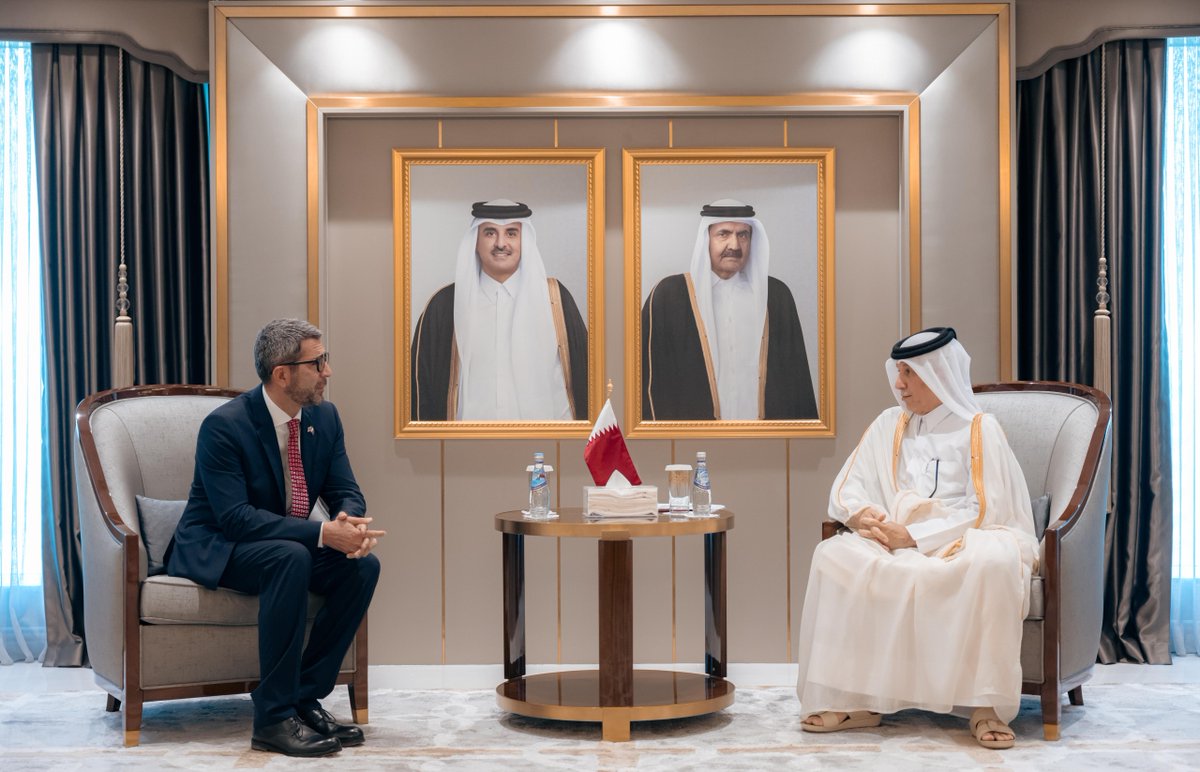

Doha, Qatar – Qatar has welcomed two new ambassadors, representing Greece and Georgia, signaling continued efforts to strengthen diplomatic relations with both European nations. Minister of State for Foreign Affairs HE Sultan bin Saad Al Muraikhi formally received the credentials from HE Christos Kapodistrias, the new Ambassador of the Hellenic Republic, and HE Varlam Avaliani, the new Ambassador of Georgia, on Monday. This exchange underscores Qatar’s commitment to international cooperation and expanding its global partnerships.
The credential presentation ceremony took place at the Ministry of Foreign Affairs in Doha. According to the official Qatar News Agency, Al Muraikhi extended wishes for success to both ambassadors in their new roles and reiterated Qatar’s dedication to bolstering bilateral ties across multiple sectors. The appointments come at a time of increasing engagement between Qatar and countries in Europe, particularly in areas of energy, investment, and cultural exchange.
Strengthening Qatar’s Diplomatic Ties
The arrival of the new ambassadors reflects Qatar’s proactive foreign policy, focused on diversifying its international relationships. Qatar has been actively working to enhance its position as a regional and global mediator, and strong diplomatic relations are crucial to achieving this goal. This is particularly evident in its ongoing efforts related to regional stability and international conflict resolution.
The Hellenic Republic and Georgia are both considered important partners for Qatar. Trade between Qatar and Greece, while not substantial, has been steadily increasing in recent years, with potential for growth in sectors like construction and tourism. Similarly, Qatar and Georgia have explored opportunities for collaboration in areas such as logistics and transportation, benefiting from Georgia’s strategic location on the Silk Road.
Focus on Bilateral Cooperation
Qatar’s willingness to provide support to the new ambassadors, as stated by Al Muraikhi, suggests a commitment to facilitating successful diplomatic missions. This support typically includes logistical assistance, security arrangements, and access to relevant government officials. Such gestures are standard diplomatic practice, designed to foster a productive working relationship.
Additionally, the timing of these appointments aligns with Qatar’s broader strategy of enhancing its presence within European political and economic circles. Qatar has been actively seeking to attract foreign investment and diversify its economy away from its reliance on hydrocarbons. Stronger international relations are seen as key to achieving these economic objectives.
Meanwhile, the appointment of ambassadors from both Greece and Georgia could also be viewed in the context of evolving geopolitical dynamics. Both countries are navigating complex regional challenges, and Qatar’s engagement may offer opportunities for constructive dialogue and collaboration. Qatar’s foreign policy often prioritizes maintaining open channels of communication with all parties involved in regional disputes.
In contrast to some regional actors, Qatar has consistently emphasized a diplomatic approach to resolving conflicts. This approach is underpinned by a belief in multilateralism and the importance of international law. The country’s mediation efforts in various regional crises demonstrate its commitment to peaceful conflict resolution.
The Ministry of Foreign Affairs has not yet announced specific dates for the ambassadors’ formal presentations to the Emir of Qatar, Sheikh Tamim bin Hamad Al Thani. However, such presentations are a customary step in the accreditation process and are expected to occur within the coming weeks. Observers will be watching for any announcements regarding planned high-level visits or agreements stemming from these new diplomatic appointments. Further developments in Qatar’s foreign policy and its engagement with European partners will likely unfold throughout the remainder of the year.
Looking ahead, the focus will be on observing how these new diplomatic relations translate into concrete initiatives and agreements. The success of these partnerships will depend on continued dialogue, mutual understanding, and a shared commitment to addressing common challenges. The evolving geopolitical landscape and economic conditions will also play a significant role in shaping the future of Qatar’s relationships with Greece and Georgia.