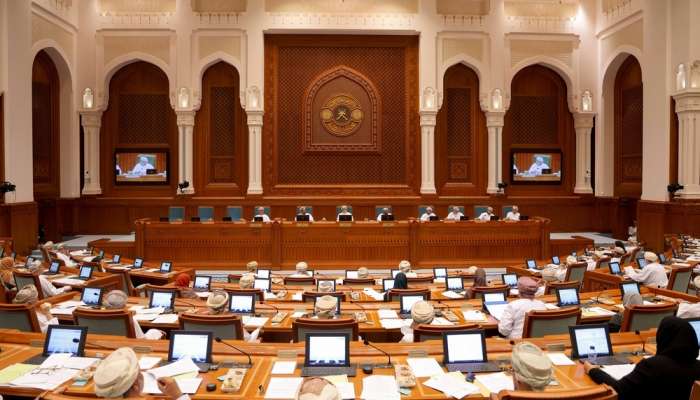

Oman’s State Council convened on Tuesday to address a range of important legislative matters, focusing heavily on regional cooperation and the future of education within the Sultanate. The session centered on discussions regarding the “Draft National Geospatial Data and Information Law,” alongside crucial GCC-wide regulations, and a comprehensive study aimed at improving school education. This dedication to both national development and Oman legislation reflects the country’s commitment to progress and integration within the Gulf region.
State Council Advances Key Legislation in Oman
During its fourth session of the third regular sitting of the eighth term, the State Council, presided over by Sheikh Abdulmalik bin Abdullah Al Khalili, Chairman of the State Council, made significant strides in reviewing and preparing new laws. The agenda was packed with items designed to modernize Oman’s legal framework and bolster its regional partnerships. A primary focus was placed on ensuring these laws align with the Sultanate’s Vision 2040, a national plan for economic and social progress.
National Geospatial Data and Information Law
The “Draft National Geospatial Data and Information Law” represents a crucial step towards building a data-driven Oman. Effective management of geospatial data is becoming increasingly important for urban planning, environmental monitoring, infrastructure development, and a multitude of other sectors. The law aims to establish a clear framework for collecting, storing, sharing, and utilizing this data, promoting efficiency and informed decision-making across various industries.
Harmonizing with the GCC: Industrial Regulation and Customs
A substantial portion of the session was dedicated to two draft laws designed to harmonize regulations with other Gulf Cooperation Council (GCC) member states. The “Draft Unified Industrial Regulation Law for the GCC States” intends to create a standardized approach to industrial regulation, fostering a more competitive and integrated regional market. This will likely benefit businesses operating across multiple GCC countries, streamlining procedures and reducing obstacles to trade.
Additionally, the Council reviewed the “Draft Amendment to the Unified Customs Law for the GCC States.” Modernizing customs procedures is vital for facilitating efficient cross-border trade and enhancing regional economic cooperation. The amendments likely address issues related to customs valuation, rules of origin, and the implementation of new technologies to improve border security and streamline the movement of goods. Embracing such changes is a testament to Oman’s economic policy and its dedication to collaboration.
Improving Educational Attainment in Oman: A Detailed Study
Beyond regional regulations, the State Council demonstrated a strong commitment to enhancing the quality of education within Oman. A study presented by the Education and Research Committee, titled “Enhancing the Quality of Educational Attainment and Mastery of Competencies and Skills in School Education in the Sultanate of Oman: An Analytical and Legislative Study,” served as a central point for discussion. This detailed analysis is intended to identify key areas for improvement in the education system.
The study likely explored a range of factors influencing educational outcomes, including curriculum development, teacher training, student assessment methods, and the availability of resources. It also probably addressed the critical need to align school education with the evolving demands of the labor market, ensuring that students graduate with the skills and competencies needed to succeed in a rapidly changing world. The importance of practical skills development and promoting critical thinking were likely highlighted as key priorities for educational reform.
Focusing on building a robust educational framework is crucial for Oman’s long-term economic diversification and social development. Investment in human capital is often cited as the most important driver of sustainable growth, and this study represents a thoughtful approach to strengthening the foundations of Oman’s future workforce. Areas such as STEM education and vocational training are likely to be central to these improvements, and the resulting legislation promises to drive change within the education system in Oman.
Ensuring Timely Legislative Action
Sheikh Abdulmalik bin Abdullah Al Khalili, in his opening remarks, emphasized the significance of expediting the review process for these draft laws. He specifically pointed out that several are linked to a shared legislative system within the GCC, meaning timely action is crucial for maintaining alignment and facilitating regional integration.
The Chairman urged all permanent and special committees to prioritize their studies and proposals, ensuring they are well-prepared for discussion in upcoming sessions. This directive underscores the Council’s commitment to efficiency and its proactive approach to addressing legislative needs.
The Oman State Council’s recent session marks a pivotal moment in the nation’s legislative journey. By tackling important issues ranging from geospatial data management to regional economic integration and educational reform, the Council is actively shaping a brighter future for Oman and reinforcing its position as a key player in the GCC. Understanding these developments is vital for anyone interested in Oman’s progress and its role in the region. We encourage readers to follow updates on Oman legislation and the implementation of these crucial regulations.