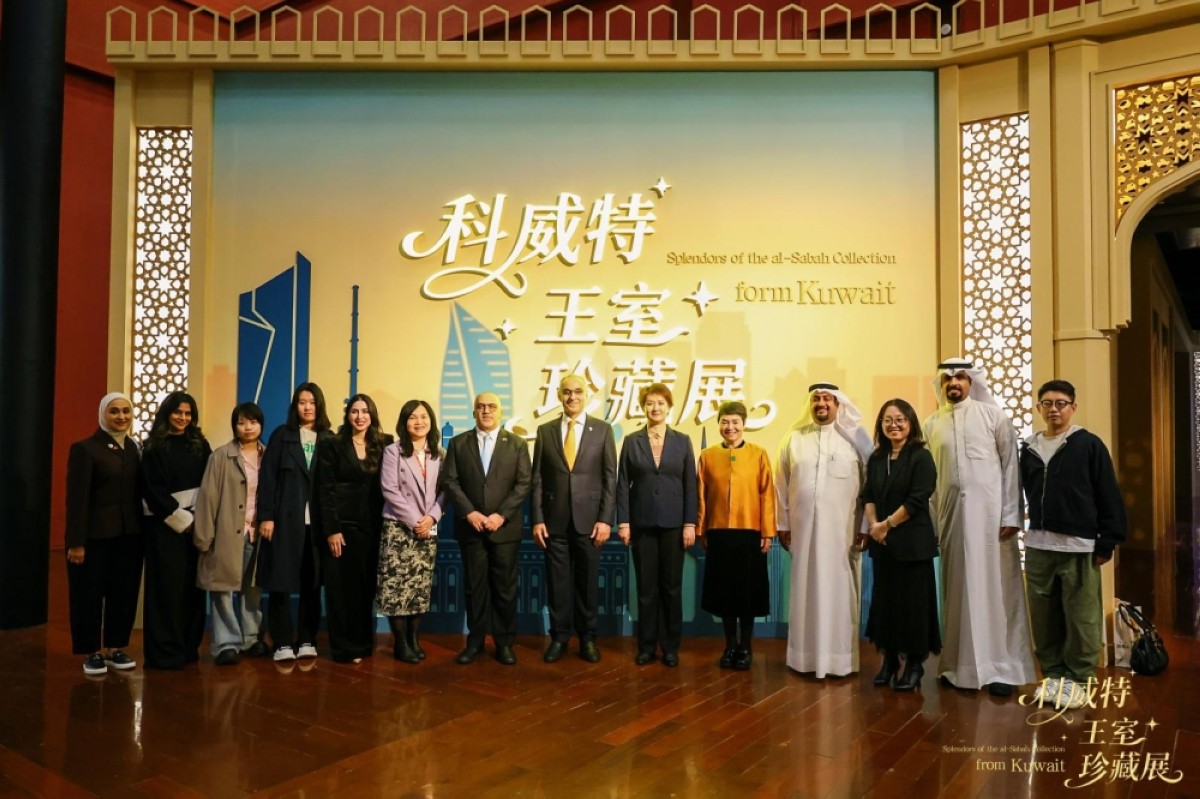

Kuwait’s rich cultural heritage took center stage in Guangzhou, China, on December 9th with the opening of “Splendors of the Al-Sabah Collection from Kuwait” at the Guangdong Museum. This significant exhibition, showcasing 133 rare artifacts, is a key event in the lead-up to Kuwait being named the Arab Capital of Culture and Media 2025. The event underscores the growing cultural exchange between Kuwait and China, and highlights the importance of preserving and sharing historical treasures.
Celebrating Kuwaiti Culture: The Al-Sabah Collection in Guangzhou
The exhibition’s inauguration was a prestigious affair, attended by Dr. Mohammad Al-Jassar, Secretary-General of the National Council for Culture, Arts and Letters (NCCAL), alongside a Kuwaiti delegation headed by Consul General Abdullah Turki Al-Turki. Dr. Al-Jassar emphasized the exhibition’s role in amplifying Kuwait’s cultural presence on the international stage, particularly as it prepares for its 2025 designation. He also lauded the continued dedication of Sheikha Hussa Sabah Al-Salem Al-Sabah in upholding the vision of Dar Al-Athar Al-Islamiyyah, founded by the late Sheikh Nasser Sabah Al-Ahmad Al-Sabah.
This exhibition isn’t simply a display of beautiful objects; it’s a deliberate effort to foster cultural dialogue and strengthen the bonds of cooperation between Kuwait and its global partners. The Al-Sabah Collection, renowned for its breadth and historical significance, provides a unique window into the artistic and cultural achievements of a vast geographical region.
A Journey Through Time and Civilizations
The artifacts on display span an impressive timeline, stretching from the third millennium BCE to the early 7th century CE. This extensive period allows visitors to trace the evolution of artistic styles and cultural practices across diverse civilizations. The collection isn’t limited to Kuwaiti artistry; it encompasses pieces originating from the Arabian Peninsula, Iran, India, Central Asia, and Egypt.
This diverse representation demonstrates the interconnectedness of these regions throughout history, and the influence they had on one another. Visitors can admire exquisite jewelry, intricately crafted vessels, imposing statues, and stunning works in gold and silver, often adorned with precious gemstones. The exhibition offers a tangible connection to the past, allowing audiences to appreciate the skill and artistry of ancient civilizations.
Highlights of the “Splendors of the Al-Sabah Collection”
Among the many remarkable pieces, a large bronze goat from Mesopotamia stands out as a particularly compelling exhibit. This sculpture isn’t merely an artistic creation; it’s deeply rooted in the symbolic beliefs of its time, representing fertility and playing a role in ancient religious rituals. The detail and craftsmanship of this piece are truly remarkable, offering a glimpse into the spiritual life of Mesopotamian society.
However, the bronze goat is just one example of the treasures on display. Hundreds of other rare items, each with its own unique story, contribute to the exhibition’s overall richness and appeal. The careful curation of the collection allows visitors to appreciate the diversity of artistic expression and the shared cultural heritage of the region. The exhibition also serves as a platform for art preservation and education.
A Multi-Sensory Opening Ceremony
The opening ceremony itself was a vibrant and engaging event, lasting 90 minutes and incorporating a variety of artistic performances. A captivating sand art performance set the stage, followed by speeches from Chinese officials acknowledging the importance of the cultural exchange. The Xinghai Conservatory ensemble provided a beautiful musical accompaniment, and a guided tour of the exhibits offered attendees a deeper understanding of the artifacts on display. This multi-sensory approach ensured a memorable experience for all who attended.
Strengthening Kuwait-China Relations Through Cultural Exchange
This exhibition in Guangzhou follows closely on the heels of another successful showcase, “Blossoms and Blades,” which opened in Shenzhen on December 6th. That exhibition focused on Mughal and Indian art from the 16th to 19th centuries, featuring 143 masterpieces from the Al-Sabah Collection. These back-to-back events demonstrate Kuwait’s commitment to actively promoting its cultural heritage abroad and fostering stronger ties with China.
The “Splendors of the Al-Sabah Collection from Kuwait” marks a significant milestone in Kuwait-China relations. It’s a testament to the power of cultural heritage to bridge divides and build understanding between nations. This initiative paves the way for future collaborations and exchanges, promising a continued strengthening of the relationship between Kuwait and China. The exhibition is expected to attract a large number of visitors, further solidifying Kuwait’s position as a vibrant cultural hub.
In conclusion, the exhibition in Guangzhou is more than just a display of artifacts; it’s a celebration of Kuwaiti culture, a testament to the enduring power of art, and a symbol of the growing friendship between Kuwait and China. As Kuwait prepares to embrace its role as the Arab Capital of Culture and Media 2025, this exhibition serves as a powerful prelude, showcasing the nation’s rich history and its commitment to fostering international understanding. We encourage those in the Guangzhou area to visit the Guangdong Museum and experience the “Splendors of the Al-Sabah Collection” firsthand.