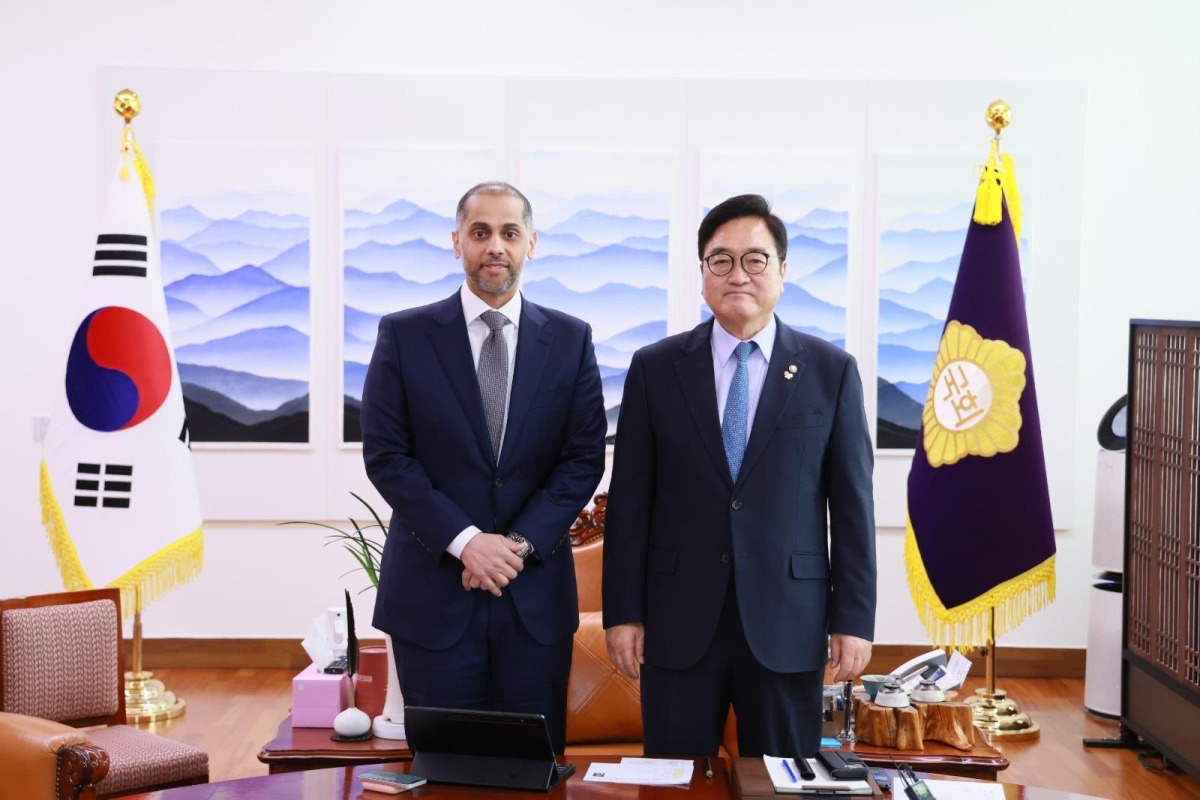

Seoul, South Korea – The Speaker of the National Assembly of the Republic of Korea, HE Woo Won-shik, recently convened with the Ambassador of the State of Qatar to Korea, HE Khalid bin Ibrahim Al Hamar, to discuss strengthening Qatar-Korea relations. The meeting, held in Seoul, focused on a review of existing collaborative efforts and potential avenues for increased cooperation between the two nations. Discussions spanned various sectors, signalling a continued commitment to a burgeoning partnership.
The meeting underscores a period of increasing diplomatic and economic engagement between Qatar and South Korea. While the specific details of the talks remain largely unconfirmed, it appears to build on recent trade agreements and investment initiatives. The encounter occurred as both countries navigate changing geopolitical landscapes and seek to diversify their international partnerships.
Strengthening Qatar-Korea Relations: A Focus on Collaboration
The core theme of the discussions was reportedly the enhancement of bilateral ties. Both officials expressed satisfaction with the current state of Qatar-Korea relations, pointing to growth in areas like energy, construction, and technology, according to a statement released by the Korean National Assembly. The meeting provided an opportunity to identify obstacles to further cooperation and explore potential solutions.
Economic Partnerships as a Cornerstone
Qatar is a significant supplier of liquified natural gas (LNG) to South Korea, a key component of Seoul’s energy security strategy. This trade relationship has been particularly important given global energy market volatility. Additionally, Korean companies have been actively involved in infrastructure projects within Qatar, notably related to preparations for major international events such as the FIFA World Cup 2022.
However, the discussion likely went beyond established energy and construction links. Reports indicate an increasing Korean interest in Qatari investment funds, and Qatari exploration of potential collaborations in advanced manufacturing and renewable energy technologies. This diversification of economic ties represents a key trend in the broader diplomatic relationship.
Cultural and Political Exchange
Beyond economic interests, the meeting likely touched upon cultural and political exchange programs. South Korea and Qatar have previously engaged in initiatives to promote mutual understanding through educational and artistic collaborations. These efforts contribute to building stronger people-to-people connections, fostering a more sustainable long-term partnership.
Furthermore, collaboration on regional and international security matters probably played a role in the conversations, particularly given shared concerns about stability in the Middle East and the wider Indo-Pacific region. Both nations have expressed a commitment to multilateralism and peaceful conflict resolution, aligning their foreign policy objectives in several key areas.
The exchange between Speaker Woo and Ambassador Al Hamar takes place amid a wider context of Qatar’s efforts to strengthen its international standing and deepen ties with key Asian partners. Meanwhile, South Korea continues to pursue economic diversification and secure reliable energy sources, making Qatar a strategically important ally. This focus on bilateral trade has been consistent in recent years.
Looking ahead, the immediate implications of this meeting are expected to be administrative follow-up by both governments. A joint commission, potentially focused on implementing identified collaborative projects, may be established. The timing and scope of such a commission remain uncertain and will depend on ongoing internal reviews in both Doha and Seoul. Future developments regarding potential investment agreements and expansion of cultural exchange programs should be monitored as indicators of the strengthened foreign relations between Qatar and South Korea.
The South Korean Ministry of Foreign Affairs has yet to release a detailed readout of the meeting, and further clarity regarding specific commitments is anticipated in the coming weeks. The relationship’s trajectory will also be influenced by broader regional political and economic trends.
Analysts suggest continued high-level dialogue will be vital to capitalize on the momentum generated by this meeting.