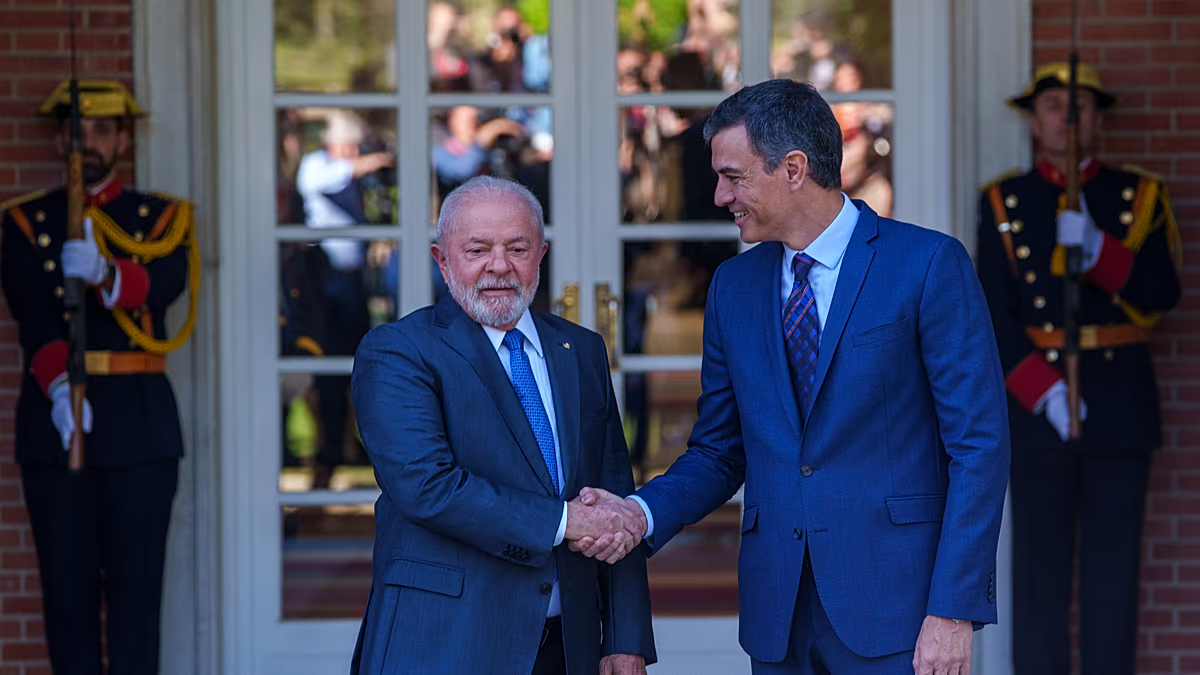

A joint statement from the leaders of Spain, Brazil, Chile, Colombia, Mexico, and Uruguay has condemned the United States’ military operation that resulted in the removal of Venezuelan President Nicolás Maduro. The leaders expressed concerns over a potential violation of international law and the possibility of foreign governments appropriating Venezuela’s resources following the US announcement it would oversee an interim government.
The operation, which saw Maduro and his wife, Cilia Flores, taken into custody by US Delta Force on Saturday following a raid on his Caracas compound, has ignited international debate. Maduro now faces charges in a New York prison related to drug trafficking, narcoterrorism, conspiracy, and weapons possession. President Donald Trump characterized the raid as “brilliant,” stating the US would “run Venezuela” until a “safe, proper and judicious” transition is established.
International Law and the Future of Venezuela
The six Latin American and European nations signing the joint statement argued the US action breached “basic principles of international law,” specifically the prohibition of the use of force and respect for territorial sovereignty as outlined in the United Nations Charter. They warned that such an intervention sets a “dangerous precedent” for regional peace and security, and carries risks for the Venezuelan civilian population.
The statement reiterated the need for a resolution to the situation in Venezuela through dialogue and in accordance with the will of the Venezuelan people, without external interference and adhering to international legal frameworks. A core concern voiced by the signatories is the potential exploitation of Venezuela’s substantial natural and strategic resources following Maduro’s removal.
Venezuela possesses the world’s largest proven oil reserves, making control of its petroleum industry a significant stake for international actors. During a press conference, President Trump alluded to the potential for rebuilding Venezuela’s oil infrastructure, estimating a multi-billion dollar cost to be covered by oil companies through reimbursement. This comment has amplified fears about resource control.
European Response and Diverging Views
Meanwhile, the European Union has adopted a more cautious stance. While calling for restraint and adherence to the UN Charter, the EU has largely refrained from explicit criticism of the US operation or President Trump’s handling of the situation.
German Chancellor Friedrich Merz stated the legal assessment of the US intervention is “complex” and requires thorough consideration, emphasizing the importance of consolidating a democratic transition. French President Emmanuel Macron celebrated Maduro’s removal as an opportunity for the Venezuelan people and suggested a swift role for Edmundo González, a 2024 presidential candidate forced into exile, in the transition process.
In contrast, Spanish Prime Minister Pedro Sánchez aligned with the Latin American governments, declaring Madrid would not recognize “an intervention that violates international law” any more than it recognized the Maduro regime. Spain maintains strong historical and economic ties to Latin America and has a vested interest in regional stability.
The EU previously refused to recognize the results of the July 2024 Venezuelan elections, citing widespread electoral fraud allegedly orchestrated by the Maduro government. Following the disputed election, opposition figures such as Edmundo González and María Corina Machado, who was barred from running and subsequently went into hiding, faced significant persecution. International recognition of Machado’s activism culminated in a Nobel Peace Prize in 2025.
The coming weeks will be critical in determining the shape of Venezuela’s future government and the extent of international involvement. Observers are closely watching how the US will balance its stated goals of facilitating a transition with concerns about sovereignty and resource exploitation, and what role international actors will play in ensuring a peaceful and democratic outcome. Stay informed about the evolving Venezuela crisis as events unfold.