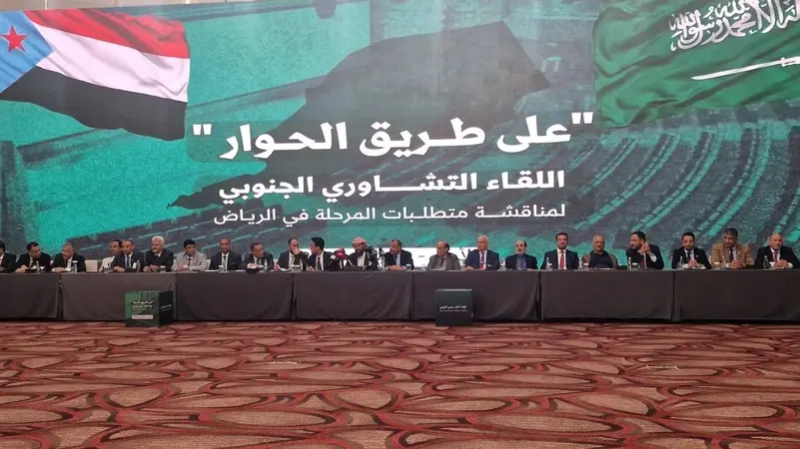

RIYADH — A significant gathering of southern Yemeni leaders concluded in Riyadh on Sunday, with participants voicing strong backing for Saudi Arabia’s efforts to facilitate a political dialogue aimed at resolving the long-standing southern issue. The meeting, which included tribal sheikhs and community representatives, signaled a unified desire for a negotiated solution and underscored the critical role Saudi Arabia is playing in Yemen’s complex political landscape. Participants emphasized the need for a path forward that avoids further conflict and prioritizes the future of the south.
The consultative meeting, which began earlier in the week, brought together a broad spectrum of southern voices to discuss their collective aspirations and concerns. According to a statement released by the Presidential Leadership Council member Abu Zar’a Al-Muharrami, the attendees sought “a just, safe and guaranteed solution” to address the unique challenges facing southern Yemen. The discussions took place against a backdrop of ongoing instability and the need for a comprehensive peace process in the country.
Saudi Arabia Leads Dialogue on the Southern Issue
Saudi officials reportedly provided assurances to the southern delegation that the Kingdom supports their legitimate demands and a comprehensive political solution. This includes acknowledging the right of southerners to self-determination, potentially including the restoration of an independent southern state. This commitment represents a potentially pivotal shift in the approach to Yemen’s internal divisions.
The Saudi-sponsored dialogue is seen by many as a crucial opportunity to address grievances that have fueled unrest in the south for decades. Historically, South Yemen was a separate nation before unification in 1990, and tensions have persisted since, often centering on issues of political representation, economic marginalization, and regional autonomy.
Addressing Immediate Concerns
Beyond long-term political goals, participants highlighted the importance of addressing immediate needs. These include the payment of delayed salaries, improvements to living conditions, and tackling broader economic challenges facing the southern population. Saudi Arabia has reportedly demonstrated a willingness to engage constructively on these issues, offering tangible support to alleviate suffering.
Additionally, Saudi officials reaffirmed their commitment to supporting southern security forces, including providing financial entitlements and enhancing their capabilities. This support is viewed as essential for maintaining stability and countering threats from groups like the Houthis, who are widely considered a primary obstacle to peace in Yemen. The Houthis control much of northern Yemen and have been engaged in conflict with the internationally recognized government, backed by a Saudi-led coalition.
Economic Development as a Cornerstone
The meeting emphasized the importance of economic support and development as a key component of any future partnership between the south and Saudi Arabia. Participants view this engagement as a foundation for a stable and prosperous future, built on security and economic opportunity. Investment in infrastructure and job creation are expected to be central to these efforts.
However, the path forward remains complex. The success of the dialogue hinges on the ability of various southern factions to overcome internal divisions and present a unified front. The statement from the meeting stressed the need for a “state-minded approach” and responsible representation of southern aspirations.
The participants also condemned campaigns that question Saudi Arabia’s role or target southern military and security forces. They reiterated that the Houthis and other extremist groups pose the greatest threat to the region’s stability. This stance aligns with the Saudi-led coalition’s broader security objectives in Yemen. The ongoing conflict has created a humanitarian crisis, with millions of Yemenis in need of assistance.
The international community was urged to support the Saudi-sponsored dialogue and respect the aspirations of the southern Yemeni people. A lasting resolution to the Yemen conflict requires addressing the concerns of all stakeholders, including those in the south. The United Nations has been actively involved in mediation efforts, but a comprehensive peace agreement has yet to be reached.
Looking ahead, the next step involves translating the outcomes of the Riyadh meeting into a concrete political roadmap. While no specific timeline has been announced, observers anticipate further consultations and negotiations in the coming weeks and months. The key uncertainty lies in whether a broad consensus can be achieved among the diverse southern groups and whether the Houthis will engage in meaningful dialogue. The outcome of these discussions will be crucial for determining the future of southern Yemen and the overall stability of the region, and the resolution of the political status of the south remains a central challenge.
The situation also requires continued monitoring of the Yemen peace process and the role of external actors, including Saudi Arabia, the United Arab Emirates, and the international community. Any escalation in violence or a breakdown in negotiations could jeopardize the progress made in Riyadh and prolong the suffering of the Yemeni people.