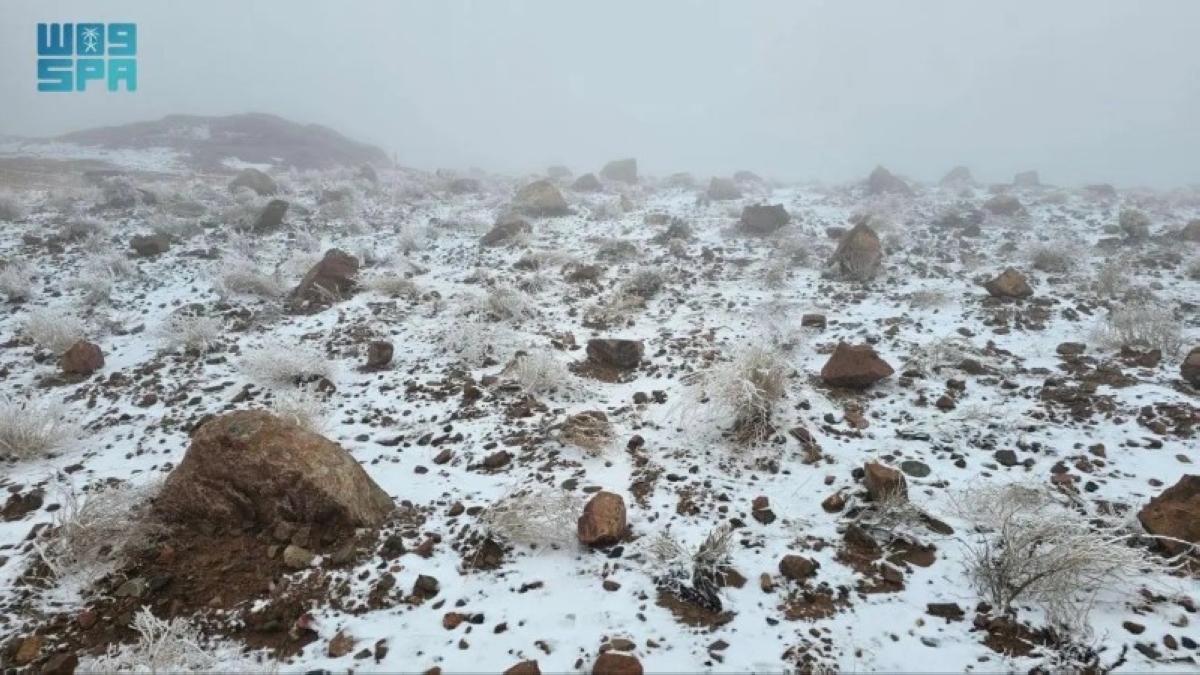

Unusual winter weather brought snowfall in Tabuk, Saudi Arabia, on Wednesday, blanketing the Jabal Al-Lawz mountains and surrounding highlands. Temperatures plummeted as low as -4 degrees Celsius, accompanied by dense fog and strong winds. The National Center for Meteorology (NCM) had previously warned of potential snow and frost in the region, marking a rare and visually striking event for the typically arid landscape.
The snowfall was concentrated on Jabal Al-Lawz, also known as the Mountain of Almonds, and the Trojena highlands, with lighter rainfall reported in areas like Bi’r bin Hirmas, Al-Uyaynah, Halat Ammar, and Shigry. This weather system is attracting both local residents and tourists eager to experience the unusual winter scenery. The NCM also issued warnings for other parts of the Kingdom, anticipating more severe weather conditions.
Jabal Al-Lawz Snowfall: A Rare Weather Event
Jabal Al-Lawz, situated northwest of Saudi Arabia at an elevation of 2,580 meters, is one of the few places in the country where snowfall occurs regularly, though it remains a relatively infrequent phenomenon. The mountain’s height and geographic location create conditions conducive to freezing temperatures and precipitation during colder months. This recent event, however, appears to be more substantial than typical winter snowfalls in the area.
Impact on Local Conditions
The combination of snow, fog, and strong winds has created challenging conditions in the Tabuk region. Visibility has been significantly reduced in the highlands, and authorities are advising caution for travelers. The NCM reports that the cold snap is expected to persist for at least the next 24 hours, potentially impacting transportation and outdoor activities.
Additionally, the snowfall is contributing to increased moisture levels in the surrounding areas. This, coupled with predicted rainfall in other regions, raises the risk of flash floods, particularly in low-lying areas and wadis. Residents in Riyadh, the Eastern Province, and the Northern Borders regions have been specifically warned to prepare for potential flooding.
In contrast to the cooler temperatures in the north, much of Saudi Arabia experiences mild winters. The Kingdom’s diverse geography, ranging from coastal plains to high mountains, results in significant regional variations in weather patterns. This latest event highlights the dramatic differences that can occur within a relatively short distance.
Broader Weather Patterns Across Saudi Arabia
The NCM’s Wednesday report detailed a complex weather system affecting much of the Kingdom. While snowfall in Tabuk was the most visually striking aspect, the report also indicated partly cloudy to cloudy skies with scattered thunderstorms and rain in the western and southwestern regions. This is linked to a larger weather disturbance moving across the Arabian Peninsula.
Moderate to heavy thunderstorms are predicted for parts of the Riyadh, Eastern Province, and Northern Borders regions, with the potential for hail and strong winds. These conditions could disrupt daily life and pose risks to infrastructure. The forecast also includes moderate rainfall for areas in Tabuk, Al-Jouf, Hail, and Qassim, adding to the overall increase in precipitation across the country.
The recent increase in rainfall and cooler temperatures is a welcome change for some areas of Saudi Arabia experiencing drought conditions. However, the rapid onset of these conditions also presents challenges, requiring effective preparedness and response measures from local authorities. Water resource management will be crucial in the coming weeks.
The phenomenon of winter weather in Saudi Arabia is becoming increasingly discussed in climate circles. While snowfall isn’t new to the highest peaks, the frequency and intensity of these events are being monitored for potential links to broader climate change trends. Further research is needed to determine the long-term implications of these shifts.
The current weather situation is also impacting travel plans. Several domestic airlines have reported delays and cancellations due to the adverse conditions, particularly at airports in the affected regions. Travelers are advised to check with their airlines for the latest updates before heading to the airport. The unusual weather is also drawing attention to the Kingdom’s developing tourism sector, with potential for “snow tourism” in areas like Jabal Al-Lawz.
Looking ahead, the NCM continues to monitor the weather system closely. The immediate forecast calls for continued cold temperatures and precipitation in the northern and central regions of the Kingdom. The duration and intensity of the rainfall and potential for further snow in Saudi Arabia remain uncertain, dependent on the movement of the prevailing weather patterns. Residents and visitors are encouraged to stay informed through official weather updates and heed any safety advisories issued by local authorities.
The NCM will be releasing updated forecasts every six hours, providing more detailed information on the evolving weather situation. Monitoring these reports will be essential for assessing the risks and taking appropriate precautions. The potential for continued disruptions to travel and daily life remains a key concern as the weather system progresses.