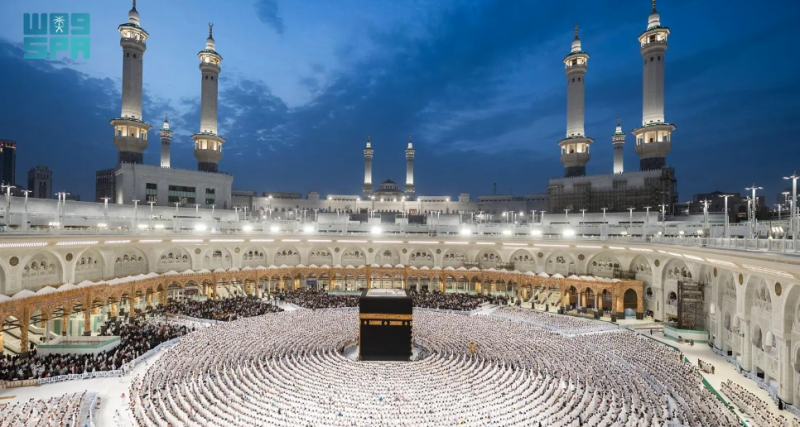

MAKKAH — Advanced crowd management technologies are being implemented at the Grand Mosque in Makkah to improve the safety and flow of pilgrims during Hajj and Umrah seasons. These systems utilize real-time data collection and analysis to monitor visitor movement, enabling authorities to respond quickly to changing conditions and optimize the worship experience. The deployment represents a significant investment in technology aimed at accommodating the increasing number of pilgrims visiting the holy site each year.
The General Authority for the Care of the Two Holy Mosques announced the expanded use of intelligent counting systems, which track worshippers entering and exiting key areas of the mosque, including entrances, corridors, floors, and courtyards. This data provides a comprehensive understanding of crowd density and movement patterns, allowing for proactive adjustments to maintain a safe and orderly environment. The initiative is part of a broader effort to leverage technology for improved services at the Grand Mosque and Prophet’s Mosque.
Enhancing Safety Through Intelligent Crowd Management
The core function of these new systems is to provide real-time situational awareness to field teams. According to the General Authority, the data generated allows for faster and more informed decision-making, particularly in response to fluctuations in visitor numbers. This is especially critical during peak prayer times and throughout the Hajj season, when millions of pilgrims converge on Makkah.
How the Technology Works
The systems rely on a network of sensors strategically placed throughout the Grand Mosque. These sensors collect data on pedestrian traffic, which is then analyzed to create a dynamic map of pilgrim flow. This information is displayed on dashboards accessible to security personnel and operational teams. The authority has not disclosed the specific types of sensors used, but industry experts suggest technologies like infrared sensors, video analytics, and Wi-Fi tracking are likely components.
Additionally, the systems are designed to identify potential bottlenecks before they form. By detecting areas of increasing density, authorities can redirect visitors to less congested routes, preventing overcrowding and ensuring a smoother flow of movement. This proactive approach is a departure from reactive measures traditionally used for Hajj security.
However, the implementation of such technology also presents challenges. Maintaining data privacy and ensuring the accuracy of the sensors in a crowded environment are ongoing concerns. The authority has stated its commitment to protecting pilgrim data and continuously calibrating the systems for optimal performance.
Beyond Counting: Integrated Operational Framework
The intelligent counting systems are not operating in isolation. They are integrated into a broader operational framework that combines technology-driven monitoring with on-the-ground personnel. Field teams are equipped with mobile devices that provide access to real-time data, allowing them to respond quickly to alerts and address emerging issues.
Meanwhile, the systems also contribute to improved resource allocation. By understanding where crowds are concentrated, authorities can deploy additional personnel and services to those areas, ensuring that worshippers have access to the support they need. This includes providing assistance with directions, medical aid, and other essential services.
In contrast to previous years, where crowd control relied heavily on manual observation and static barriers, this new approach offers a more dynamic and responsive solution. The ability to adapt to changing conditions in real-time is a significant advantage, particularly during the unpredictable nature of mass gatherings like Hajj.
The Wider Context of Smart City Initiatives
The deployment of these technologies at the Grand Mosque aligns with Saudi Arabia’s broader Vision 2030 plan, which emphasizes the development of smart cities and the use of technology to improve the quality of life for citizens and visitors. The initiative also reflects a growing global trend towards using data analytics and artificial intelligence to manage large-scale events and public spaces.
The Ministry of Hajj and Umrah has previously announced plans to implement similar technologies at other holy sites, including Mina and Arafat, to enhance the overall Hajj experience. This suggests a long-term commitment to leveraging technology for improved pilgrimage management.
The authority stated that the ongoing efforts to harness cutting-edge solutions are intended to enhance service quality and improve the overall worship experience at the Two Holy Mosques. This includes not only improving safety and efficiency but also creating a more comfortable and welcoming environment for pilgrims.
Looking ahead, the General Authority for the Care of the Two Holy Mosques is expected to continue refining the intelligent counting systems and exploring new technologies to further enhance crowd management capabilities. The next phase of development will likely focus on integrating the systems with other smart city initiatives and expanding their coverage to encompass a wider area around the Grand Mosque. The effectiveness of the current implementation will be closely monitored during the upcoming Hajj season, and adjustments will be made based on the data collected. Further details regarding the long-term scalability and potential for predictive modeling remain to be seen.