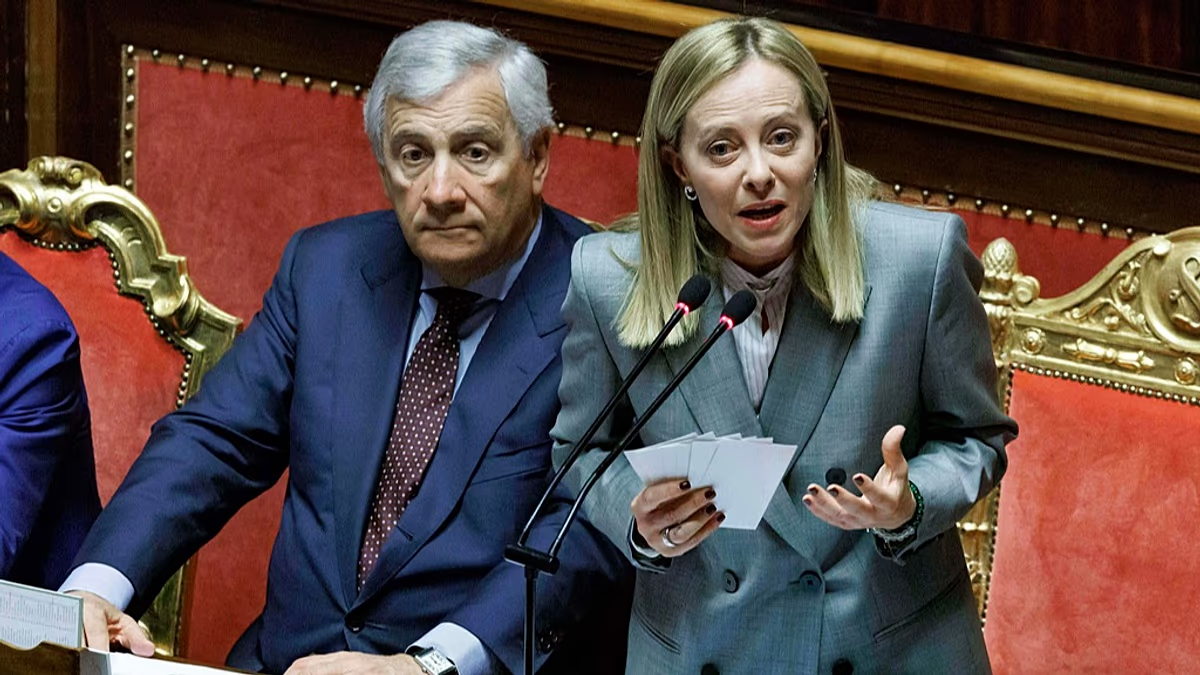

The potential ratification of the EU-Mercosur deal faces a critical hurdle as Italian Prime Minister Giorgia Meloni expressed reservations on Wednesday, stating that signing the agreement in the coming days would be “premature.” This hesitation throws into doubt the European Commission’s plan to finalize the trade agreement with Argentina, Brazil, Paraguay, and Uruguay this Saturday in Foz do Iguaçu. The deal, years in the making, aims to liberalize trade between the two blocs, but significant opposition remains within the European Union.
Italy’s stance is particularly important as several other EU member states have already voiced concerns. Without Italy’s support, securing the qualified majority needed for approval – 15 out of 27 countries representing at least 65% of the EU population – appears unlikely. The delay comes despite a recent vote in the European Parliament intended to pave the way for the agreement.
Why is the EU-Mercosur Deal Stalled?
The core of the disagreement centers on protecting European farmers from increased competition from South American agricultural imports. France is leading the charge for stronger safeguards, demanding measures to ensure a level playing field and prevent unfair trade practices. Concerns extend to the environmental and animal welfare standards employed by Mercosur producers, with calls for reciprocity – meaning Mercosur nations should adhere to similar regulations as those in the EU.
According to Prime Minister Meloni, Italy needs more time to assess a package of additional measures designed to protect its agricultural sector. She emphasized that Italy doesn’t intend to block the deal outright, but requires “adequate guarantees of reciprocity” before offering its approval. This suggests a willingness to compromise, but only if Italian farmers’ interests are sufficiently addressed.
Safeguard Concerns and Proposed Amendments
The European Parliament approved a package of safeguards on Tuesday intended to monitor for import surges from Latin America. However, Italian Agriculture Minister Francesco Lollobrigida has reportedly instructed his party’s MEPs to propose amendments that would strengthen these protections further. These amendments aim to address what some lawmakers see as shortcomings in the initial safeguard clause proposed by the European Commission.
Carlo Fidanza, head of the Brothers of Italy delegation at the Parliament, explained that current safeguards are “too cumbersome to activate” and don’t adequately enforce the principle of reciprocity. He argued against allowing imports of products that don’t meet EU standards for environmental protection, animal welfare, and pesticide use. This push for stricter standards reflects growing anxieties about the potential impact of the deal on European agricultural practices.
Additionally, Meloni’s government is facing pressure from Italian farmers’ associations, who are actively campaigning against the agreement. Coldiretti, a major Italian agricultural network, is participating in a broader European protest scheduled for December 18 in Brussels, demanding “real and binding safeguard principles and full reciprocity” as conditions for the deal’s approval. Coldiretti has been a vocal critic of the potential negative consequences for Italian agriculture.
Ireland and the Netherlands, while previously expressing reservations, have not yet formally announced their positions. Belgium, meanwhile, has indicated it will abstain from the vote. This complex landscape highlights the deep divisions within the EU regarding the trade agreement.
The situation is further complicated by broader geopolitical considerations and the desire to strengthen trade relationships with South America. The EU sees Mercosur as a significant economic partner, and the deal represents a potential boost to trade and investment. However, these benefits are being weighed against the concerns of domestic agricultural sectors and the need to uphold environmental standards. The term trade liberalization is central to the debate surrounding the deal.
Looking ahead, the focus will be on whether the European Commission can address the concerns raised by Italy and other member states. Further negotiations and potential revisions to the safeguard package are likely. The future of the EU-Mercosur deal remains uncertain, and a final decision may be delayed beyond the initially proposed date. Stakeholders on both sides of the Atlantic will be closely watching developments as the debate continues.
For more information on the EU’s trade policy, you can visit the European Commission’s Trade website.