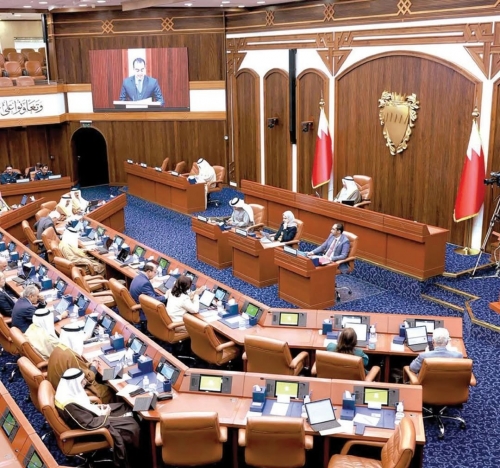

The Bahrain Shura Council recently concluded a session marked by key decisions impacting road safety regulations and the private education sector. A central focus of the discussion was a proposal concerning traffic fines, specifically the “half-settlement” period offered to motorists. While seemingly a gesture of leniency, the council ultimately decided against extending this deadline, prioritizing the effectiveness of recent traffic law reforms. This session also saw the approval of a long-awaited new law governing private schools and an administrative adjustment aimed at improving the financial accountability of the Council itself.
Shura Council Stands Firm on Traffic Fine Policy
The core debate revolved around a suggestion to increase the timeframe for paying traffic fines at a reduced rate – often referred to as a “half-settlement” – from the current seven days to a full 30 days. Proponents argued that a longer period would provide greater convenience for citizens and residents. However, members of the Shura Council firmly rejected this notion, citing concerns that it would dilute the deterrent effect of stricter traffic laws recently implemented to enhance road safety.
Maintaining the Deterrent Effect
The council’s reasoning centers on the principle of immediacy in legal consequences. They argue that a shorter half-settlement window reinforces the seriousness of traffic violations. Extending it to 30 days, they believe, provides a disincentive for prompt payment and inadvertently normalizes irresponsible driving behaviors. The intention behind recent legislative changes was to actively discourage violations and improve overall road discipline, and the council views the existing seven-day period as crucial to achieving this goal.
The recent crackdown on traffic violations, coupled with increased fines, appeared to be showing a positive impact. The council members expressed a desire to maintain that momentum and prevent any rollback of progress made in reducing accidents and fatalities. This decision reflects a broader commitment to public safety and adherence to robust legal frameworks.
Modernizing Private Education with a New Schools Law
Beyond traffic fines, a significant portion of the Shura Council’s session was dedicated to modernizing the regulation of the private education sector. The approval of a new Private Schools Law represents a major overhaul of the existing legislation, which dated back to 1998 and was becoming increasingly inadequate to address the evolving landscape of education in Bahrain.
A Comprehensive Framework for Private Schools
This new law establishes a more comprehensive and updated framework governing all aspects of private schooling. This includes, but is not limited to, nurseries, kindergartens, primary and secondary schools, foreign institutes, and community schools. Key areas addressed in the legislation encompass curriculum standards, teacher qualifications, student welfare, and financial oversight.
The aim is to enhance the quality of education offered by private institutions, ensuring they meet internationally recognized standards. It also seeks to provide greater protection for students and their families, promoting a safe and supportive learning environment. The updated law is expected to attract further investment in the private education sector, contributing to its continued growth and development. This initiative is expected to impact educational standards across Bahrain.
Streamlining Financial Processes within the Council
In a move demonstrating commitment to transparency and efficiency, the Shura Council also approved an administrative amendment regarding its own financial procedures. The amendment extends the timeframe granted to the Secretariat of the Council of Representatives to prepare and submit audited final accounts from one month to three months.
Enhancing Financial Accountability
This adjustment is intended to allow for a more thorough and accurate financial review process, particularly concerning the Council Bureau and the Speaker’s office. The extra time will enable the Secretariat to properly reconcile accounts, address any discrepancies, and ensure full compliance with auditing requirements. This change doesn’t suggest prior issues; rather, it’s a proactive step towards strengthening financial governance within the Council’s operations. The broader goal is to improve public financial management and foster greater public trust in the Council’s stewardship of resources.
The Council emphasized that this is not a loosening of oversight, but a pragmatic solution to ensure the robustness of the financial review. A more detailed and accurate accounting process ultimately benefits the public by promoting responsible spending.
In conclusion, the Shura Council’s recent session showcased a commitment to both public safety and institutional improvement. The firm stance against extending the traffic fines half-settlement period prioritizes road safety and the effectiveness of recent legislation. The approval of the new Private Schools Law signifies a dedication to modernizing the education sector and upholding quality standards. Finally, the administrative amendment regarding financial accounts demonstrates a desire for increased transparency and efficient governance. These decisions collectively reflect the Shura Council’s ongoing efforts to address critical issues and enhance the well-being of Bahraini citizens and residents. Readers interested in learning more about specific legislative changes are encouraged to visit the official website of the Bahrain Shura Council.