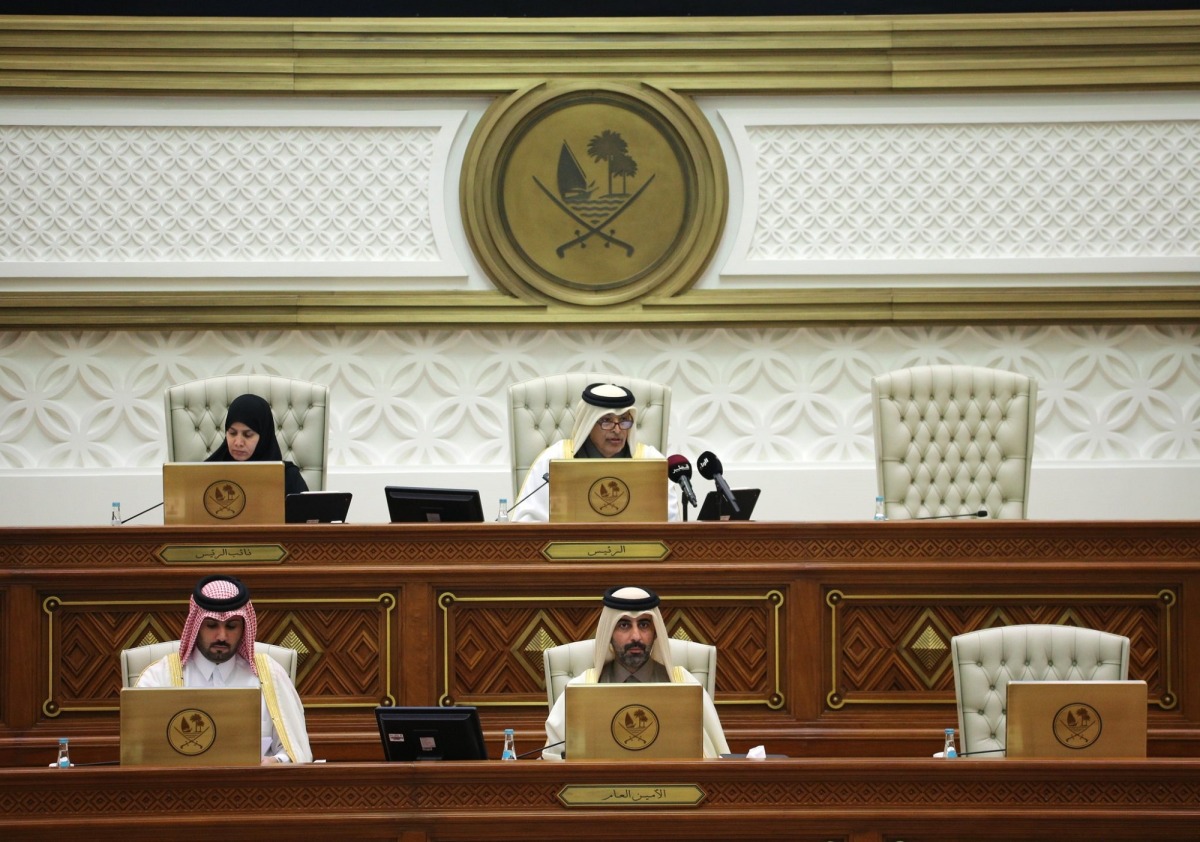

The Shura Council of Qatar convened on Monday to discuss several key pieces of legislation and international engagements, including a draft law concerning tax exemptions for foreign military contractors and amendments to food security regulations. The session, held at the Council’s headquarters in Doha, focused on bolstering Qatar’s economic and national security interests through careful review of proposed laws and strategic partnerships. This Shura Council activity highlights the ongoing legislative process within the country.
Under the chairmanship of Speaker HE Hassan bin Abdullah Al Ghanim, the Council addressed a range of issues, from supporting local agriculture to reviewing reports from recent international parliamentary meetings. Secretary-General HE Nayef bin Mohammed Al Mahmoud presented the agenda, and the minutes of the previous session were approved before proceeding to the core discussions. The proceedings underscore Qatar’s commitment to both domestic policy refinement and international collaboration.
Examining the Proposed Tax Exemptions
A significant portion of the session was dedicated to a draft law proposing income tax exemptions for specific transactions involving foreign companies working with Qatar’s military and related entities. The Council opted to refer this legislation to the Financial and Economic Affairs Committee for detailed study. This committee will analyze the potential economic impact and strategic implications of the proposed exemptions before submitting a report to the Council.
Potential Implications for Foreign Investment
The proposed tax exemptions could be designed to attract further foreign investment in Qatar’s defense sector, according to analysts. However, the Council’s careful consideration suggests a desire to balance economic incentives with national interests and ensure transparency in financial dealings. The Financial and Economic Affairs Committee will likely assess the potential benefits against any possible drawbacks.
Strengthening Food Security Measures
The Council also approved a draft law amending provisions of Decree Law No. 24 of 2019, which regulates Qatar’s strategic food and consumer goods reserves. This amended draft was then returned to the government following a review by the Financial and Economic Affairs Committee. This action demonstrates a continued focus on food security, a critical priority for Qatar given its geographic location and reliance on imports.
The amendments likely aim to enhance the efficiency and effectiveness of Qatar’s strategic stock management system. According to previous statements from the Ministry of Municipality and Environment, Qatar is actively diversifying its food sources and increasing domestic production to reduce its vulnerability to external disruptions. This legislative update is a key component of that broader strategy.
Agricultural Support Mechanisms Under Review
Additionally, the Council reviewed a government statement regarding proposals for improving agricultural support to local farms. The aim is to determine how these mechanisms can better contribute to enhancing Qatar’s overall food security. The matter was referred to the Health, General Services and Environment Committee for further investigation and recommendations. This signals a commitment to bolstering the agricultural sector.
The Council also considered reports detailing the participation of its members in international forums. A report on the involvement of Deputy Speaker Dr. Hamda bint Hassan Al Sulaiti in meetings of the Inter-Parliamentary Union in Geneva (October 2025) was presented. Similarly, a report on the delegation’s attendance at the Asian Parliamentary Assembly’s Committee on Political Affairs meeting in Mashhad, Iran (December 2025) was reviewed. These engagements highlight Qatar’s active role in regional and global parliamentary diplomacy.
Looking ahead, the Financial and Economic Affairs Committee is expected to submit its report on the tax exemption draft law within a specified timeframe, which has not yet been publicly announced. The Health, General Services and Environment Committee will also begin its study of agricultural support mechanisms. The Council’s subsequent decisions on these matters will be crucial in shaping Qatar’s economic and security policies in the coming months, and further legislative updates regarding Qatar’s economy are anticipated.
The timing of the government’s response to the amended food security law remains uncertain, dependent on internal review processes. Observers will be watching for further details on the specific amendments and their potential impact on Qatar’s food supply chain.