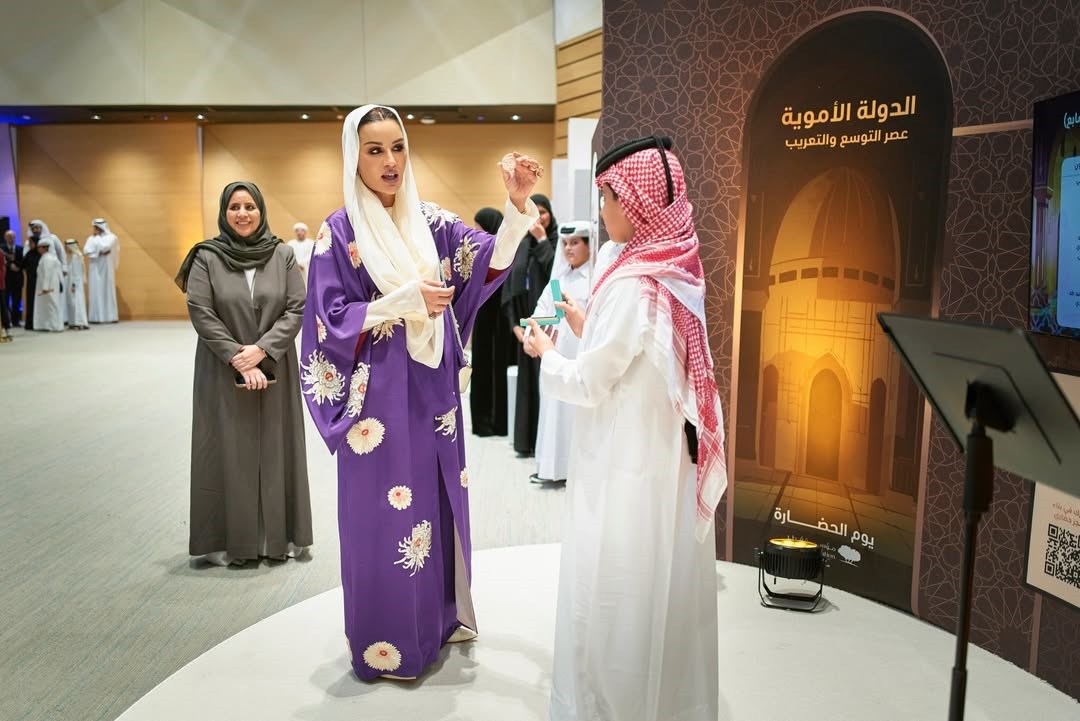

Doha, Qatar – HH Sheikha Moza bint Nasser, Chairperson of Qatar Foundation, attended “Civilization Day,” a new initiative designed to bring the study of Islamic civilization to life for students. The event, organized by Qatar Foundation’s Pre-University Education, focused on interactive learning and demonstrating how historical knowledge can be applied to contemporary life, fostering a deeper understanding of national identity and cultural heritage.
Held at Qatar Foundation, the event showcased student research, performances, and digital content exploring the significant eras and achievements of Islamic history. It marks a shift towards experiential learning within the foundation’s curriculum, moving beyond traditional rote memorization to encourage critical thinking and engagement with the subject matter. Officials emphasized the importance of understanding the past to shape a stronger future for Qatar.
The Importance of Studying Islamic Civilization
Qatar Foundation’s Pre-University Education launched the “Islamic Civilization” curriculum to provide students with a comprehensive understanding of the region’s rich history. According to Abeer Al Khalifa, President of QF’s PUE, the curriculum aims to instill a deeper appreciation for Qatar’s heritage and its place within the broader Islamic world. This curriculum differs from standard history lessons, placing emphasis on the values and principles that drove advancements during key periods.
Al Khalifa underscored that revisiting Islamic history isn’t just about memorizing dates and names, but about extracting valuable lessons that remain relevant today. These lessons, she believes, help to strengthen a sense of identity and provide a foundation for future progress. The event actively promoted the idea that understanding cultural heritage is key to informed citizenship.
From Theory to Practice
Civilization Day wasn’t a lecture series; it was a hands-on showcase of student learning. Students themselves led interactive stations, demonstrating their research and creative interpretations. Sara Al Hajri, Executive Director of Student Affairs and Community Engagement at QF’s PUE, highlighted that this practical activation allowed learning to transcend theoretical knowledge.
The integrated educational approach used in the curriculum combined historical data with social contexts, artistic expressions, and underlying values. This allowed students to form a well-rounded understanding of Islamic history and its impact. The day also encouraged students to develop and exhibit crucial soft skills such as communication, collaboration, and leadership.
Students explored various facets of Islamic civilization, showcasing achievements in science, art, and philosophy. Visual and digital displays complemented the performances and research projects, creating a multi-sensory learning experience. This holistic approach aimed to foster not merely awareness, but genuine understanding and a living connection to the past.
The event represented the first large-scale demonstration of the new curriculum in Qatar Foundation schools, a move reflecting a wider trend in educational institutions globally to prioritize experiential learning and cultural understanding. However, the long-term effects of this pedagogical shift on student outcomes remain to be seen.
Looking ahead, Qatar Foundation intends to build upon the success of Civilization Day, with plans to establish it as an annual event. Al Hajri indicated that future iterations of the event could become a vital platform for showcasing student research and innovation, as well as demonstrating the foundation’s commitment to quality education. The event’s expansion will likely depend on ongoing assessments of student engagement and feedback from educators. Further development and adjustments to the Qatar education system will be key to sustaining this initiative’s momentum.