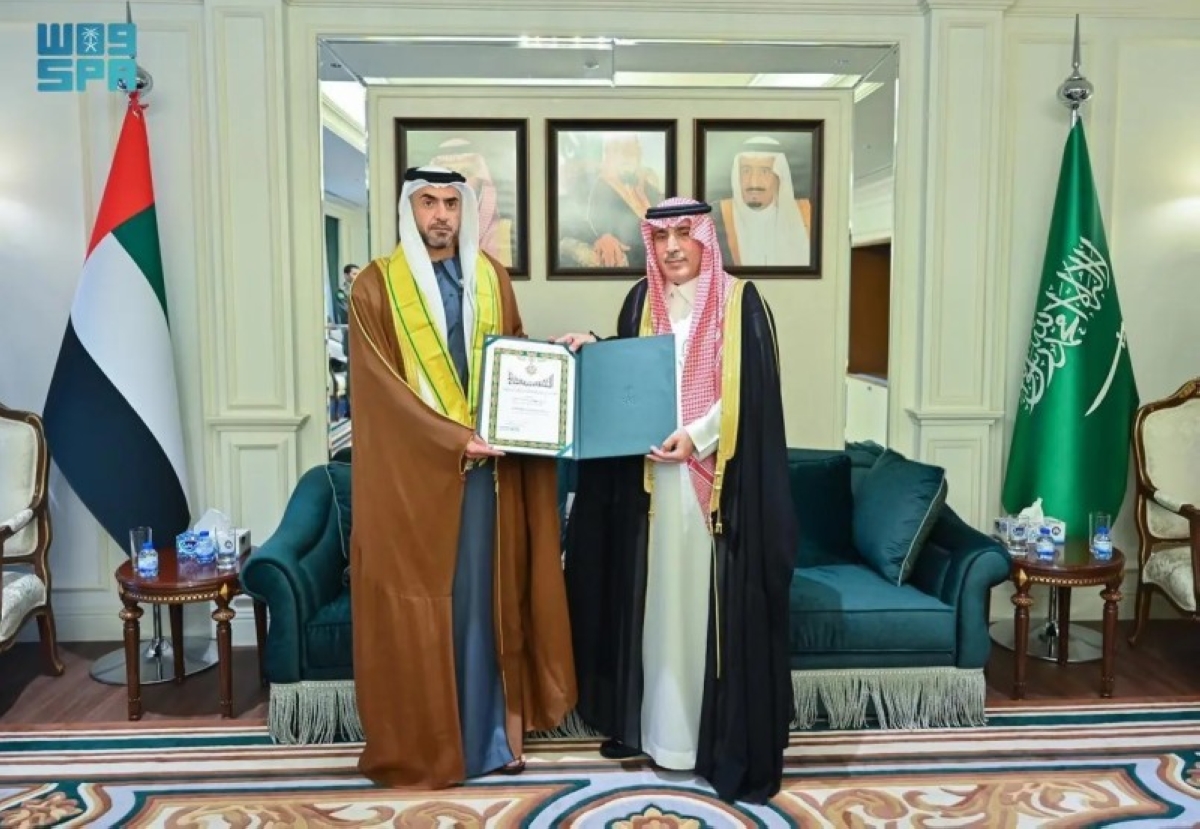

Abu Dhabi recently witnessed a significant diplomatic recognition as Sheikh Nahyan bin Saif Al Nahyan, the United Arab Emirates’ deputy minister of state for foreign affairs, received the King Abdulaziz Sash of the Second Class from Saudi Ambassador Sultan Al-Anqari. The award, presented at the Saudi embassy, acknowledges Sheikh Nahyan’s contributions to fostering strong UAE-Saudi relations during his previous role as UAE ambassador to Saudi Arabia. This event underscores the continued importance of the bilateral partnership between the two Gulf nations.
The ceremony took place in Abu Dhabi on [Date – *insert date if available, otherwise omit*]. Saudi Ambassador Al-Anqari presented the honor on behalf of King Salman, highlighting Sheikh Nahyan’s dedication to strengthening ties between the Kingdom and the Emirates. The recognition is a formal expression of gratitude for his work while serving as ambassador, a position he held until his appointment as deputy minister.
Strengthening UAE-Saudi Relations Through Diplomatic Recognition
The King Abdulaziz Sash is a prestigious award bestowed by Saudi Arabia to individuals who have significantly contributed to the Kingdom’s interests or strengthened its relationships with other nations. The awarding of this sash to Sheikh Nahyan is particularly noteworthy given the current geopolitical landscape and the increasing emphasis on regional cooperation. It signals Saudi Arabia’s appreciation for the UAE’s consistent support and collaborative efforts.
Sheikh Nahyan’s tenure as UAE ambassador to Saudi Arabia coincided with a period of increased collaboration on several fronts, including economic development, security initiatives, and cultural exchange. According to reports from the UAE Ministry of Foreign Affairs, trade volume between the two countries has steadily risen in recent years, reaching [Insert trade volume if available, otherwise omit] in [Year – *insert year if available, otherwise omit*]. This growth is attributed, in part, to the diplomatic groundwork laid during Sheikh Nahyan’s ambassadorship.
A History of Close Ties
The relationship between the UAE and Saudi Arabia dates back decades, rooted in shared cultural heritage, economic interests, and strategic security concerns. Both nations are founding members of the Gulf Cooperation Council (GCC), a political and economic alliance aimed at fostering stability and cooperation in the region. The GCC framework has facilitated numerous joint projects and initiatives, further solidifying the bond between Abu Dhabi and Riyadh.
However, the relationship hasn’t been without its complexities. Regional conflicts and differing approaches to certain foreign policy issues have occasionally presented challenges. Despite these hurdles, both countries have consistently prioritized maintaining a strong and unified front, recognizing the mutual benefits of close cooperation. The recent diplomatic gesture reinforces this commitment.
Sheikh Nahyan’s New Role and Future Collaboration
Sheikh Nahyan’s appointment as UAE’s deputy minister of state for foreign affairs in [Month, Year – *insert if available, otherwise omit*] signifies the UAE’s continued focus on proactive diplomacy and regional engagement. In this new capacity, he is expected to play a crucial role in shaping the UAE’s foreign policy agenda and strengthening its relationships with key international partners. This includes, but is not limited to, continued efforts to enhance bilateral ties with Saudi Arabia.
The Ministry of Foreign Affairs has indicated that Sheikh Nahyan will be involved in a wide range of diplomatic initiatives, including mediation efforts, economic negotiations, and cultural diplomacy. His experience as ambassador to Saudi Arabia will undoubtedly be invaluable as he navigates the complexities of regional politics and works to advance the UAE’s interests. Furthermore, his understanding of Saudi perspectives will be a key asset in fostering even closer collaboration.
The award also comes at a time of evolving dynamics in the Middle East, with increased focus on economic diversification and regional security. Both the UAE and Saudi Arabia are actively pursuing ambitious economic reforms, such as Vision 2030 in Saudi Arabia and the UAE’s long-term economic strategy, which require a stable and cooperative regional environment. Strong diplomatic relations are therefore essential for achieving these goals.
Analysts suggest that this recognition is a signal of continued alignment on key regional issues, including the ongoing efforts to address the conflicts in Yemen and Syria. The two nations have historically coordinated their foreign policy positions on these matters, and the award reinforces the expectation of continued cooperation. The stability of the region is a shared priority for both the UAE and Saudi Arabia.
Looking ahead, the next steps will likely involve continued high-level meetings and consultations between officials from both countries. The implementation of joint economic projects and security initiatives is also expected to accelerate. While the precise timing and scope of these developments remain uncertain, the recent award serves as a positive indicator of the future trajectory of Saudi-Emirati cooperation. Observers will be watching for further demonstrations of this strengthened partnership in the coming months, particularly regarding regional security and economic integration.
The ongoing development of the relationship will also be influenced by broader geopolitical factors, including the evolving role of the United States in the region and the increasing influence of other global powers. Maintaining a strong and independent voice within the GCC will be crucial for both the UAE and Saudi Arabia as they navigate these complex challenges. The strength of their regional partnership will be a key determinant of their success.