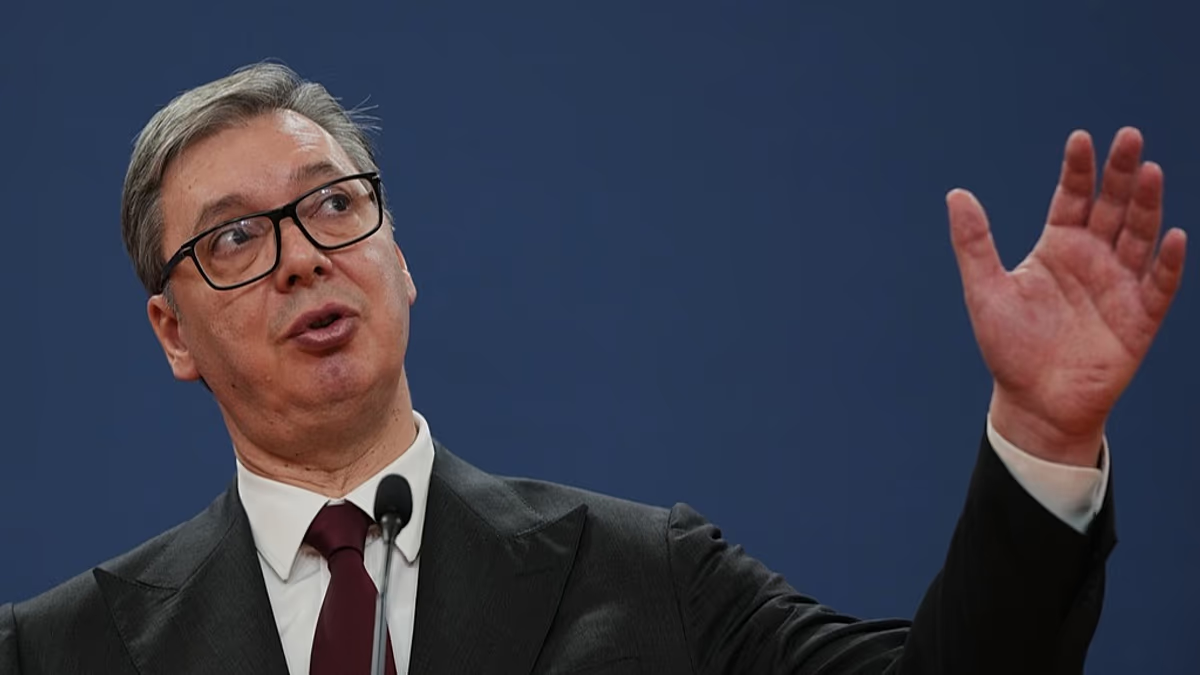

Serbian President Aleksandar Vučić sparked speculation on Thursday after appearing to reference a communication from Moscow while arriving for talks with European Union leaders in Brussels. The incident, captured by a microphone, occurred as Vučić walked alongside EU Commission President Ursula von der Leyen. This development adds a layer of complexity to Serbia’s ongoing EU membership bid and its delicate balancing act between Western and Russian interests.
The exchange was brief. Vučić was overheard saying, “I got a message from Moscow now,” prompting a quick response from von der Leyen, who appeared to urge him to wait before discussing the matter further. The context of the “message” remains unclear, but it occurred during discussions about Serbia’s path toward European integration.
Serbia’s EU Membership Bid and Russian Influence
Serbia has formally sought EU membership for over a decade, but progress has been hampered by concerns over its relationship with Russia. Despite the ongoing war in Ukraine, Serbia has refrained from joining EU sanctions against Moscow and continues to maintain diplomatic and economic ties. This position has drawn criticism from some EU member states and raised questions about Serbia’s commitment to aligning with European values.
According to the European Commission, Serbia has made strides in several areas required for accession, including economic policy and freedom of expression. However, significant challenges remain, particularly regarding the rule of law and the normalization of relations with Kosovo. The timing of Vučić’s apparent reference to Moscow is particularly sensitive given these ongoing negotiations.
The Serbian government has not officially commented on the incident, leaving observers to speculate about the nature of the communication from Russia. Some analysts suggest it could be related to the ongoing conflict in Ukraine, while others believe it may concern regional issues in the Balkans.
International Efforts to Resolve the Ukraine Conflict
Meanwhile, international efforts to find a resolution to the war in Ukraine continue. Ukrainian President Volodymyr Zelenskyy stated on Wednesday that he would soon present the United States with a revised proposal for ending the conflict, incorporating feedback from European partners. This indicates a renewed push for diplomatic solutions, even as fighting persists.
Former US President Donald Trump has also signaled a potential willingness to engage in negotiations, suggesting he might travel to Europe for a meeting if it could advance the peace process. However, Trump emphasized the need for a concrete plan before committing his time. Reuters provides further details on Trump’s statement.
A meeting of the “Coalition of the Willing,” a group of over 30 countries supporting Ukraine, is scheduled for Thursday. The French president’s office described the meeting as a crucial moment for Ukraine, its people, and the security of Europe, highlighting the urgency of the situation. This coalition aims to bolster Ukraine’s defense capabilities and maintain pressure on Russia.
The EU’s stance on Serbia’s EU integration is likely to be influenced by the broader geopolitical context, including the war in Ukraine and the need to maintain unity among member states. The incident with Vučić’s comment underscores the complexities of navigating these relationships.
Additionally, the situation highlights the ongoing struggle for influence in the Balkans, a region with a history of geopolitical competition. Russia has actively sought to maintain its presence in the region, while the EU and the United States have worked to strengthen ties with countries aspiring to membership in Western institutions.
Looking ahead, the focus will be on Serbia’s response to the EU’s concerns and its willingness to demonstrate a clear commitment to European values. The outcome of the Ukraine negotiations and the broader geopolitical landscape will also play a significant role in shaping Serbia’s future. Continued monitoring of Serbia’s foreign policy and its engagement with both the EU and Russia will be essential to understanding the evolving dynamics in the region. Stay informed about the latest developments in European news for further updates.