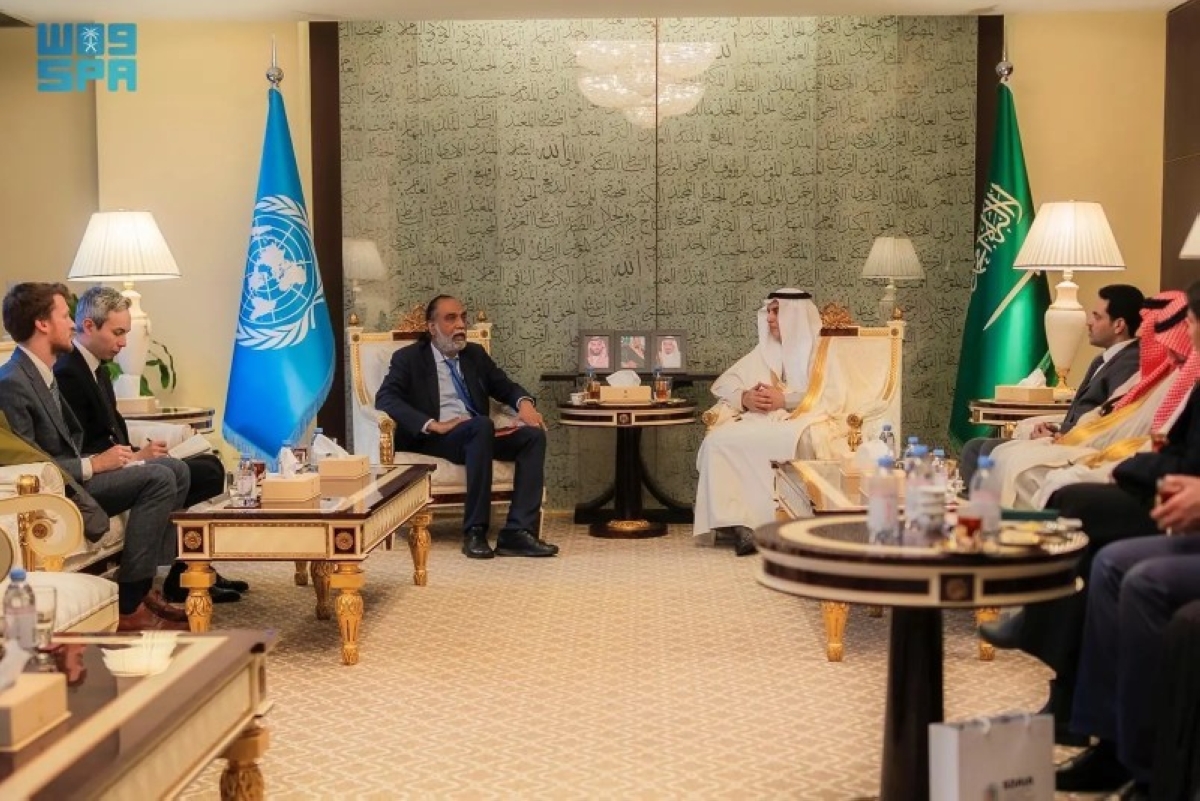

The United Nations has publicly acknowledged Saudi Arabia’s growing commitment to and advancements in artificial intelligence, specifically its alignment with the UN’s Sustainable Development Goals (SDGs) 2030. This recognition came during a meeting between UN Undersecretary-General and Secretary-General’s Technology Envoy Amandeep Singh Gill and Dr. Abdullah Alghamdi, President of the Saudi Data and AI Authority (SDAIA), held Sunday at Saudi Arabia’s Permanent Mission to the UN in New York. The discussions centered on strengthening collaboration in data and AI to support global development initiatives.
The meeting underscored Saudi Arabia’s increasing role as a key international partner in shaping the future of technology governance. Gill and Alghamdi discussed the importance of responsible technology implementation and the need for international cooperation to maximize the benefits of these rapidly evolving fields. This dialogue occurs as global bodies grapple with the ethical and practical implications of widespread AI adoption.
Saudi Arabia and the UN: A Growing Partnership in Artificial Intelligence
Saudi Arabia’s Vision 2030, a strategic framework aimed at diversifying the nation’s economy and society, places significant emphasis on technological innovation. The SDAIA, established in 2019, is central to this effort, tasked with developing the Kingdom’s data and artificial intelligence infrastructure. According to the SDAIA’s website, the authority aims to position Saudi Arabia as a global leader in these domains.
The UN’s SDGs represent a blueprint for achieving a more sustainable future for all, addressing challenges like poverty, hunger, climate change, and inequality. Gill commended Saudi Arabia’s support for these goals, noting the potential of data and AI to accelerate progress across multiple SDG targets. This includes using AI for more efficient resource management, improved healthcare delivery, and enhanced educational opportunities.
Focus on AI Governance and Ethical Frameworks
A key theme of the meeting was the importance of establishing robust governance frameworks for artificial intelligence. Alghamdi reaffirmed Saudi Arabia’s dedication to UN initiatives focused on responsible AI use, emphasizing the need for shared expertise and the creation of ethical guidelines. This reflects a growing global concern about potential biases, security risks, and societal impacts associated with AI technologies.
The development of such frameworks is complex, requiring input from governments, industry, academia, and civil society. Saudi Arabia’s participation in these discussions is seen as crucial, given its substantial investments in AI and its growing influence on the international stage. The Kingdom has also been actively involved in UN committees related to digital technologies, contributing to the global conversation on these issues.
Capacity Building and Knowledge Exchange
Beyond governance, the discussion highlighted the need for capacity building to ensure that communities can effectively leverage the benefits of artificial intelligence. Alghamdi emphasized Saudi Arabia’s efforts to develop a skilled workforce capable of designing, implementing, and maintaining AI systems. This includes investments in education, training programs, and research initiatives.
Gill echoed this sentiment, stressing the importance of knowledge exchange and international collaboration in building AI capacity worldwide. He noted that sharing best practices and fostering innovation are essential for ensuring that AI technologies are accessible and beneficial to all nations. This aligns with the UN’s broader mandate of promoting international cooperation and sustainable development.
The meeting also touched upon the potential of data analytics to inform policy decisions and improve the effectiveness of development programs. Saudi Arabia has been actively collecting and analyzing data across various sectors, including healthcare, education, and transportation. This data-driven approach is seen as a key component of Vision 2030 and a valuable contribution to the UN’s SDG monitoring efforts. Relatedly, the Kingdom is exploring the use of machine learning to predict and mitigate risks associated with climate change, a critical aspect of SDG 13.
Meanwhile, the SDAIA has launched several national initiatives focused on leveraging AI for social good. These include projects aimed at improving public safety, enhancing healthcare services, and promoting environmental sustainability. The authority is also working to develop AI-powered solutions for addressing specific challenges faced by developing countries, furthering Saudi Arabia’s commitment to global development.
In contrast to some nations’ cautious approach to AI, Saudi Arabia has embraced the technology with significant investment and a proactive stance on its development. This strategy is driven by the recognition that AI is a transformative force with the potential to unlock new economic opportunities and improve the quality of life for its citizens. However, this rapid adoption also necessitates careful consideration of ethical and regulatory implications.
Looking ahead, the UN and Saudi Arabia are expected to continue their collaboration on AI governance, capacity building, and knowledge exchange. The next major opportunity for discussion will likely be the upcoming UN AI Summit, scheduled for later this year. The specific outcomes of this ongoing partnership remain to be seen, but the commitment from both sides suggests a continued focus on harnessing the power of artificial intelligence for sustainable development and global benefit. Monitoring the development of Saudi Arabia’s national AI strategy and its implementation will be key to understanding the long-term impact of this collaboration.