







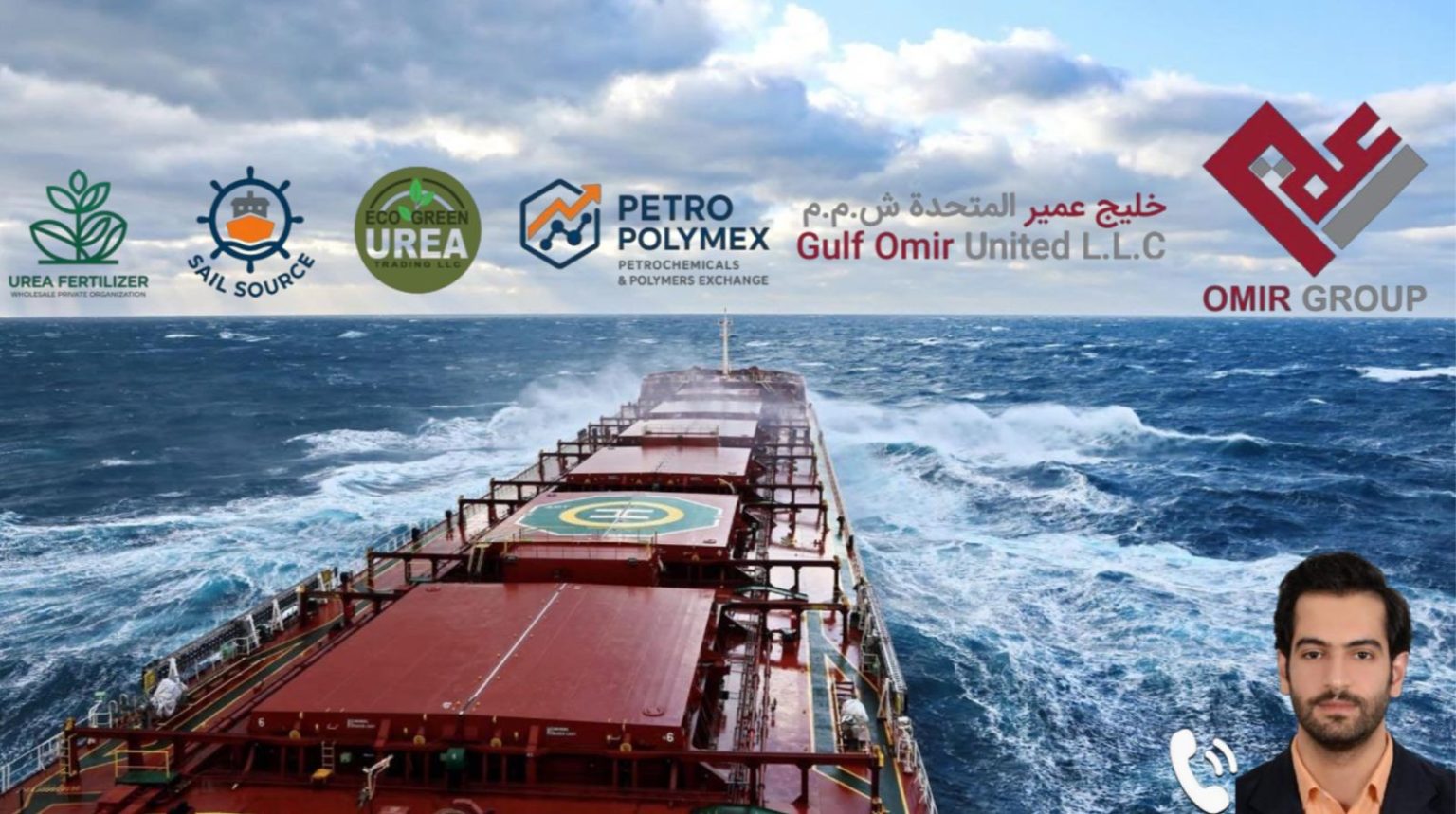

As global food security comes under pressure, the fertilizer trade is becoming one of the Gulf’s most important industries. The GCC is not only a producer of fertilizers such as urea and sulfur but is also turning into a major distribution hub, linking suppliers with farmers and industries from Asia to Africa.
To get a closer look at how this transformation is taking shape, we spoke with Pouria M. Yaghoubi, Founder of OMIR Group, a fast-growing trading group with operations in Muscat and Dubai.
Q: Why is the fertilizer trade in the GCC so important right now?
A: “The Gulf is right in the middle of global agriculture,” Pouria says. “The Middle East is one of the biggest exporters of urea in the world. Demand from countries like India and markets across Asia and Africa is growing every year. That makes Dubai and Muscat more than just trading points; they’re reliable gateways for buyers who want reliability when global markets get uncertain.”
Q: What challenges are you seeing in fertilizer supply today?
A: “The biggest one is market fluctuation,” he explains. “Prices can shift sharply within short periods. Shipping schedules are often disrupted. And global politics can create sudden uncertainty. For us, the real test is how to keep things steady for our clients. Anyone can sell when conditions are favorable, but the real value is in being consistent when the market is unstable.”
Q: How has OMIR Group adjusted to these challenges?
A: “We set up Eco Green Urea Trading in Dubai for exactly this reason,” Pouria says. “Dubai has the logistics, the finance, and the connections we need to move fast. At the same time, being based in Muscat keeps us close to the region’s producers and ports like Sohar and Duqm, which are becoming more important for global trade. We are also working on building stronger connections to the American market, which we see as a key growth area for fertilizers and petrochemicals.”
He adds: “At OMIR Group, we’re developing a new concept that goes beyond just physical trading. It’s still in the works, but the goal is to drive real innovation and long-term whole industry growth. The vision is to build a system where every stakeholder in the chain, from producers, traders, shippers, financiers, and farmers alike, can benefit through clearer processes, greater trust, and more reliable access.”
Q: What makes Eco Green different from other distributors in the UAE?
A: “Trust,” he says. “We focus on urea and sulfur in Eco Green, and our clients know that when we commit to a shipment, it arrives as promised. It’s not only about the product; it’s about confidence in the supply chain, ensuring deliveries arrive on time and under competitive terms. That’s how you build relationships in this business
Pouria notes that the Group’s strength also comes from its leadership team. “Our foundation is enriched by the deep expertise of my partner, who has been active in trade for more than 19 years,” he says. “Her knowledge and experience give us an added layer of confidence as we expand into complex markets.”
Q: How do you connect this business to food security?
A: “Fertilizers might look like just another commodity, but they’re directly linked to food,” Pouria says. “Every ton of urea helps grow crops that feed millions of people. If farmers don’t get fertilizers on time, it affects harvests and food prices. That’s why the Gulf’s role is bigger than trade, we’re helping to keep food systems running.”
Q: Where do you see the fertilizer market in the GCC heading in the next few years?
A: “I see the GCC becoming the heart of global fertilizer trade,” he says. “We already have the production and the infrastructure. Demand worldwide is only going up, and the Gulf will be expected to meet a big part of that. The key is to make our supply chains transparent and resilient so they can handle shocks when they come.”
Q: And for OMIR Group, what’s your vision?
A: “Our vision is simple: Rooted in Oman, reaching the world,” Pouria says. “We’re proud of our Gulf identity, but we think globally. Our role is to connect this region’s strengths with international needs. Fertilizers are at the core of food security, and we want to be a group that people can rely on for stability and growth.”

