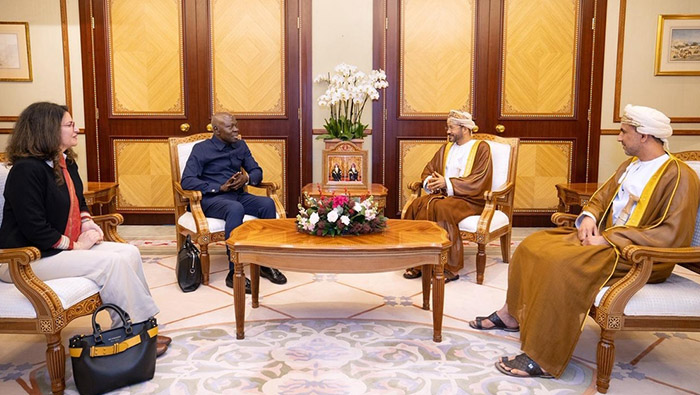

The Sultanate of Oman continues to strengthen its international partnerships, particularly in areas crucial to its ongoing economic and social transformation. Recently, a significant meeting took place in Muscat between Sayyid Badr bin Hamad Al Busaidi, Oman’s esteemed Foreign Minister, and Gilbert Houngbo, Director-General of the International Labour Organisation (ILO). This discussion underscored the nation’s commitment to developing a robust and internationally aligned labor market, a key component of its ambitious Oman Vision 2040.
Oman and the ILO: Reinforcing Collaborative Ties
The meeting, held at the Foreign Ministry headquarters in Muscat, focused on the existing cooperative relationship between Oman and the ILO. Both parties expressed a strong desire to continue collaborative work programs and maintain open channels of communication for constructive consultation. This ongoing dialogue is vital for ensuring Oman’s labor policies remain effective and responsive to the evolving needs of its workforce and economy.
Sayyid Badr bin Hamad Al Busaidi conveyed the Omani government’s deep appreciation for the ILO’s role in assisting member states with the development of their labor systems. He specifically highlighted the organization’s dedication to promoting best international practices and standards. The Foreign Minister also acknowledged the Director-General’s personal contribution to shaping relevant frameworks and concepts within the field of labor rights and development.
Acknowledging Oman’s Progress in Labor Policies
Gilbert Houngbo, in turn, commended the substantial progress Oman has made in several key areas. He praised the nation’s advancements in labor policies, the dynamic development of its labor market, and the positive relationship fostered between employers and employees – the core parties of production. This recognition from a leading international body like the ILO validates Oman’s strategic approach to workforce development.
The Director-General reaffirmed the ILO’s dedication to a continued, constructive partnership with Oman. This commitment extends to various aspects of mutual interest, with a particular emphasis on skills development and capacity building. Supporting training and employment programs that align with Oman’s national development priorities and the overarching goals of Oman Vision 2040 were also highlighted as crucial areas of collaboration.
Focus on Skills Development and Vision 2040
Oman Vision 2040 is a comprehensive national strategy designed to diversify the economy, enhance social well-being, and create a sustainable future for the Sultanate. A skilled and adaptable workforce is central to achieving these objectives. The ILO’s expertise in skills development programs will be instrumental in equipping Omani citizens with the knowledge and abilities needed to thrive in a rapidly changing global landscape. This includes initiatives focused on emerging technologies and industries.
Exploring Future Cooperation and Enhancing Efficiency
The discussions extended beyond current programs to explore potential avenues for future cooperation. Both sides examined ways to maximize the benefits derived from the ILO’s specialized programs, particularly those aimed at refining labor legislation and boosting the overall efficiency of the labor market. This proactive approach demonstrates Oman’s commitment to continuous improvement and its willingness to learn from international best practices.
Improving institutional capabilities was another key topic. Strengthening the capacity of Omani government agencies responsible for labor market regulation and enforcement is essential for ensuring fair labor practices and promoting a conducive environment for economic growth. The ILO can provide valuable technical assistance and training in this regard.
Furthermore, the meeting addressed the importance of adapting to global trends in employment, including the rise of the gig economy and the increasing demand for digital skills. Oman is actively working to create a regulatory framework that supports innovation while protecting the rights of workers in these new forms of employment. The ILO’s guidance on these complex issues is highly valued.
Attendees at the meeting included Khalid bin Salim Al Ghamari, Undersecretary of the Ministry of Labour for Labour Affairs, Dr. Ruba Jaradat, Regional Director for Arab States at the ILO, and a number of other officials from both the Omani government and the ILO. This high-level representation underscores the significance of the partnership and the commitment to achieving tangible results.
In conclusion, the meeting between Sayyid Badr bin Hamad Al Busaidi and Gilbert Houngbo signifies a strong and enduring partnership between Oman and the ILO. The focus on strengthening the labor market through skills development, improved legislation, and enhanced institutional capacity is directly aligned with Oman’s Vision 2040. This collaboration promises to contribute significantly to the Sultanate’s economic diversification and the well-being of its citizens. Readers interested in learning more about Oman’s economic development can explore resources on Oman Vision 2040 and the ILO’s work in the region on their official website.