


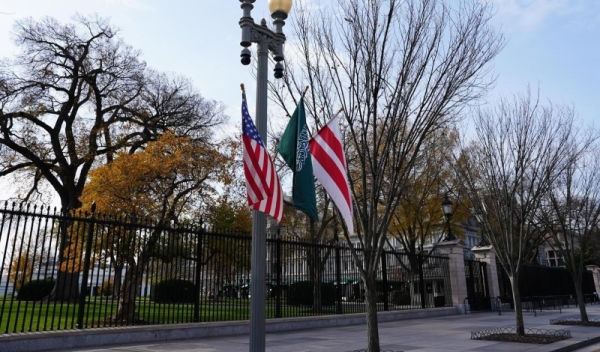

Trade between Saudi Arabia and the United States has experienced substantial growth, exceeding $500 billion over the last decade. This robust Saudi-US trade positions the US as the Kingdom’s second-largest import partner, reflecting a deepening economic alliance. Recent data indicates continued momentum, with trade volume increasing over 50 percent since 2020 and reaching $33 billion in 2024 according to government reports.
The increasing economic ties between Riyadh and Washington are vital for both nations, fostering investment and economic diversification. Initial figures suggest approximately $16 billion in trade occurred during the first half of 2025, building upon the established growth trajectory. This development signals a sustained commitment to bilateral economic cooperation despite evolving global trade dynamics.
The Growing Volume of Saudi-US Trade
The relationship between the Saudi Arabian and American economies has been steadily strengthening for years, driven by mutual strategic interests and complementary economic needs. Saudi Arabia relies on the US for advanced technologies, machinery, and automotive products, while the US benefits from Saudi energy exports and increasingly, manufactured goods. This interdependence ensures a consistent flow of goods and services for both countries.
In 2024, Saudi exports to the US were largely comprised of fertilizers and organic chemical products, indicating the Kingdom’s growing capabilities in these sectors. Conversely, US exports to Saudi Arabia focused on machinery, equipment, mechanical tools, and automobiles, totaling an estimated $9 billion. This diversification is an important element of Saudi Arabia’s Vision 2030 plan, which aims to reduce reliance on oil revenue.
Key Sectors Driving Growth
Several key sectors are fueling the expansion of international trade between the two nations. The energy sector remains significant, but non-oil sectors like petrochemicals, manufacturing, and increasingly, technology and artificial intelligence, are gaining prominence. The focus on developing these industries is an ongoing effort by Saudi Arabia to diversify its economy.
Additionally, the defense industry represents a substantial component of bilateral relations, with consistent arms sales from the US to Saudi Arabia. However, this aspect of the relationship frequently draws scrutiny due to geopolitical concerns and human rights considerations. The US government continues to navigate these sensitivities while maintaining strategic partnerships.
Pharmaceuticals and food security are also emerging areas of cooperation. The Saudi government is actively seeking to bolster its domestic production of both through investment and partnerships with US companies, furthering its self-sufficiency goals.
Facilitating Trade: The Role of TIFA
The Saudi-US Trade and Investment Framework Agreement (TIFA) Council, spearheaded by the General Authority of Foreign Trade (GAFT), is central to bolstering these economic connections. Established to oversee and enhance trade and investment ties, the TIFA Council provides a formal structure for dialogue and problem-solving. It serves as a platform for identifying opportunities and navigating obstacles to smoother commercial exchange.
Since its inception, the TIFA Council has facilitated agreements on 27 initiatives spanning crucial fields like standards and metrology, food and pharmaceuticals, artificial intelligence, and intellectual property rights. These initiatives aim to streamline processes, promote regulatory alignment, and improve the overall investment climate for businesses in both countries.
The council’s structure involves the participation of 11 Saudi government entities, underscoring the collaborative and holistic approach to trade and investment issues. This inter-agency cooperation enables a coordinated response to challenges and ensures that policies are aligned with broader economic objectives.
GAFT actively encourages non-oil exports from the Kingdom by coordinating with relevant councils and governmental committees. These efforts aim to provide Saudi businesses with the support they need to access foreign markets, address logistical hurdles, and overcome trade barriers. This push for diversification is a key element of the Kingdom’s long-term economic vision.
However, challenges remain, including navigating differing regulatory frameworks and potential geopolitical shifts. The global economic outlook and fluctuations in oil prices also present ongoing uncertainties that could impact trade volumes.
Looking ahead, the TIFA Council is expected to continue its work on resolving existing trade disputes and identifying new areas for collaboration. Formal reviews of progress are scheduled bi-annually, with the next major assessment anticipated in early 2026. Monitoring developments in these talks, and the impact of evolving global economic conditions, will be critical to understanding the future trajectory of Saudi-US trade.